By Hannah Bickel, Nastaran Zarnegari and Sarah Tosse
VR glasses are hardly a conventional tool in agriculture: for the past three years, they have been used in rural areas of Burkina Faso and Cameroon as a training tool for sustainable cotton cultivation. The benefits of this innovative approach are now becoming apparent.
The Deutsche Gesellschaft für Internationale Zusammenarbeit (GIZ) is a globally active provider of international cooperation for sustainable development. It has more than 50 years of experience in a wide range of fields.
At the touch of a button, several square kilometers of cotton fields unfold before the farmers' eyes. Soil, plants, pests and beneficial insects move around in a virtual world that is hardly any different from the real one.
The training is being piloted by the Gesellschaft für Internationale Zusammenarbeit (GIZ) together with the International Cotton Advisory Committee (ICAC). The training does not only focus on increasing the yield of the cotton harvest, but also on protecting the environment and people's health. Saskia Widenhorn was heavily involved in the project development and implementation on behalf of GIZ and was also partly on-site in Cameroon. She reports on the benefits of VR-based training:
It is much more like experiencing what you have learned than with traditional training, which makes the learning content even more accessible.
The videos are particularly valuable in rural areas. Educational opportunities - and therefore also the opportunities to acquire reading and writing skills - are often limited in these regions. With the help of technology, particularly disadvantaged groups, such as women, also gain access to education.
The project follows a "training of trainers" approach, in which multipliers are first trained in the use of VR training in order to then pass on their knowledge to the farmers.
Compared to traditional training methods, VR training videos are more intensive and have a more lasting learning effect. Although the purchase and provision of the technical equipment is a costly undertaking, it is one that is worthwhile. Compared to conventional training courses, where travel costs can account for a large proportion of the total costs, there is a major advantage for the training participants: they can complete the training anywhere and are not dependent on the presence of trainers.
The video footage for the training material was recorded by ICAC in cotton fields in India at different times of the year to show the plants at different stages of growth and thus ensure a holistic learning experience.
The training has now been translated into several languages, including local languages, and rolled out in other countries. So far, 285 farmers from a total of five countries - Zambia, India, Côte d'Ivoire, Kenya and Egypt - have been trained and can now pass on their knowledge. More than 20,000 cotton farmers have been encouraged to make their farming methods more sustainable.
A video report on the project was published by Deutschen Welle (DW).
The United Nations plan a Food Systems Summit - and now the Corona-Virus is dictating the agenda. The Chief Economist of the UN World Food Programme takes stock of the current situation: a conversation with Jan Rübel about pandemics, about the chromosomes of development - and about the conflicts that inhibit them.
How can agriculture modernise Africa? And does the road to the cities really lead out of poverty? Dr. Reiner Klingholz from the Berlin Institute for Population and Development in conversation with Jan Rübel .
A report by T. S. Jayne, A. Adelaja and R. Mkandawire
Thirty years ago, Africa was synonymous with war, famine and poverty. That narrative is clearly outdated. African living standards are rising remarkably fast. Our authors are convinced that improving education and entrepreneurship will ensure irreversible progress in the region even as it confronts COVID-19.
A contribution by the Bill & Melinda Gates Foundation
Africa’s population is young and ready to take its destiny into its own hands. Agriculture offers amazing opportunities in this regard. The Bill & Melinda Gates Foundation wants to support the next generation in this way.
Lack of seasonal workers and virus explosion in slaughterhouses, rising vegetable prices, climate crisis – all this demonstrates: Our food system is highly productive and (at least for the rich inhabitants of planet earth) guarantees an unprecedented rich and steady food supply - but it is not resilient.
Interview with Gnininkaboka Dabiré and Innocent Somé
Later on you want to become a farmer yourself, or would you prefer to take up another profession? Two young people from Burkina-Faso talked to representatives of the Dreyer Foundation about their parents' farms, the profession of farmer and their own plans for the future.
The soybean is a natural crop that can be used to make a lot of food. So, Tata Bi started a small processing business first on her own, then with a few other women, which provides the women with an additional source of income year-round besides selling the soybeans.
Supporting groups of smallholding women substantially contributes to strengthen rural operations economically. The organisation and associated group activities can help to reduce extreme poverty and improve the food situation.
Besides the well known impacts of Covid19 lockdowns for the adult population, the associated school closures led to 90 percent of the world’s children with no access to schools. However, school meals are in often the only daily meal for children. Without access to this safety net, issues like hunger, poverty and malnutrition are exacerbated for hundreds of millions of children.
The majority of producers in developing countries are women. Although they contribute significantly to the food security of their families, they remain chronically disadvantaged in male-dominated agriculture in terms of access to land, credit, technology and education.
A contribution by Nadine Babatounde and Anne Floquet (MISEREOR)
To prevent malnutrition among young children and strengthen the role of women in their communities, Misereor, together with the local non-governmental organisation CEBEDES, is implementing a programme on integrated home gardens in Benin - a series of pictures.
What happens when young people leave the rural areas? How can the region achieve what is referred to as the demographic bonus – and how can it reap the benefits of the demographic dividend? A look at demography shows the following: What is most important is promoting women’s rights and education.
A contritbution by Essa Chanie Mussa (University of Gondar)
Rural youth need viable livelihood opportunities to escape out of poverty and realize their aspirations. How could they be helped to fully unleash their potential? This is an aloud call that needs novel strategies among governments, policy makers, and international development partners and donors.
What do electrical engineering, telecommunications and agriculture have in common? They arouse the passion of Strive Masiyiwa: Thirty years ago, he started an electrical installation company with $75, later riding the telecommunications wave as a pioneer. Today he is committed to transforming African agriculture.
A menstrual health pilot in Rural Malawi empowers rural women in Agribusiness through hygiene products and helps to improve working conditions in rural areas.
How can we reach more people with successful approaches to food security? In Berlin, an international conference organized by the Deutsche Gesellschaft für Internationaler Zusammenarbeit (GIZ) addressed this issue.
During the trade Grüne Woche, school classes visited the BMZ (German Federal Ministry for Economic Cooperation and Development), Brot für die Welt and Misereor. Each class spends one hour at their stand to learn about the global challenges posed by food systems. A review by Jan Rübel.
Agriculture is coming under pressure worldwide: bacteria, viruses and insects are causing problems for crops. In Palestine, Dr. Rana Samara from the Palestinian Academy of Science and Technology is researching solutions to the problem. And she finds them in nature itself.
Every second, worldwide, we lose valuable and healthy soil with the size of four football fields. This was only one of the many facts being presented to a wide audience in Bonn and worldwide via livestream at the World Desertification and Drought Day on 17th June 2024. This was the 30th anniversary of the United Nations Convention on Combatting Desertification (UNCCD), which was celebrated at the Bundeskunsthalle in Bonn.
During the Women Leadership Programme in May 2024, around 20 women from African countries and Germany met again for a one-week workshop in Bavaria, Germany to become fit for leadership in their organisations. One topic that concerns the women across countries is climate change, but also violence against women and their discrimination in agriculture.
As a passionate social scientist and entrepreneur from Malawi, Ngabaghila Chatata knows that she can overcome any challenge. Her story stands out in a country faced with high unemployment, particularly in its rural areas. As the managing director of Thanthwe Farms, she has set out to inspire the next generation of young agripreneurs – proving that successful business starts with the right mindset, not only capital.
Two new podcast formats from the Deutsche Gesellschaft für Internationale Zusammenarbeit (GIZ) bring stories from on-the-ground project work to life: "Over to you!" from Malawi and "Voices of Change – Beneficiary Story Book" from Zambia. At the heart of these podcasts are the people behind the changes toward sustainable food security.
Food systems shape social realities. Whether legal claims can be enforced also depends on access to legal institutions. Camara Castro from the Amka Africa Justice Initiative shows how legal work in Kenya helps reduce the gap between law and lived reality and contributes to making agri-food systems more just.
Small holders around the world are often forced to sell their harvests below market value due to a lack of market and pricing information. A new app by the UN World Food Programme (WFP) is going to change this.
The project “Scaling digital agriculture innovations through start-ups” (SAIS) supports Africans going into business in the agricultural and food sector in scaling their digital innovations and thus reaching out to a larger number of users.
From a circular food system in Rwanda to functioning cooled transports in Kenya: The lab of tomorrow addresses development challenges such as preventing food loss and waste
Vertically growing plants, magnetic cotton. Hairy leftovers fertilizing fields, tractors running on algae? These six innovations could lead agriculture’s next Green Revolution!
Innovate2030 is looking for creative people from around the world to develop smart and innovative solutions against climate change in cities. Initiated by the Make IT-Alliance.
In March 2022, the virtual conference ICTforAg summons leading actors in the agrartechnology and food sector from low- and middle-income countries to exchange ideas advancing resilience, nutrition and agriculture-led growth.
At the ICTforAg conference in March 2022, the digital agriculture community exchanged on the challenges and opportunities associated with the next green revolution.
The finals of the Innovation Challenge “Advisory for Agroecology” took place on 17 May - 2022 featuring six innovations in advisory that provided the basis for a discussion on how to bridge the gap between science and practice.
Data security, financing, the automation of loans and the use of alternative data - the digitalisation of financial services in the agricultural sector has many facets, which an international conference with representatives of the agricultural finance sector in Zambia addressed. But how does the digitalisation of financial services contribute to rural development and the inclusion of women?
A new study on the digitalisation of agriculture puts farmers back at the centre of their own sector, identifies market gaps and gives recommendations on how to support relevant actors.
Four interviews kick off the relaunch under the new name „Food4Transformation“, asking the same questions from different perspectives. Mareike Haase and Stig Tanzmann from Brot für die Welt explain why the right to food, inclusivity, agroecology and food sovereignty are the central levers for a successful transformation.
Four interviews kick off the relaunch under the new name „Food4Transformation“, asking the same questions from different perspectives. Dr Julia Köhn, Chair of the German AgriFood Society, points out in the interview: Only if innovation and transformation are profitable in the medium term can they close the food gap in the long term.
Small farmers often have a hard time getting financing. An app in Nigeria wants to change that: Founder Blessing Mene about what his app offers - and about the opportunities and limitations of agricultural financing.
Journalists Angeline Ochieng and Victor Raballa visited Ms Bilha Munyole, a Kenyan farmer in Kimilili, Bungoma County, on her maize plantation. About the important role of mechanisation in climate-smart agriculture and in building resilience to the impacts of climate change.
A Campaign of the Federal Ministry for Economic Cooperation and Development
In light of World Food Day, the Federal Ministry for Economic Cooperation and Development launched a campaign: Three women from Kenya, Benin and Ecuador share how their ideas and local solutions are fighting hunger and poverty.
In Sub-Saharan Africa, not all financial institutions (FIs) have access to knowledge about how to implement processes to enhance rural financial inclusion. The pan-African Community of Practice (CoP) plays a pivotal role in supporting these institutions along this transformative journey.
How can agriculture engage more young people in rural areas? Advocacy and education campaigns can play an important role here. Simeon Kambalame, Timveni Child and Youth Media Organisation, has launched such a campaign in Malawi.
A Contribution by Initiative für nachhaltige Agrarlieferketten (INA)
The demand for sustainable products and supply chains is constantly increasing. DIASCA is an alliance that works on interoperability of digital solutions in agricultural supply chains through the development of open standards for forest monitoring, farm income and traceability.
Recycling organic waste into soil amendments and animal feed through a transdisciplinary approach – this is what the RUNRES project, launched in four sub-Saharan African countries four years ago, seeks to achieve. Three of the project's scientists report.
The bioeconomy movement is fundamentally changing agriculture and food production: through innovative ideas, environmentally friendly approaches and the realization that we need to work together globally to ensure that change truly benefits everyone. At this years’ German Forum for Food and Agriculture (GFFA), the German Federal Ministry for Economic Cooperation and Development (BMZ) focused on this topic.
Maura Oerding has a mission: With the specialty coffee Angelique's Finest, she not only wants to enter new markets but also revolutionize the coffee industry. Her recipe for success? Empowering women from Rwanda and Uganda from cultivation to marketing. Oerding’s goal: quality, fairness, and self-determination in every bean.
In 2025, GIZ and the Import Promotion Desk (IPD) celebrate ten years of successful cooperation. With their joint stand at BIOFACH trade fair in Nuremberg, they were able to introduce over 300 organic companies of partner countries to the European market. And the journey continues – despite challenges on the global market.
With a simple but effective idea to combat malnutrition: in Nairobi, Fabio Rappenecker and his start-up TenX Nutrition produce mandazi, which become a real power biscuit thanks to added micronutrients. The aim is to strengthen food security through local, affordable and healthy food.
The results of twelve years of cooperation: a compendium by the Deutsche Gesellschaft für Internationale Zusammenarbeit (GIZ) takes stock of the work of green innovation centres in 16 countries. It brings together experiences, documents successes and challenges, and collects key findings for practical application and policy-making.
An Interview with Carolina Jaramillo Ferrer and Felix Strauss
How can sustainable solutions grow without losing sight of local realities? Carolina Jaramillo Ferrer (Uniban) and Felix Strauss (ALDI SOUTH Group) discuss what it takes to bring successful solutions to scale.
A contribution by Humboldt-Universität zu Berlin and TU Berlin
Alternative proteins could make an important contribution to future-proof food systems. Particularly in the Global South, they offer potential to conserve resources, strengthen food security, and enhance resilience to climate change.
A world without hunger and with sufficient healthy food as well as climate-friendly agriculture can only be achieved if ideas are transformed into innovations and ultimately also applied - a conversation with BMZ Head of Division Sebastian Lesch on the Innovation Challenge programme of the new Agricultural Innovation Fund.
Peasant farmers tend to fail due to bank credit limits. But investment could help them generate a sustainable income. This has given rise to an intense discussion about potential digital solutions.
Does Africa's youth want to live in the city or in the country? Which career path seems particularly attractive? And how optimistic are the young people about the future? Young adults from rural areas answered these questions by SMS.
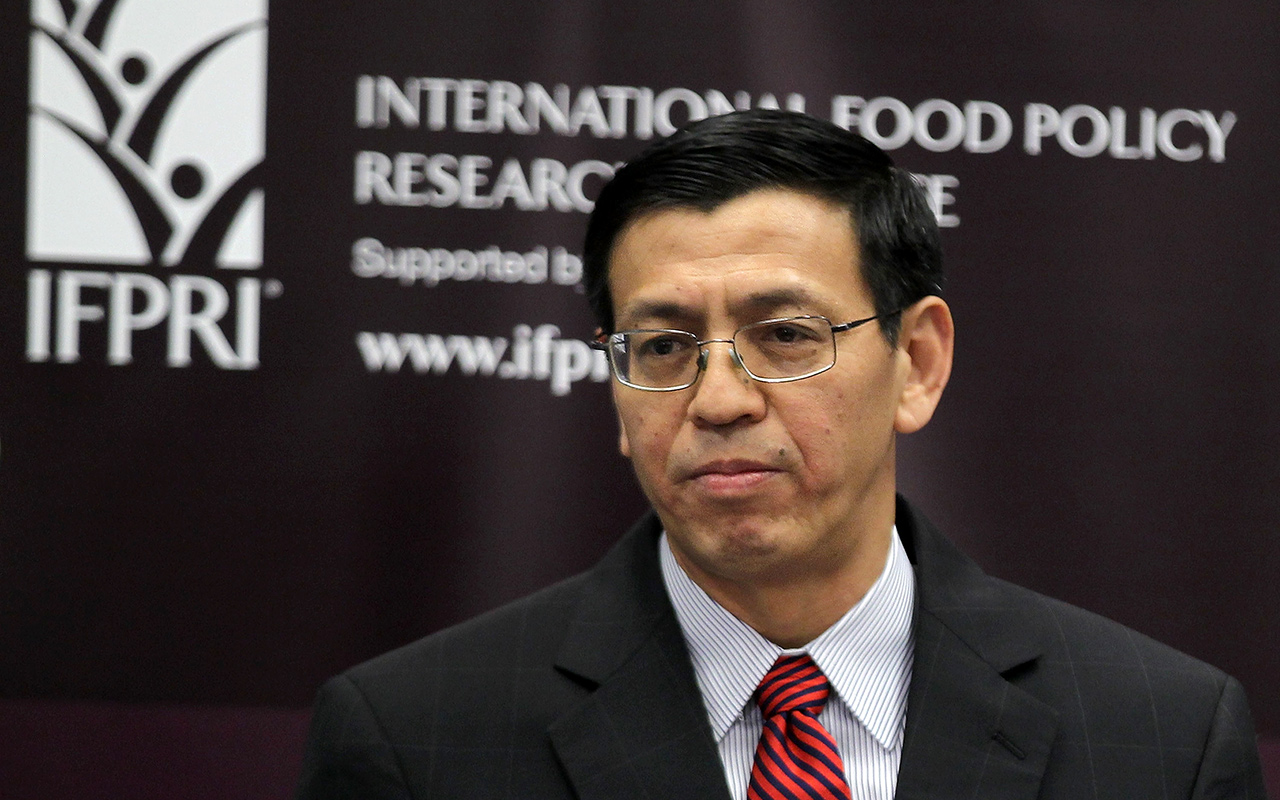
Shortly before ending his position as Director General of the International Food Policy Research Institute (IFPR) Dr. Shenggen Fan talks about the reforms and new modes of operation needed to achieve global food security in the coming decade.
Small farmers in developing countries must modernise their farming methods, but poorly understood reforms could exacerbate poverty instead of alleviating it.
In western Africa a new middle class is emerging. Their consumer behaviour is determining the demand for products – home-produced and imported goods, on the internet or at the village market. The people of Ivory Coast in particular are looking to the future with optimism.
Startups are booming in African agriculture. What are the current trend and challenges – and can other regions benefit from innovative approaches? A Video-Interview with Claudia Makadristo, Regional Manager of Seedstars
International agricultural research is responding to new challenges: Their advisory group is undergoing a fundamental reform process and unites knowledge, partnerships and physical assets into OneCGIAR.
Artificial intelligence, big data and blockchain are the hottest topics of our time. The digital transformation of the African agricultural sector is ready for take-off. What will it take for the future of technology to hit the ground running?
Lots of apps are entering the market, but what really makes sense? For African agriculture, some of it seems like a gimmick, some like a real step forward. So this is what a smallholder farm in Africa could look like today - with the help of smartphones, internet and electricity.
It is 2080. We are on a farm somewhere in Africa. Everything is digital. The blockchain is an omnipotent point of reference, and the farm is flourishing. But then, everything goes wrong. A dystopian short story, written exclusively for SEWOH.
Jehiel Oliver was a successful consultant. One day, he quit his job in investment banking to become a social entrepreneur. His mission: tractors for Africa. Rental tractors. What gave him that idea? Find out in his interview with Jan Rübel.
A contribution by Sarah D´haen & Alexander Müller, Louisa Nelle, Bruno St. Jaques, Sarah Kirangu-Wissler and Matteo Lattanzi (TMG)
Young farmers’ insights on the effects of the COVID-19 pandemic on food systems in Sub-Saharan Africa @CovidFoodFuture and video diaries from Nairobi’s informal settlements.
At the moment, the agricultural industries of African countries exist in relative isolation. Imagine peasant farmers digitally connected to the value chains of the global food industry. How could this happen? A guidebook.
There is a clear global task: We need to feed nine billion people by 2050. We, the people of Earth, must produce more food and waste less. That is the top priority of the UN World Food Programme (WFP), too - the description of a challenge.
At the beginning of December 2018, AGRA's board of directors met in Berlin. The "Alliance for a Green Revolution in Africa" panel discussed the next steps in their policy of modernizing agriculture. How to go on in the next ten years? One question - many answers from experts.
Joe DeVries is a breeder – and Vice President of AGRA (Alliance for a Green Revolution in Africa). What are the chances and risks of a ’green revolution‘ in Africa? A discourse between Jan Rübel and him about productivity, needs, and paternalism.
Stefan Liebing is chairman of the Africa Association of German Business. The manager calls for a better structure of African farms. Jan Rübel asked him about small farmers, the opportunities for German start-ups and a new fund.
Africa has a huge opportunity to make agriculture its economic driver. However, the potential for this is far from being made exhaustive use of, one reason being that women face considerable difficulties in their economic activities. The organisation AWAN Afrika seeks to change this state of affairs.
The COVID 19 pandemic is hitting developing and emerging countries and their poorest populations particularly hard. It is important to take countermeasures at an early stage. Companies in the German agricultural sector want to make their contribution to ensuring the availability of urgently needed operating resources.
Time to dig deeper: We can only benefit from technical progress if we have a solid legal framework for everybody. But so far, none is in sight - in many countries. Instead, international corporations grow ever more powerful.
The region of Sub-Saharan Africa is on the decisive verge of a great development boost in farming: it could skip entire generations of technological development. But how? About possible roles and potentials of digital services.
Stig Tanzmann is a farmer and adviser on agricultural issues at ‘Bread for the World’. Jan Rübel interviewed him about his reservations about AGRA's strategy.
Climate change is destroying development progress in many places. The clever interaction of digitalisation and the insurance industry protects affected small farmers.
Studies show that women often manage agricultural resources more effectively and sustainably. With equal access to production resources, agricultural yields could increase by up tp 30 per cent. But this is about more than just productivity. How can gender-transformative approaches (GTA) drive meaningful change and why are GTA key to sustainable change?
“In times of global crises and growing budget constraints, strong partnerships are more crucial than ever” – this statement by Federal Minister Alabali-Radovan in the German Bundestag in mid-May is also a guiding principle for the German Agribusiness Alliance. For greater cooperation between politics and the private sector in development cooperation, writes Director Dr. Per Brodersen.
We use cookies on our website. Some of them are essential, while others help to improve your user experience. Your consent is voluntary and can be revoked at any time on the "Privacy" page.
Protects against cross-site request forgery attacks
Retention period: This cookie remains only for the current browser session.
Saves the current PHP session.
Retention period: This cookie remains only for the current browser session.
Content from third-party providers, such as YouTube, which collect data about usage. Third-party content embedded on this website will only be displayed to you if you expressly agree to this here.
Provider: Google Ireland Ltd., Gordon House, Barrow Street, Dublin 4, Ireland
Retention period: Here you can learn more about the storage period of the cookie: https://policies.google.com/privacy.
Provider: Vimeo, Inc. / 555 West 18th Street New York, New York 10011, USA
Retention period: Here you can learn more about the storage period of the cookie: https://vimeo.com/privacy.
We use Matomo analytics software, which collects anonymous data about website usage and functionality to improve our website and user experience.