


Newsletter-Anmeldung
Verpassen Sie nichts!
Wir versorgen Sie regelmäßig mit den wichtigsten Neuigkeiten, Artikeln, Themen, Projekten und Ideen für EINEWELT ohne Hunger.
Newsletter-Anmeldung
Verpassen Sie nichts!
Wir versorgen Sie regelmäßig mit den wichtigsten Neuigkeiten, Artikeln, Themen, Projekten und Ideen für EINEWELT ohne Hunger.
Bitte beachten Sie unsere Datenschutzerklärung.
Deutschland ist der weltweit größte Geber im Kampf gegen den Hunger und ein zentraler Gestalter globaler Agenden zur Transformation von Agrar- und Ernährungssystemen. Partners for Change (P4C) ist das zentrale Netzwerk für politische Partner und Durchführungsorganisationen im BMZ-Kernthema „Leben ohne Hunger – Transformation von Agrar- und Ernährungssystemen". Als internationales Multi-Stakeholder-Netzwerk verbindet P4C praktische Umsetzungserfahrungen mit globalen Politikprozessen, um gerechtere, nachhaltigere und resilientere Agrar- und Ernährungssysteme zu fördern – mit dem Ziel, ein Leben in Würde für alle Menschen zu ermöglichen. Das Netzwerk vereint Partner aus mehr als 40 Ländern aus Regierungen, Zivilgesellschaft, Wissenschaft, dem Privatsektor und internationalen Organisationen.


In den vergangenen drei Jahren veranstaltete das P4C-Netzwerk eine globale Veranstaltungsreihe zu zentralen thematischen Schwerpunkten. Diese Austausche förderten Zusammenarbeit, gemeinsames Lernen und konkrete Ergebnisse. Das Resultat: eine Reihe von Abschlussdokumenten, die Erkenntnisse, Empfehlungen und Handlungspfade festhalten – und globale Agenden mit realen Transformationserfahrungen verbinden.
Entdecken Sie Beiträge und Interviews aus drei Jahren Partners for Change (P4C) Netzwerk.
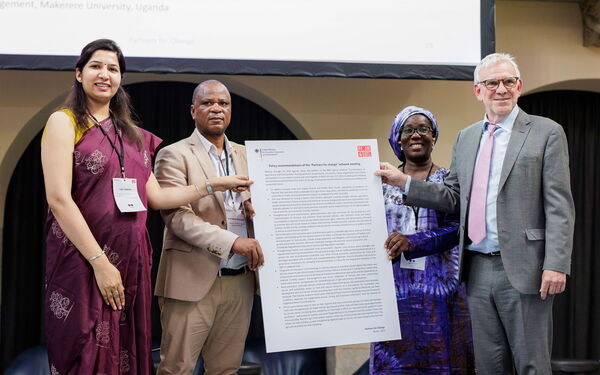
Beim Netzwerktreffen „Partners for change – Transformation to a food secure, resilient and sustainable future“ kamen knapp 250 Teilnehmende aus über 30 Ländern zusammen, um gemeinsam Erfahrungen und Ideen zur Transformation der Agrar- und Ernährungssysteme auszutauschen zu sammeln. Das Endprodukt, eine gemeinsame Selbstverpflichtung zur Transformation der Agrar- und Ernährungssysteme, ist nun online nachzulesen.

Das diesjährige Netzwerktreffen der Partners for Change (P4C), einem Netzwerk des Bundesministeriums für wirtschaftliche Zusammenarbeit und Entwicklung (BMZ), fand am 26. und 27. Juni 2024 in Nairobi, Kenia, statt. Kah Walla, Moderatorin der Veranstaltung und Geschäftsführerin von Strategies!, gibt einen Einblick in die wichtigsten Ergebnisse und Erkenntnisse.
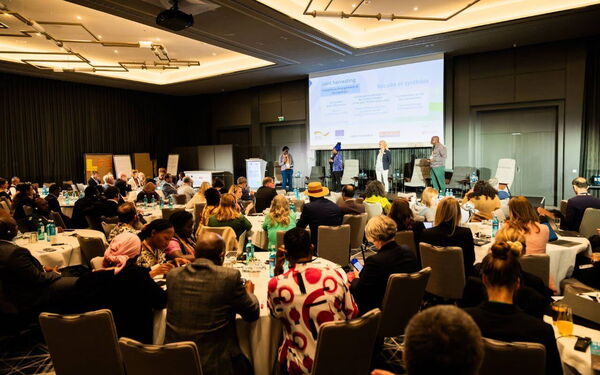
Die Konferenz „Partners for Change – SOILutions for a Food Secure, Resilient, and Sustainable Future“ in Berlin war mehr als eine Abschlussfeier: Sie war ein Aufruf zum Handeln und ein Moment der Annäherung. Partner aus mehr als 25 Länder kamen zusammen, um einen neuen Kurs für die globale Bodengesundheit einzuschlagen.
Haben Sie Fragen zum P4C-Netzwerk
oder möchten Sie das P4C-Sekretariat kontaktieren?
Schreiben Sie uns unter p4c.secretariat@giz.de.