


Strong Roots: The Women Shaping the Future of Coffee in Peru
A Contribution by Jil Schütze
Learn how women coffee producers in Peru’s Selva Central are driving sustainable models that safeguard the Amazon and strengthen responsible value chains, together with international cooperation.

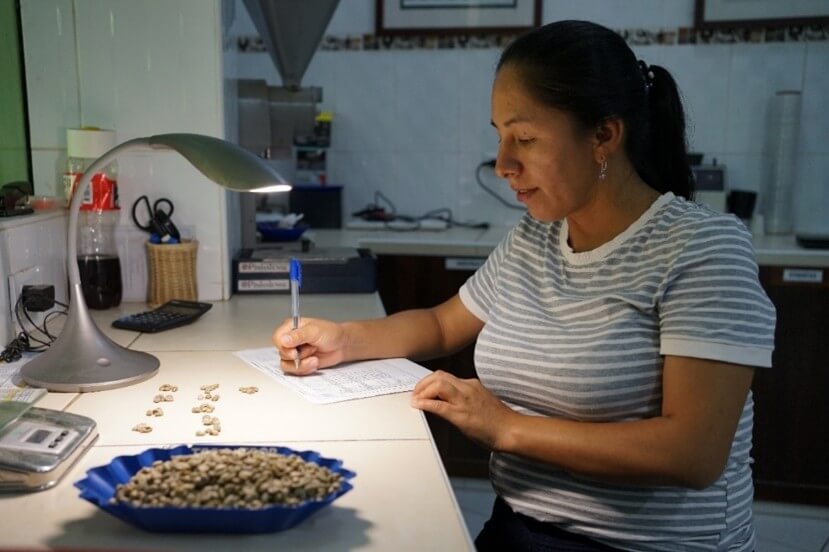
In Villa Rica, at the heart of Peru’s Selva Central, the aroma of freshly roasted coffee fills the cupping room of CEMCAVIR – the Cooperativa Ecológica de Mujeres Cafetaleras Villa Rica. At altitudes between 1,500 and 1,900 meters, women producers cultivate ecological, high-quality coffee that has earned growing recognition in national and international markets. Inside the cooperative, María, a trained cupper, carefully evaluates samples - checking color, aroma, and flavor before coffee is sent to buyers in Peru and Europe.
"Thanks to my dad, I am a cupper," she says. "Since I was little, I watched him harvest selected coffee... He taught me to love this work."
For María and her colleagues, coffee represents both cultural heritage and economic independence. Through their cooperative, they manage every stage of the production, from cultivation to quality control, ensuring that excellence and sustainability remain in women’s hands. In Peru, there are 744 people certified by the Coffee Quality Institute in coffee cupping and post-harvest processes, of whom almost 40% are women.
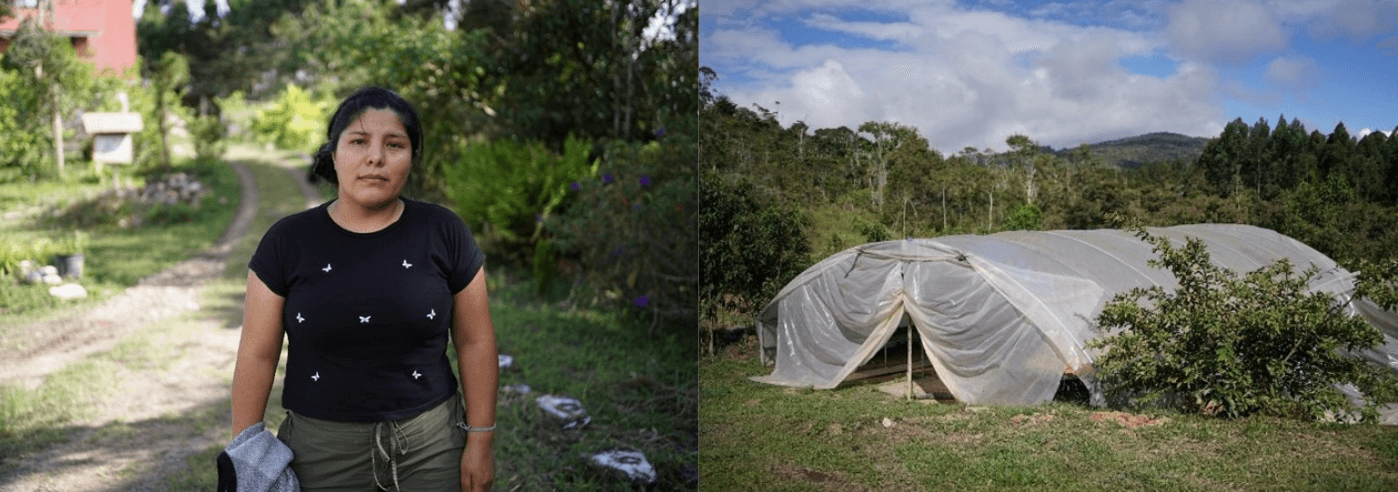
"Behind CEMCAVIR are women who work and strive every day... we carry the household on our shoulders," adds Elena, administrator. "Behind the logo, there is a lot of history." Today, CEMCAVIR brings together around 70 women producers who cultivate coffee on 150 hectares using agroecological practices that contribute to conserving Amazon forests.
Facing New Challenges
Peru’s Selva Central – including areas like Villa Rica, Chanchamayo, and Pichanaki — is one of the country’s most productive coffee-growing regions. At the same time, it is an environmentally important area due to its biodiversity and its role in conserving tropical forests. Here, cooperatives are adapting to the EU Deforestation Regulation (EUDR), which requires full traceability and proof that coffee comes from deforestation-free land. For many cooperatives, this is a major shift. It requires training, staff, technology, and time, and it can be especially demanding when traceability must be ensured plot by plot across many small farms. If origin cannot be demonstrated, access to European buyers can be at risk. At the same time, meeting the EUDR requirements helps to strengthen professionalism and trust with customers in Europe.
Through SAFE, cooperatives such as CEMCAVIR and ACPC Pichanaki are gaining access to:
• digital tools for geographic traceability
• training for deforestation-free production
• data-informed risk checks
• stronger organizational and commercial capacity
In Pichanaki (Junín), Elisa, a producer with the ACPC Pichanaki cooperative, faces these changes firsthand.
"Complying with the standard requires a lot of sacrifice, ‘ she says. ’There is a lot of work behind it. But we also share part of that responsibility."
Founded in 2000, ACPC Pichanaki brings together nearly 400 smallholder producers, almost 30% of whom are women. The cooperative exports mainly to Europe and is strengthening its capacity to demonstrate deforestation-free production. This includes mapping plots, improving data systems, and building the skills needed to keep evidence and documentation consistent from the farm to the buyer.
A Shared Responsibility
Across Peru’s central coffee regions, women are often leading change as farmers, cuppers, technicians, and cooperative leaders. Their work strengthens environmental protection, ensures business continuity, and adapts the supply chain to EUDR compliance. "We're complying with the standards they require," Elisa adds. "I wish people knew everything a producer goes through. We do it because we want to keep growing." For the women of CEMCAVIR, ACPC Pichanaki, and other cooperatives across Peru, sustainability is not only about meeting international standards. It’s about fairness, recognition, and equal participation in global markets. Their message is simple:
The future of coffee depends on shared responsibility between producers, buyers, and consumers. And in that future, women are leading the way.
Context note: German cooperation, implemented by GIZ, has been working in Peru for more than 30 years to support sustainability, competitiveness, and climate adaptation in the coffee sector. Its most recent contribution is the SAFE project, which aims to transform coffee and cocoa value chains in the Selva Central and support compliance with European regulations against deforestation.