All contributions

Illustration highlighting six innovations combating climate change with images of plants, buildings, and renewable energy symbols.

City, Country, Sea: 6 Innovations in the Fight Against Climate Change

A listicle for climate-neutral agriculture

Vertically growing plants, magnetic cotton. Hairy leftovers fertilizing fields, tractors running on algae? These six innovations could lead agriculture’s next Green Revolution!

Read more

Hands arrange multiple circular molds filled with batter, creating a pattern of preparation and culinary artistry.

A Climate of Hunger: How the Climate Crisis Fuels the Hunger

A photo reportage by the Zeitenspiegel agency

Every one degree Celsius rise in temperature increases the risk of conflict by two to ten percent. The climate crisis is a humanitarian crisis, as the photos by Christoph Püschner and Frank Schultze illustrate.

Read more

A group of protesters in Stockholm holds climate change signs during a Fridays for Future event in a sunny park.

‘None of the Three Traffic Light Coalition Parties is Close to the Paris Agreement’

An Interview with Leonie Bremer (FFF)

At the climate conference in Glasgow, activists from various groups protested again – Leonie Bremer from ‘Fridays for Future’ was there too. How can climate protection and development cooperation work hand in hand?

Read more

A bunch of yellow bananas is displayed with a purple banner promoting fair trade and climate awareness.

Fair Trade and Climate Justice: Everything is Conntected

A Contribution of the 'Initiative for Sustainable Agricultural Supply Chains' (INA)

Fair Trade organisations and the Initiative for Sustainable Agricultural Supply Chains (INA) have launched the #ichwillfair campaign during COP26 to highlight the link between global supply chains and climate change.

Read more

Aerial view of a vibrant green field with parallel tractor lines and a distinct curved pattern.

How Can We Feed The World in Times of Climate Change?

A Contribution by Jan Grossarth

Genetically modified bacteria become edible proteins, cows graze on pasture, and no waste is produced in an industrial circular economy. Journalist Jan Grossarth sees a silver lining for the future of world nutrition

Read more

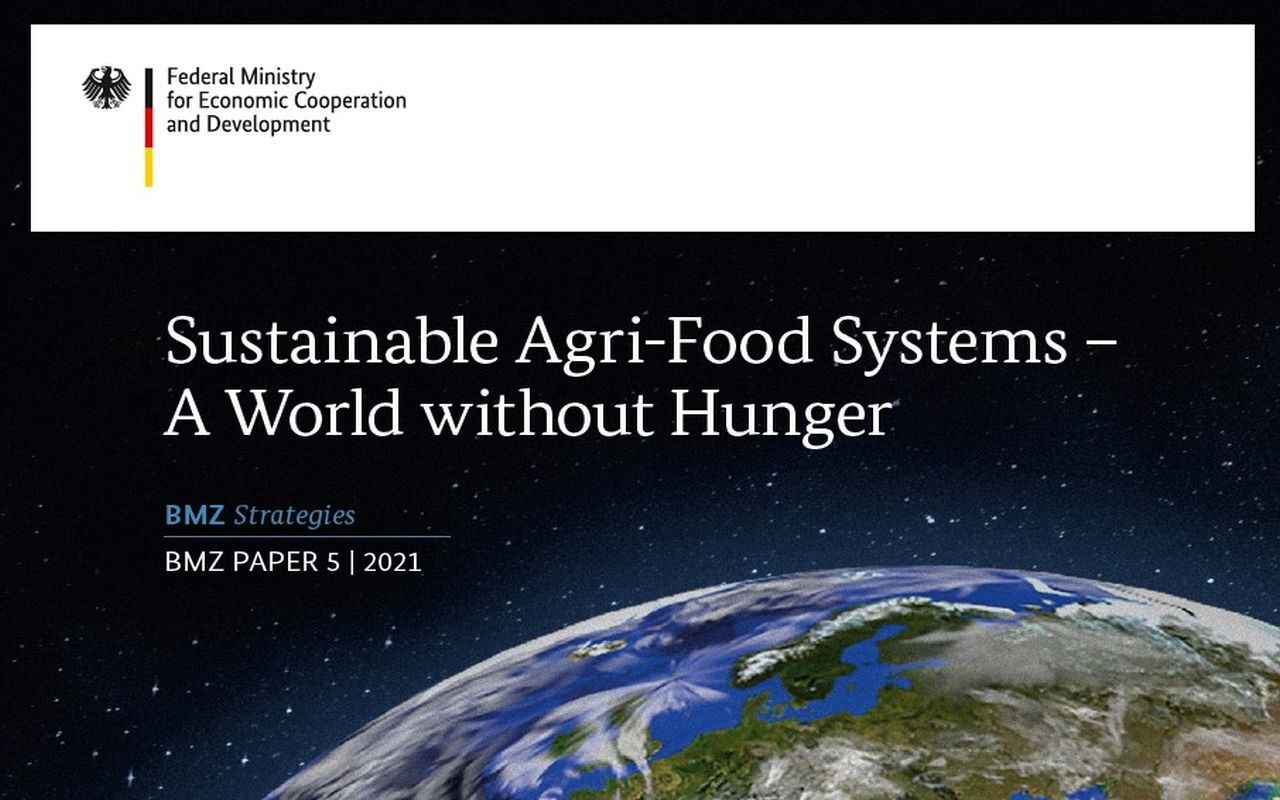
The image shows a BMZ publication cover on sustainable agri-food systems with Earth and a focus on ending hunger.

Nine Harvests Left until 2030: How Will the BMZ Organise Itself in the Future?

An Interview with Dirk Schattschneider (BMZ)

"One World no Hunger" (SEWOH) becomes one of the five core themes of the BMZ. Dirk Schattschneider, SEWOH Commissioner about previous approaches, future areas of action, and the political will to end hunger.

Read more

What is wrong with our nutrition in Germany, Mr. Plagge ?

An interview with Jan Plagge (Bioland)

Vitamin-poor nutrition must become more expensive, in-vitro meat is not a panacea, and agricultural systems should be more decentralised. Bioland President Jan Plagge in an interview about the challenge of (future) world nutrition.

Read more

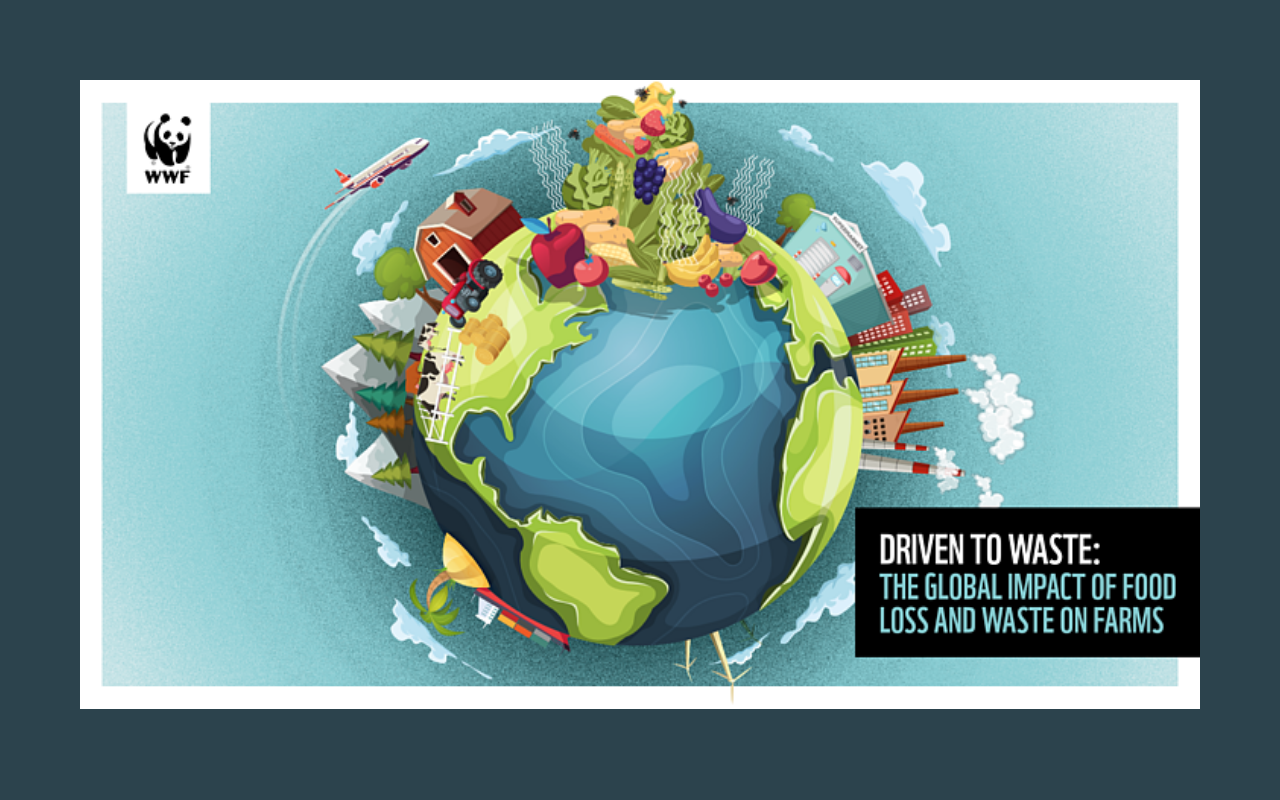
A globe surrounded by farms and food illustrates the global impact of food loss and waste, with a "Driven to Waste" headline.

How much do we actually waste, Mr. McFeely?

An interview with Peter McFeely (WWF)

The WWF has published a sensational study on food waste. The focus: farm-stage food waste. Peter McFeely, Global head of communications and strategic planning at WWF, explains what needs to be done.

Read more

Women joyfully sell tomatoes and vegetables at a vibrant market stall, highlighted by a striking red and blue overlay.

How can the private sector prevent food loss and waste?

An interview with David Brand (GIZ)

From a circular food system in Rwanda to functioning cooled transports in Kenya: The lab of tomorrow addresses development challenges such as preventing food loss and waste

Read more

A person harvests plants next to a branded sack in a field, emphasizing sustainable farming practices.

From lost products to safe food - Innovations from Zambia

A contribution by GIZ

In Zambia, innovative approaches are used to address the problem of post-harvest losses in the groundnut value chain. GIZ's Rapid Loss Appraisal Tool (RLAT) can help to develop more such approaches.

Read more

A person uses a tablet in a greenhouse, symbolizing innovation with a lightbulb icon featuring a tree.

Innovation Challenge 2021

Competition for ideas by BMZ

Out of 40 consortia that applied from all over the world, 14 were invited to present their innovative concept on agroecological approaches in the form of an online pitch and to face the questions of an international jury of experts. Find out which six semi-finalists were selected by the jury and what happens next in this article.

Read more

A speaker addresses the audience at the United Nations Food Systems Summit 2021 Pre-Summit, standing at a podium.

UNFSS Pre-Summit: What did it achieve?

Interview with Martina Fleckenstein (WWF), Michael Kühn (WHH) and Christel Weller-Molongua (GIZ)

After the summit means pre-summit: It was the first time that the United Nations held a summit on food systems. Martina Fleckenstein, Michael Kühn and Christel Weller-Molongua reviewed the situation in this joint interview.

Read more

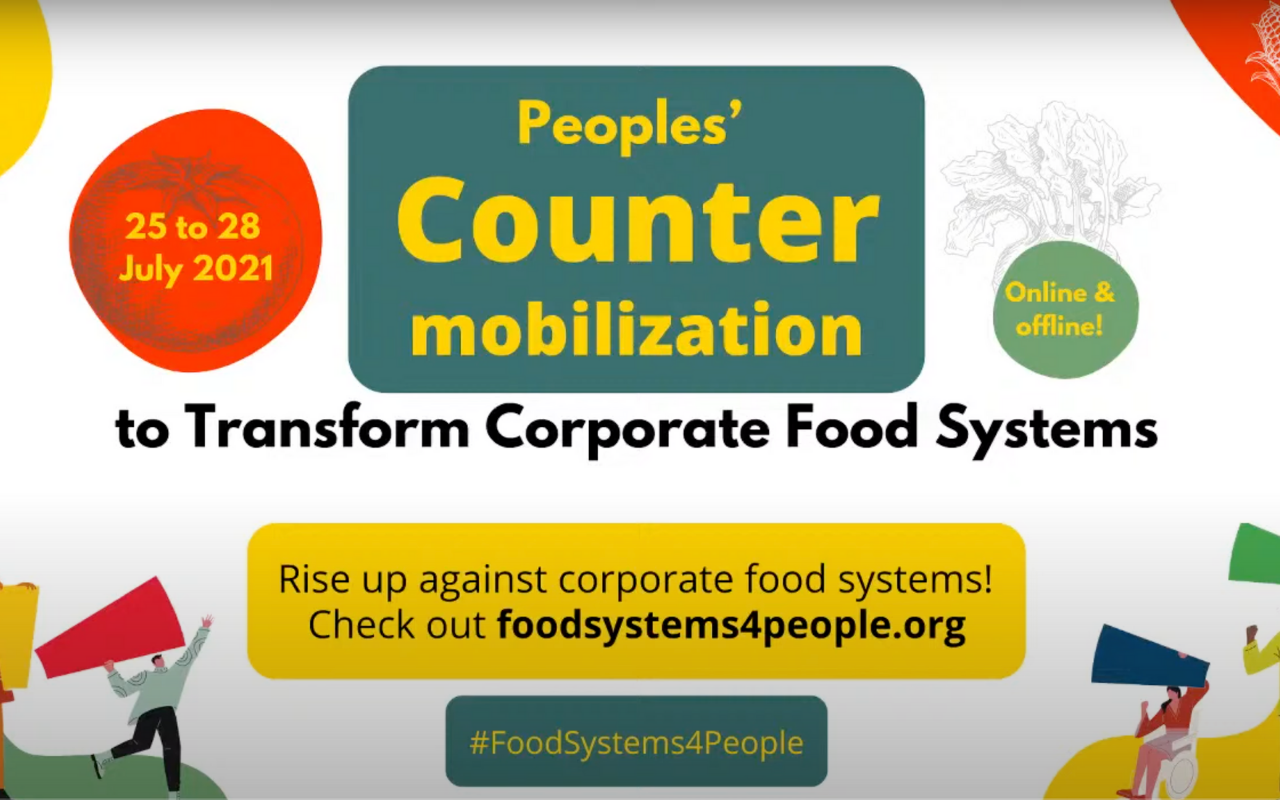
The image promotes a counter-mobilization event to transform corporate food systems, scheduled for July 25-28, 2021.

Mr. Marí, what happened at the alternative summit?

An Interview with Francisco Marí (Brot für die Welt)

Brot für die Welt (Bread for the World) did not attend the UNFSS pre-summit. Instead, the organisation took part in a counter-summit that took place at the same time. A conversation with Francisco Marí about the reasons, the process - and an outlook for the future

Read more

A man in a cap and blazer speaks at a podium during a presentation on small business competition winners.

How do you campaign “Food Systems”?

Interview with Paul Newnham, Director of the SDG 2 Advocacy Hub.

The UN Food Systems pre-Summit in Rome dealt with transforming the ways of our nutrition. How do you bring that to a broad public? Questions to Paul Newnham, the Director of the Sustainable Development Goal (SDG) 2 Advocacy Hub.

Read more

Rows of young rice plants grow in a well-organized pattern, showcasing the SRI method in a lush green field.

The Rice Sector in West Africa: A Political Challenge

New insights on trade and value addition in the rice sector in West Africa

Low import tariffs, smuggling activities, unpredictable tax exemptions and weak enforcement of food safety standards: The potential of local rice value chains is undermined in West African countries.

Read more

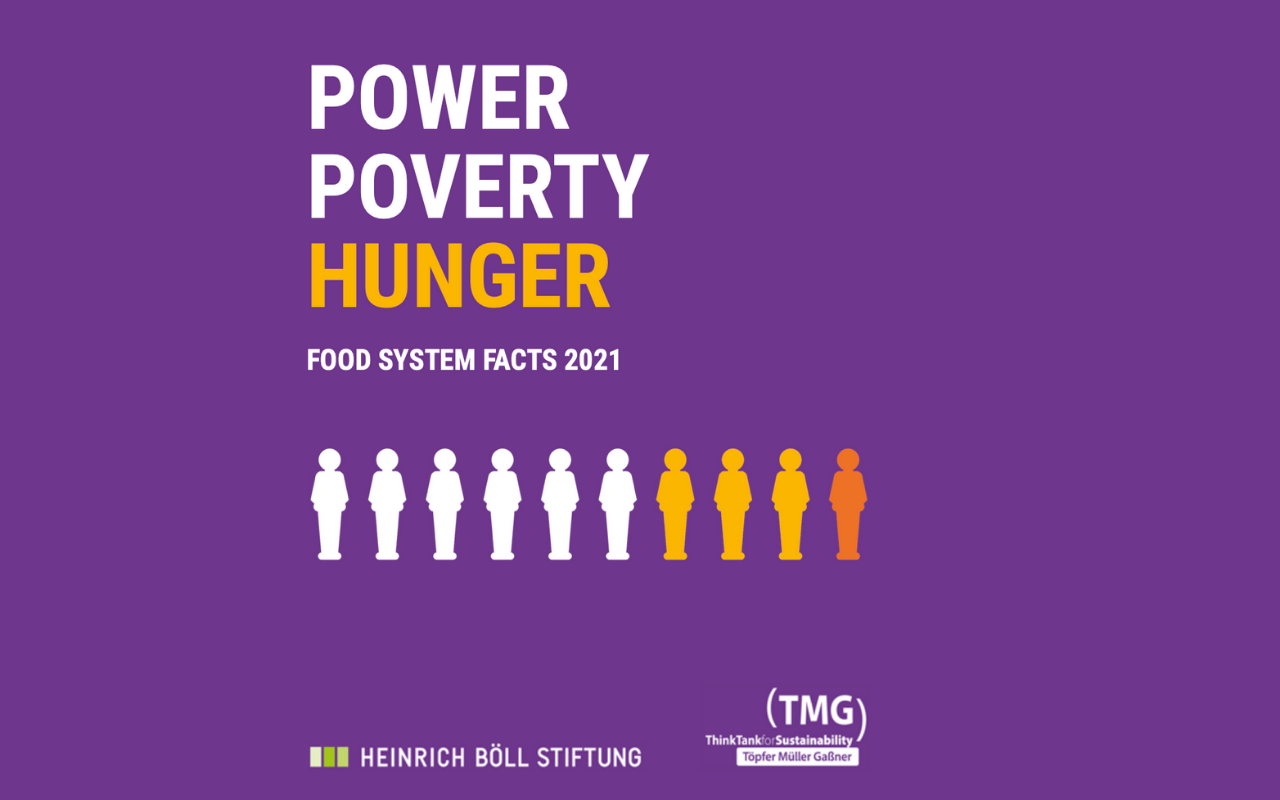
A purple infographic highlights power, poverty, and hunger with figures and text from a 2021 food system report.

Poverty Power Hunger

Publication of the Heinrich Böll Foundation and TMG ThinkTank for Sustainability.

The global community is failing in the fight against hunger and malnutrition. This is shown in the factsheet "Poverty Makes Hunger" published by the Heinrich Böll Foundation and the TMG ThinkTank for Sustainability. Read the full report here.

Read more

A group of women in colorful dresses proudly display harvested crops in a sunlit field, marking a successful start to their season.

A World without Hunger Is Possible

With the special initiative "One World Without Hunger" (SEWOH), the German government has set an example. Dirk Schattschneider, Commissioner for the Special Initiative at the Federal Ministry for Economic Cooperation and Development (BMZ) on achievements to date, lessons learned and the future of SEWOH.

With its special initiative for “ONE WORLD – no Hunger”, the German federal government issued a clear statement of intention. Soon commonly known as “SEWOH”, the initiative provided the opportunity to react flexibly within budgeting regulations and make an extensive contribution to fulfilling SDG 2. The political calendar provided various occasions to engage the international community through Germany’s G7 and G20 presidencies. The fact that the number of people suffering from hunger has increased since then does not undermine SEWOH’s efforts. Instead, it underpins the call to further intensify efforts on the national, European and global levels. The calendar still offers good vantage points. Great expectations rest on the United Nations Food Systems Summit, and in 2022 Germany will again take over the G7 presidency.

Read more

A man in traditional attire uses a tablet while sitting in a lush green field, with another person working in the background.

Accelerating Development in Rural Areas through Innovation

In order to make rural areas fit for the future and to sustainably improve the nutrition of many people, innovative approaches and solutions are needed. That is why SEWOH has created Green Innovation Centers, thereby providing important impetus for progress and innovation.

Read more

Two girls joyfully play soccer on a dusty field, capturing the spirit of playful perspectives.

Creating Prospects through Income, Employment and Participation

Perspectives must be created and existing potentials in the agricultural and food sector must be intensified so that people have the courage to pursue their future in rural areas. In its projects, the SEWOH promotes a comprehensive approach that focuses in particular on the needs of young people.

Read more

A group of five people studies a map and equipment in a dry, open field under a clear sky.

Securing Land Rights

Unresolved land ownership and rights of utilisation contribute to hunger and poverty and lead to conflicts over land, especially in Africa. The SEWOH therefore promotes various approaches to eliminate conflicts over land and to ensure responsible and sustainable agricultural land use.

Read more

Women joyfully sell vibrant tomatoes and peppers at a bustling outdoor market.

Securing a Balanced and Healthy Diet for Millions

810 million people suffer from hunger. Many more people are affected by "hidden" hunger. With the goal of "Zero Hunger" in mind, the SEWOH has implemented numerous measures and training programs to contribute to an improved nutrition situation.

Read more