Newsletter
Don't miss a thing!
We regularly provide you with the most important news, articles, topics, projects and ideas for One World – No Hunger.
Newsletter
Don't miss a thing!
We regularly provide you with the most important news, articles, topics, projects and ideas for One World – No Hunger.
Please also refer to our data protection declaration.
An Interview by Jacob Häberli
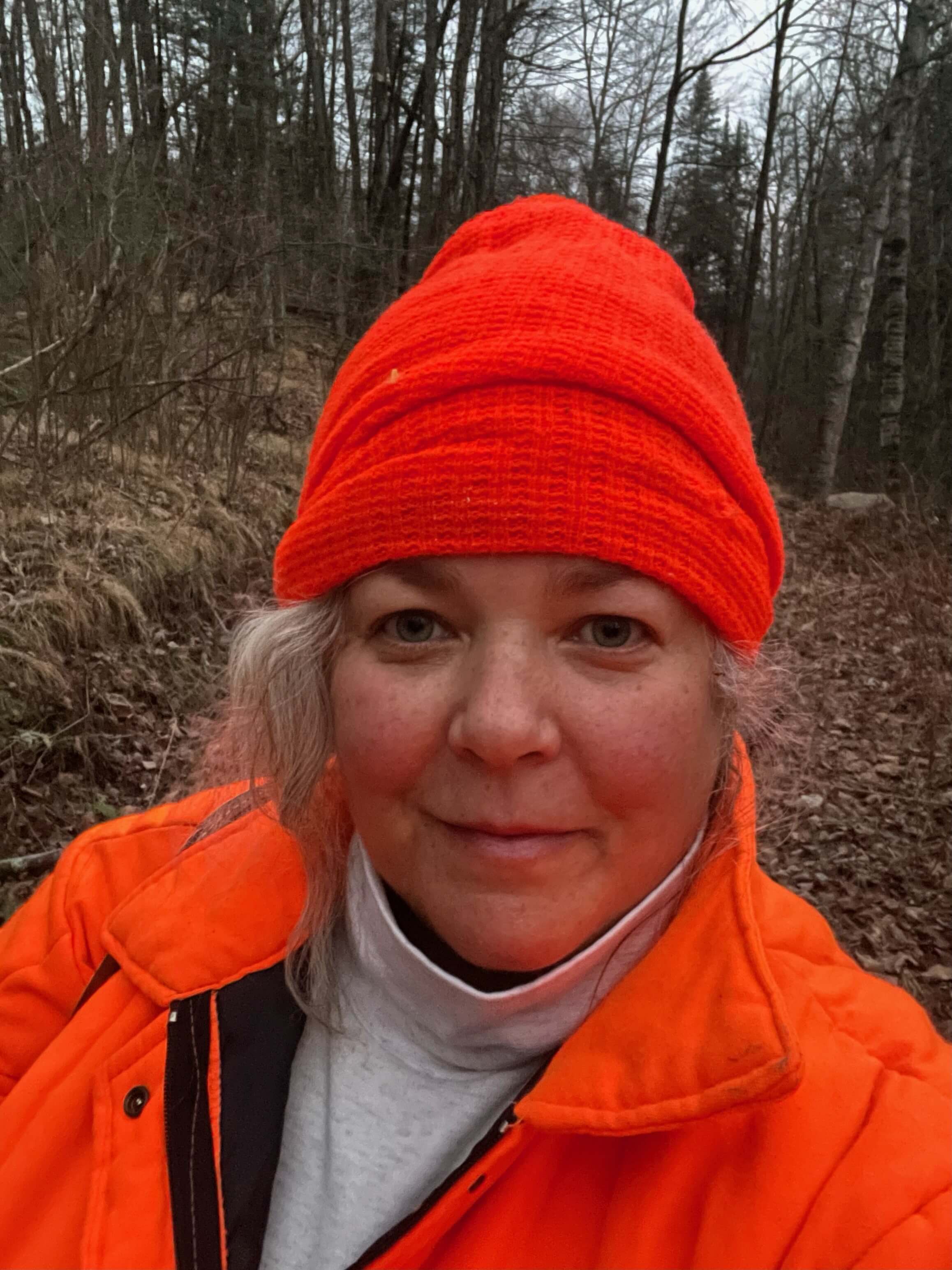
Stacia Nordin is a registered dietitian with nearly three decades of experience working on food and nutrition security across diverse global contexts, including long-term engagement in Malawi. During the GIZ closing conference “A Decade of Impact: Advancing Food and Nutrition Security, Enhanced Resilience," she spoke about diversification, coordination across food systems, and the role of different actors – from governments to the private sector – in building more resilient futures. Drawing on her work at the community level as well as in international policy and professional networks, she reflects on practical pathways for change and on what sustains hope amid persistent crises.

Could you briefly introduce yourself and describe what you are currently working on?
I’m Stacia Nordin, a registered dietitian. I’ve spent most of my professional life abroad, living in Malawi for nearly thirty years after working previously in Jamaica.
Here in Malawi my family and I run a community-based initiative called “Never Ending Food,” which promotes lasting food and nutrition security as part of a broader vision of sustainable living. We work with households and communities to translate the many messages about livelihoods and sustainability into practical, locally grounded action.
I also consult on an EU “Farm to Fork” project across four Southern African countries, focusing on food-systems transformation through a One Health approach. It’s essentially another way of thinking about sustainability, considering the interdependence of soil, plants, animals, and humans.
A third strand of my work involves collaborating with dietitians in about sixty countries through the International Confederation of Dietetic Associations, supporting them as they integrate sustainability into their own contexts.
From your experience, what is one practical step that can quickly improve nutrition in rural communities?
Diversification is crucial! Many diets today are extremely narrow, despite the fact that almost every country I work with has some kind of food-group model to guide people. If individuals really familiarize themselves with those guides and then look within each group for a wider range of options – far beyond what appears on supermarket shelves – they can make significant progress. That often means asking grandparents or others with broader food knowledge to reintroduce varieties that have slipped out of everyday use. Working toward diversity is an important first step, and people can access it in many ways.
I think we touched on this when we met two days ago: How can government support farmers more effectively so they can contribute to a more resilient food system?
Yeah, there’s so much that can be done, but it can be confusing because there are mixed messages. For me, government could really help with coordination, so people are speaking in ways that add clarity instead of confusion. One person comes in and says one thing, another says something else – very exact, “do this,” “do that” – rather than working with the community and helping them make the decisions they need to make.
We heard this morning that we make about 20,000 decisions a day, and it doesn’t matter if you’re a president or in a village, you’re still making a lot. If government could help partners actually partner with communities, it would make such a difference.
Take diversification: one group might say seeds from the past are not good, another says they’re good. So the seed system becomes confusing. Sometimes governments even tell people they can’t use their own seeds and must buy from the store. Kenya just overturned that recently. Thus, there’s confusion that could become clarity through better coordination. I’d really love to see government do more of that to support communities.
Let me shift to another stakeholder group. Throughout the conference, the private sector has been described as an essential partner in food and agricultural systems, especially in fortification and market-driven nutrition. From your perspective, where do you see genuine opportunities, and where do you see risks for existing livelihoods, food environments, and labor markets?
Even for me, when I’m at home in Malawi, I probably buy a quarter to half of my food. I’m in the market too. I grow quite a lot and process my own, but still depend on what’s available. Now that I’m in the US and UK, I’m relying on the private sector completely, and it’s hard to find what I need for an active, healthy life.
I think the opportunities lie in getting to good nutrition before your partners do. You’ll have nutritionists and health providers all over the world promoting your company because you’re offering something more nutritious than others. So come to the table, talk with us, understand what’s needed to provide food that supports long, healthy lives – and also supports an environment that can live longer too.
We need to entice more businesses and show that it’s possible. There are already many smaller and some medium-sized companies doing a good job. One of the things we looked at today was “positive deviance,” a term I’ve loved for twenty years: look for people doing good things, showcase them, celebrate them. We often focus on the negative, but we’ve seen really good food displayed here. If we highlight those names, others will ask why, and then maybe join the table.
We want everyone to join, to feel welcome. It goes back to what I said earlier: it takes all of us. We need to be friendlier, more understanding, less critical. People are taking steps, let’s move toward a common goal.
And I want businesses to make money. I’m not against that. I want them to survive. Just like soil will die if we don’t feed it, a company will die if we don’t feed it. We are the ones who fund them.
Looking ahead, what kinds of changes or directions do you think could shape food systems over the next decade?
I was really glad to hear that, at least in Malawi, the older food-nutrition programme is shifting toward a fuller food-systems approach over the next decade. I want to see much more of that. It’s fine to focus on one area, but place that focus within the system it belongs to; don’t stay narrow.
As a dietitian, I want people to eat better, but that won’t happen without water – and I’m not the one who will provide it. I need to talk to those who can, so they understand what’s needed for people to cook, clean, and grow food. If I try to teach nutrition and also supply water and animals, I won’t do any of it well. It takes all of us.
So keep your focus but situate it within the wider system. We need everything to happen, and none of us can do it alone.
It would be a fitting closing remark, but I still have one question. When we talk about food systems and agriculture, we are almost always talking about crisis – political, ecological, economic, social – on a global scale. For me, it can feel overwhelming, even depressing at times. Looking back on your thirty years of meeting people and working in different places, what sustains your sense of hope for lasting change?
Everywhere I go, I find a bright ray of hope – that’s what keeps me going. One place I stay in Europe has a huge drug and alcohol problem, which really gets in the way of people thriving. It seems unrelated to nutrition, yet it’s deeply connected: if you spend your money on alcohol, you’re not buying nutritious food for your family. There’s always more beneath the surface.
Getting to know people well enough to understand their struggles – and then finding someone who’s made it through, or counselling, or whatever support exists – always reveals something good, no matter how depressing a place might feel. Sometimes I get pulled into the problems, and then someone I meet gives me that breath of fresh air. It’s there, but we have to talk to each other to find it.
Another big thing for me is taking breaks. I’m a go-go-go person, but stepping back matters. Every morning here I’ve been walking an hour to my hotel and an hour back, and that time is mine to think. It keeps me balanced; otherwise I’d burn out with all the problems we face. You have to take care of yourself so you can help others.
It’s not easy. I even feel guilty sometimes. My colleagues said this morning, “You already went for a walk? I’m so jealous.” And yes, I feel a bit guilty taking that hour, but I need it.
And maybe that’s the real closing remark: you sometimes have to step outside to keep the system around you running. Thank you, Stacia.

Read more "We have high expectations of the Kampala Declaration"

Read more Visioning for Resilient Food Systems Transformation

Read more How the self-help approach empowers smallholder women

Read more Global responsibility: Tackling hunger is the only way forward
Read more ‘Invite yourself’ – Farmers organisations as key stakeholders of food systems

Read more Governor's Day with Farmers – For more discussion with local actors

Read more Farmers' organizations want to be involved in designing agricultural policy

Read more Strengthening the market linkages of smallholders in the face of global supply shocks