Newsletter
Don't miss a thing!
We regularly provide you with the most important news, articles, topics, projects and ideas for One World – No Hunger.
Newsletter
Don't miss a thing!
We regularly provide you with the most important news, articles, topics, projects and ideas for One World – No Hunger.
Please also refer to our data protection declaration.
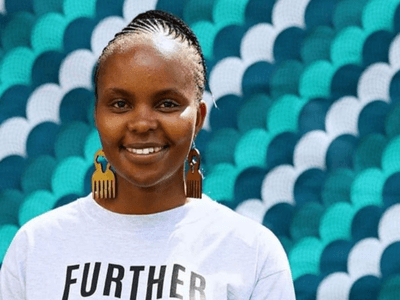
Climate change, shrinking grazing lands and a lack of investment are putting increasing pressure on pastoralist communities in Kenya and worldwide. Jacinta Sajila Pamita, herself Maasai and working for IMPACT Kenya, calls for greater participation of Indigenous communities, more investment in locally led solutions and greater recognition of traditional knowledge. As she says, sustainable development begins when the people on the ground have a say in shaping it.

In the past, managers and politicians used to sit down together and plan the world and the world's future. Why do we need Indigenous people and women to be involved in this?
Jacinta Sajila Pamita: Indigenous peoples are the guardians of biodiversity worldwide. Let us take the Amazon rainforest in Brazil, for example. It is Indigenous peoples who have protected and conserved it to this day. In Kenya, too, a dryland forest like the Mukogodo Forest has been conserved by the Yaaku Indigenous community for generations, long before conservation became a formal sector. I see this same dynamic in my own work. When women in Mukogodo East and West wards in Laikipia are given a meaningful role in natural resource governance, rather than simply being consulted, and are able to participate in grazing committees or resource-use planning, the outcomes are more sustainable. This is because the people who manage the risks are also the ones setting the rules. That is the whole logic behind community-based natural resource governance: the people who are closest to the land are often best placed to make long-term decisions about it, rather than those planning from outside. So when decisions affect Indigenous peoples, their biodiversity and their climate, Indigenous communities, including women and youth, need to be at the centre of those decisions.
Are women and Indigenous people taken as seriously as they ought to be in international forums?
At the various international platforms and conferences I have attended, I have seen that Indigenous peoples are at least receiving some recognition and are being taken more seriously. There are now several platforms where they can share their work and experiences. For example, the United Nations Framework Convention on Climate Change (UNFCCC) includes the Local Communities and Indigenous Peoples Platform (LCIPP). Nevertheless, we are calling for greater recognition, especially of traditional knowledge. Communities have their own solutions, and there is a need to invest more in community-led solutions.
And what could they contribute?
If a locally led initiative is more likely to be sustainable than something imposed from outside, then it should be given priority. The more an initiative is developed from within the community, the more committed people are to putting it into practice.
Sustainability comes with ownership.
You work a lot with rangelands. Is the importance of rangelands underestimated?
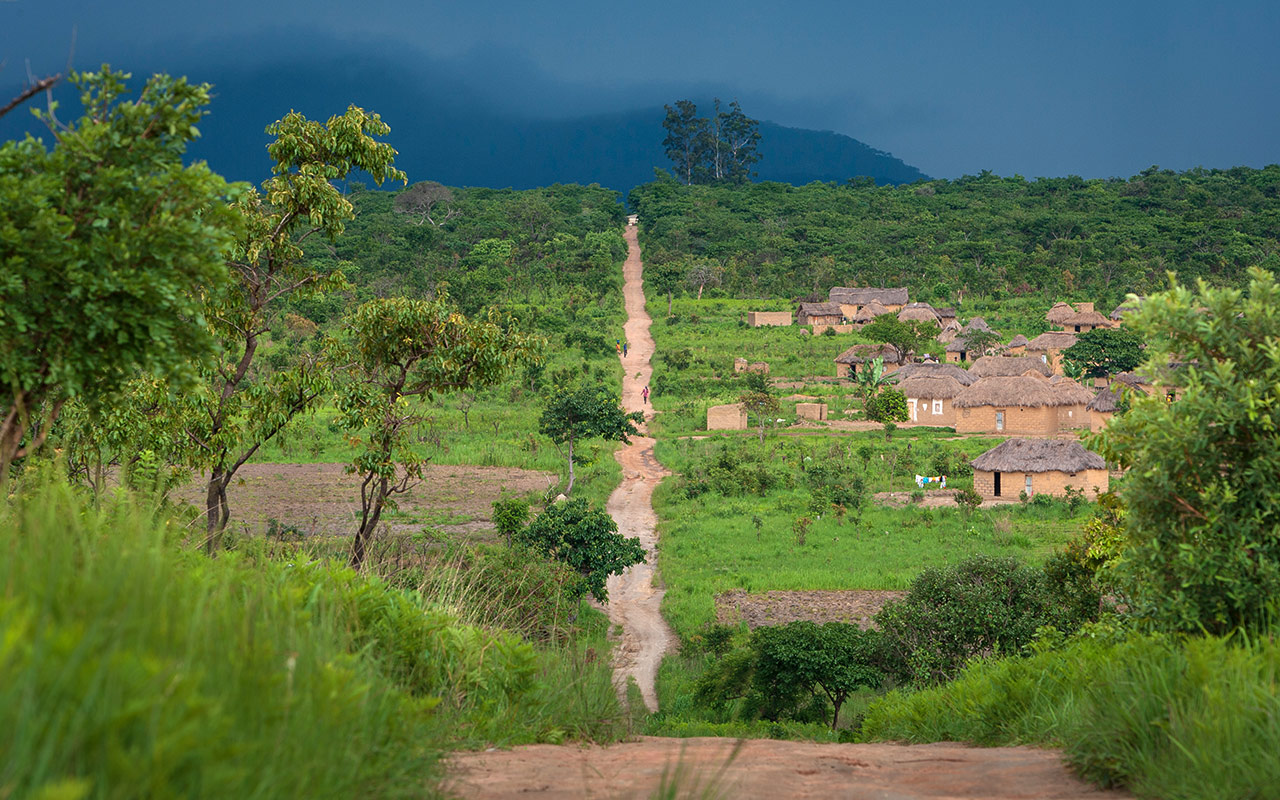
Rangelands support the entire food system that pastoralist communities depend on, yet investment in them does not reflect their importance. In the areas where I work, including Mukogodo East and West, Oldonyiro, Wamba West and Waso, among other wards in northern Kenya, you see highly degraded land, invasive plants and bare ground because the systems needed for good governance and restoration have not received enough support. Regreening is not just an ecological intervention; it is also a livelihoods intervention. When rangeland productivity improves, access to water improves, herd mobility becomes easier, and household incomes become more stable.
What should these investments look like?
Investment needs to combine ecological restoration with good governance. This means supporting communities in developing and enforcing their own grazing plans, funding invasive species control, for example for Opuntia and Prosopis, and reseeding degraded areas with native grasses. It also means securing water access points that are managed by communities rather than controlled externally.
Alongside this, there needs to be capacity building and training. This could include training rangeland restoration champions and strengthening community land management committees, so that the system is locally managed and can continue after a project ends.
And why have rangelands been ignored and neglected for so long?
This goes back to colonial times, when the northern part of Kenya became increasingly marginalized. Since then, the region has been left behind in terms of development. There is still very little development in the north, for example when it comes to schools. Pastoralist communities often prefer to set up mobile schools that can adapt to their way of life. Access to hospitals is also difficult because of the long distances. Even providing mobile veterinary services can be challenging. In the past, these areas were neglected because they were seen as idle and unproductive land.
You already mentioned that there are local solutions to these challenges. What are some of these local solutions?
Pastoralist communities have deep ecological knowledge based on systems of community monitoring. For example, they read the stars, track bird migrations and observe when acacia trees begin to flower. These are all indicators of seasonal changes and help communities decide when and where they need to move across different landscapes. When this knowledge is incorporated into formal structures, such as community-developed grazing plans or resource-sharing agreements between neighboring communities or wards, it becomes even more powerful. It is no longer just a shared practice, but a framework that can be enforced and that is recognized and respected by all parties.
How did it come about that you speak out on behalf of these people?
I am a pastoralist myself. I am Maasai from Laikipia. The issues I speak about are based on the lived experiences of pastoralist communities. I am telling their stories to the world to show that these are real people on the ground who are doing the actual work. They just need more people to believe in them and invest in them. My day-to-day work focuses on creating spaces where communities, especially women, can articulate their own priorities rather than having those priorities set for them.
How can different stakeholders work together better in the future?
One thing I took away from this meeting is that we need much more engagement between different stakeholders and much more collaboration if we want to achieve meaningful development. No one person can do everything alone. We need each other. We need more partnerships to support and strengthen each other's work. Data is also very important. When you have reliable data from the ground, it can help unlock financing from different organizations. Data is something I work with directly. Without data on the condition of rangelands, herd movements or people's livelihoods, it is very difficult to make the case to donors or the government for continued investment.
Good data is often the missing link between the knowledge of communities on the ground and decisions about financing.
Would you say that development plans are often incomplete because not all stakeholders are involved?
I would say it is more about coordination between the different stakeholders involved. Everyone has their own area of expertise, and we need to make better use of that. We need to think more in terms of partnerships and consortiums.
You said that you have experienced what pastoralist communities go through yourself. What is putting pastoralists' lives at risk?
There was not much drought last year. But in the previous years, between 2021 and 2023, we experienced very severe and extreme droughts. There were huge losses of livestock. Many animals died, and people had to leave their villages. They moved to the mountains to find feed for their livestock. Many cows died in the mountains as well. Therefore, we need more investment in measures that strengthen the resilience of pastoralist communities. This adaptation is already happening. Some people are keeping more goats and camels today than they did in the past because these animals are better adapted to the changing conditions. At the same time, we need investment in feedlots and fodder production. There are also many invasive plants in the northern rangelands. Perhaps these could be used to produce animal feed and turn them into an additional resource.
Where do you see the future of pastoralist communities in ten years? Will things get worse because of climate change, or do you see steps being taken to adapt to these changes?
I believe that climate change is real. But to me, it is not the only factor preventing pastoralist systems from thriving. I would say that other factors, such as land rights, are more important. The amount of land available to pastoralists is shrinking every day. At the same time, new forms of land use are emerging in these areas, such as conservation areas and renewable energy farms being established in pastoralist regions. In ten years, pastoralism will still exist because it has always existed. Pastoralist communities have always found ways to adapt.

Read more Sustainable and Resilient Agri-Food Systems in Motion – We’re on it!

Read more Adapted financial services – a key to transformation

Read more "The Agri-Sector is a Space of Opportunity and Entrepreneurship"

Read more Partners for Change: From Shared Insights to Concrete Action


Read more Is the international community still on track in the fight against hunger?


Read more Video diaries in the days of Corona: Voices from the ground

Read more The hype about urban gardening: farmers or hobby gardeners?


Read more Mr. Marí, what happened at the alternative summit?

Read more How can the private sector prevent food loss and waste?

Read more From lost products to safe food - Innovations from Zambia

Read more A Climate of Hunger: How the Climate Crisis Fuels the Hunger

Read more ‘None of the Three Traffic Light Coalition Parties is Close to the Paris Agreement’

Read more Social justice and climate justice: Fair Vibe at the Youth Climate Conference

Read more Mozambique: How informal workers find jobs through an app

Read more Stepping into the future: How youth organisations are driving change

Read more "We have high expectations of the Kampala Declaration"

Read more How much private investment is the agricultural sector able to bear?

Read more Climate Adaptation Summit 2021: ‘We can do better’

Read more Mr. Samimi, what is environmental change doing to Africa?


Read more Resilient small-scale agriculture: A key in global crises

Read more One Health – What we are learning from the Corona crisis

Read more Success story allotment garden: Food supply and women's empowerment

Read more Planetary Health: Recommendations for a Post-Pandemic World

Read more This is how developing countries can adapt better to droughts

Read more What do you expect from this Pre Summit, Mr. Haddad?

Read more Mr. Campari, how do we create sustainable food systems?

Read more Biodiversity and agriculture – rivalry or a new friendship?

Read more Food System Transformation Starts and Ends with Diversity

Read more Sustainable Artisanal Fisheries and Aquaculture in Rural Areas
Read more Nine Harvests Left until 2030: How Will the BMZ Organise Itself in the Future?

Read more Engaging the Community to Solve the Bushmeat Crisis

Read more ‘Preserving and restoring fertile soils is a global responsibility.’

Read more Strengthening food markets across the rural-urban continuum

Read more The importance of water for sustainable rural development

Read more New legal initiatives towards deforestation-free supply chains as a game changer

Read more From the perennial to the catwalk – banana silk as an alternative

Read more How a Tea adds to Forest Conservation and Food Security