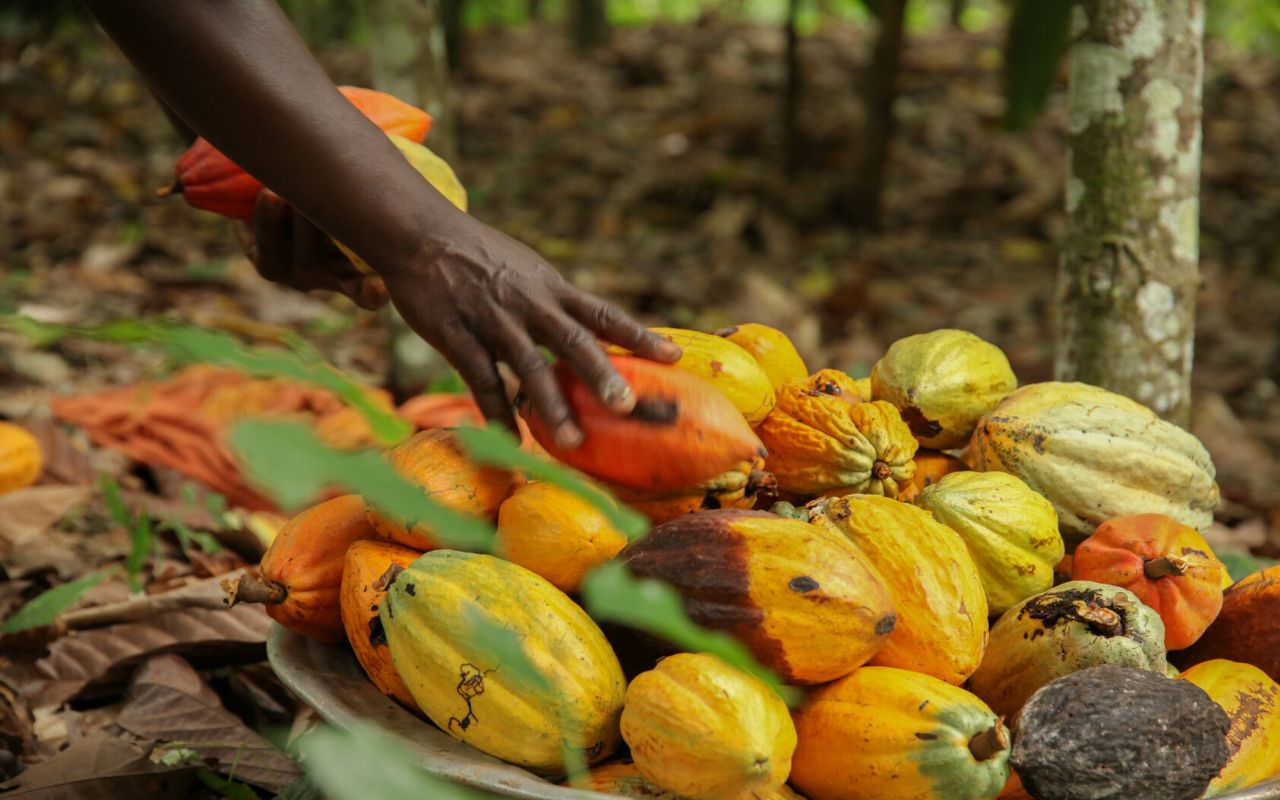
Food is often discussed in terms of production, trade, and efficiency. This perspective obscures the fact that food systems also involve questions of dignity, vulnerability, and power relations. From small-scale producers in Kenya to multinational coffee farms supplying European cafés, food systems quietly organize everyday life, determining whose labor is valued, whose needs are protected, and whose futures remain precarious. To speak of food is to speak not only of nourishment, but of political choices that shape inequality, resilience, and possibility.
Mary is an Advocacy Advisor at Welthungerhilfe in Kenya and brings over 15 years of experience working for social justice. She is an ambassador of the BMZ Partners for Change (P4C) network. From 2020 to 2024, she led a project at Rural Outreach Africa to strengthen local governance in Vihiga County, which resulted in the creation of the Right to Food Coalition Kenya, which she coordinated for several years.
Food has never been just about eating. Long before it became the subject of policy frameworks or global summits, it was already about dignity, connection, and possibility.
I grew up in low- to middle-income Nairobi, the daughter of parents who had migrated from rural central Kenya in search of better opportunities. My mother was an educator, my father a small business owner. Like many urban families, we bought most of our food from the market, yet the ties to the land never left us. Outside our house, we kept a small kitchen garden that fed not only our family, but our neighbors as well. Anyone in need could pick vegetables. Those who had nothing at all would quietly receive a packet of flour from my mother’s hands.
Food systems are not abstract. They are the quiet forces that decide who eats, who worries, who thrives, and who has the space to imagine a future.
Years later, when my parents retired and ran a small shop in our neighborhood, food once again became an index of crisis. They could tell when times were hard: more people asked for credit; some came with nothing. And once again, my parents would respond in the only way they knew, by giving beans and flour freely, preserving dignity where there was struggle.
These experiences shaped my understanding of food systems long before I encountered the term itself. Food systems are not abstract. They are the quiet forces that decide who eats, who worries, who thrives, and who has the space to imagine a future.
Today, the urgency of rethinking food could not be clearer. The world is facing a deepening food crisis, and the promise of Zero Hunger by 2030 is slipping further out of reach. According to the 2025 SOFI Report, around 673 million people were hungry in 2024, representing 8 percent of the global population. About 2.3 billion people experienced moderate or severe food insecurity, and 2.6 billion could not afford a healthy diet. The situation is most severe in Africa and in low- and lower-middle-income countries. Projections suggest that by 2030, some 512 million people may still face hunger, nearly 60 percent of them on the African continent.
These numbers are not the result of a single failure, but of overlapping crises: climate change, protracted conflict, food price inflation, declining purchasing power, fragile economies, debt distress, and weakening international cooperation. In response to these systemic failures, the UN Secretary-General called in 2021 for a transformation of food systems that had long been ungoverned, unaccountable, and unsustainable.
A food systems approach asks us to look beyond supply chains and instead consider the full ecosystem of food: how it is produced, processed, distributed, consumed, and disposed of, and how these processes shape social, economic, health, and environmental outcomes. Food systems must nourish people today while safeguarding the resources that future generations will depend on.
How a Cup of Coffee Reveals Power Structures
This interconnectedness becomes visible when we follow food back to its origins. My family comes from a coffee-growing community. My aunt, like many of her neighbors, earns her living tending coffee. She wakes early, works long days on the farm, and returns home late in the evening. The cherries she harvests will eventually become a cup of coffee enjoyed in Berlin. Yet the journey between her hands and that cup is anything but simple.
Before her coffee ever leaves the farm, it has already been shaped by multiple ministries and policy decisions. Agricultural extension services, access to inputs, water availability, land tenure, processing infrastructure, export regulations, taxation, and exchange rates all influence whether her labor translates into a livable income. By the time that coffee reaches a café in Europe, it has passed through a dense web of institutions and decisions over which she has little control, yet which determine her resilience, her security, and her dignity. This is what it means to speak of food systems: they are political, they are cross-sectoral, and they distribute power unevenly.
“The cherries she harvests will eventually become a cup of coffee enjoyed in Berlin. Yet the journey between her hands and that cup is anything but simple.”
The unavoidable question that follows is this: if so many actors influence whether my aunt can feed her children or withstand climate shocks, who ensures that her rights are protected? This is where the right to food becomes central. Food systems are not only markets; they are the architecture through which rights are either realized or denied. They determine whether people are treated as passive beneficiaries, as producers in a value chain, or as rights-holders with entitlements and the power to claim them.
The Right to Food as a Political Question
A rights-based approach recognizes that the right to food is inseparable from other rights: the right to health, work, housing, a healthy environment, and an adequate standard of living. When these rights erode, food insecurity follows.
This reality is not confined to the Global South. At a conference in Berlin in 2024, a retired German woman described her inability to afford decent housing and nutritious food after a lifetime of work. Her testimony was devastating precisely because it revealed how fragile food security becomes when social protection fails. Her story echoes those of millions of people worldwide - smallholder farmers, informal workers, and those without pensions or safety nets - who remain one crisis away from hunger. This is why social protection is not charity. It is justice. The people who feed societies themselves cannot be left unprotected.
“Her testimony was devastating precisely because it revealed how fragile food security becomes when social protection fails. Her story echoes those of millions of people worldwide - smallholder farmers, informal workers, and those without pensions or safety nets - who remain one crisis away from hunger.”
Human rights also demand participation. Smallholder farmers, rural communities, Indigenous Peoples, women, youth, and farm workers have knowledge, priorities, and solutions rooted in lived experience. Yet they are excluded from the spaces where food and agricultural policies are shaped. Participation is often reduced to a procedural checkbox, rather than a meaningful redistribution of power.
In rural Kenya, we work with farmers, persons with disabilities, women, and young people to strengthen their ability to participate in decision-making. This means supporting them to articulate collective priorities, access policy spaces, and follow through so that commitments do not remain on paper. In 2022, such efforts contributed to the inclusion of food systems priorities in a five-year county development plan, leading to expanded extension services, improved social protection transparency, grievance redress mechanisms, and new employment opportunities for youth. These outcomes demonstrate that inclusive, rights-based food systems are not aspirational, they are achievable.
At the Intersection of People, Planet, and Future
Returning once more to my aunt’s coffee, the interdependence between people and planet becomes impossible to ignore. Thousands of livelihoods depend on those beans, yet only a few cents of every euro spent on coffee returns to the farmer. At the same time, coffee is acutely vulnerable to climate change. Rising temperatures, erratic rainfall, and soil degradation threaten the very basis of production.
This is why a food systems lens matters. Food is shaped by governance, climate, land rights, labor, nutrition, and global decisions made far from the farm, including in European boardrooms. One cup of coffee connects a smallholder in rural Kenya to a consumer in Berlin, multiple ministries in Nairobi, and a climate-stressed planet.
Transforming food systems therefore requires more than efficiency or compliance. It requires placing people and human rights at the center. Policies and partnerships must address power imbalances, protect ecosystems, and ensure that those who produce food are recognized as rights-holders and decision-makers.
The future of food will be determined by the choices made now. Whether food systems deepen inequality or become vehicles for dignity, justice, and sustainability is not inevitable. It is political.
A new study on the digitalisation of agriculture puts farmers back at the centre of their own sector, identifies market gaps and gives recommendations on how to support relevant actors.
After a two-year break due to Corona, the doors of the International Green Week (IGW) in Berlin are opening again. From 20th to 29th January, visitors from all over the world can discover, marvel and taste the produce. But the event is not only feasting and fun. The BMZ stand asks questions about where food comes from & where it goes – and in the process becomes a crash test for many habits.
Russia's war against Ukraine and its impact on food, energy and fertiliser prices is worrying farmers all over the world. Young farmers, farmer organisations and politicians from Kenya, Chad and Ukraine tell their stories and what keeps them in agriculture.
Priscilla Impraim is one of the first women in Ghana to enter the chocolate business. Despite some hurdles, she founded the company Ab Ovo Confectionery Limited in 2006 with currently six permanent employees and 25 seasonal employees.
Interview with Caroline Milow and Ramon Brentführer
Groundwater resources remain dormant in the soil of African regions. Where does it make sense to use them – and where does overexploitation of nature begin? Caroline Milow (GIZ) and Ramon Brentführer (BGR) talk about potentials in the future and lessons from the past.
By processing chilli peppers, Black Mamba wants to give something back to the rural population. In a short portrait, Sandisiwe Dlamini, Food Safety Officer, reveals how.
After four years of the Bolsonaro administration, the new Brazilian government is trying to restart its engagement in agroecology, fighting deforestation in the Amazon and protecting indigenous communities and poor families from hunger. An interview with the Vice-minister for Rural Development and Family Farming, Fernanda Machiaveli.
Karen Mapusua, President of IFOAM Organics International Network, on the danger of the current fuel crises and inflation to loose track in sustainablity, why organic farmers should be heard and how the word “crisis” has a very different meaning where she lives in Fiji.
A contribution by William Onura and Larissa Stiem-Bhatia
In agriculture it is important to include political stakeholders in the discourse. To build the bridge between practical application and political action, the think tank TMG launched the Governor's Day with Farmers in Kakamega County, Kenya. Now it took place for the second time. But what are the goals and benefits of the Governor's Day?
Four interviews kick off the relaunch under the new name „Food4Transformation“, asking the same questions from different perspectives. Mareike Haase and Stig Tanzmann from Brot für die Welt explain why the right to food, inclusivity, agroecology and food sovereignty are the central levers for a successful transformation.
Four interviews kick off the relaunch under the new name „Food4Transformation“, asking the same questions from different perspectives. Dr Julia Köhn, Chair of the German AgriFood Society, points out in the interview: Only if innovation and transformation are profitable in the medium term can they close the food gap in the long term.
Organic cotton is extremely popular – but farmers still find it difficult to change their conventional cultivation methods. A new project addresses this dilemma: Bundesliga football teams in Germany are promoting the switch to organic cotton in India. And thereby setting an example.
Small farmers often have a hard time getting financing. An app in Nigeria wants to change that: Founder Blessing Mene about what his app offers - and about the opportunities and limitations of agricultural financing.
The Federal Ministry for Economic Cooperation and Development (BMZ) has released a video on the transformation of agricultural and food systems. In the video, Federal Minister Svenja Schulze also speaks about the urgent need to combat global hunger and contribute to resilient agricultural and food systems.
Africa’s drylands seem to be predestined for generating solar and wind power – especially given the current hype over green hydrogen. However, pastoral communities are often put at a disadvantage in this respect. Our author describes the arising conflicts and what successful coexistence of green energy projects and the communities could look like.
The CompensACTION Initiative for food security and a healthy planet, launched by the German Federal Ministry for Economic Cooperation and Development (BMZ) in 2022, is gaining momentum. It aims to financially compensate smallholder farmers for their contribution to preserving ecosystems. Initial successes have been achieved in Ethiopia, Lesotho and Brazil.
The complex interrelationships of the sustainable transformation of agricultural and food systems are not always easy to understand - the Agri-Food Map, an interactive online app, makes the comprehensive relations accessible by providing a wide range of comprehensibly prepared information.
The production of animal-source foods is becoming increasingly difficult due to the impact of climate change on the livestock sector in Africa. Though, Livestock make a crucial contribution to food security in Africa. Three papers by the Federal Ministry for Economic Cooperation and Development (BMZ), GIZ, ILRI and World Bank analyze, how Africas future livestock sector can look like.
Iraq suffered many years of war, sanctions and economic crises. However, Ally-Raza Qureshi from the World Food Programme in Iraq sees progress. But now the effects of climate change are becoming apparent in the country. What is to be done?
In a world facing crises – from pandemics, armed conflicts, and climate change – how do we ensure everyone has enough food within planetary boundaries? A new podcast by Food4Transformation discover solutions talking to government officials, scientists, NGOs and farmers around the world.
With the annual topic "Earth’s well, all’s well!", Fairtrade Germany is focusing on the concept of agroecology at all levels - and is thus taking the next step towards achieving greater global sustainability. At the Green Week trade fair, Fairtrade Germany will show how this can be achieved taking the cocoa supply chain as an example.
What do chocolate, carrots and tequila have in common? What sounds like the ingredients for an experimental cocktail are foods that would not exist without certain animal species. They are examples of how nature works for us every day, often behind the scenes.
The Agriculture and Food Security Cluster of the Deutsche Gesellschaft für Internationale Zusammenarbeit (GIZ) GmbH in Zambia shows how synergies among different projects and partner organisations can help people to eat healthier, diversified food. A delegation of the Bonn based Division of Agriculture and Rural Development learned this in a field visit in the Eastern Province of the Southern African country.
The Berlin start-up Klim is forging an alliance between farmers and companies. The aim is to use regenerative farming to remove CO2 from the atmosphere and sequester it as carbon in the soil. An interview with Nina Mannheimer.
The textile industry contributes significantly to environmental pollution as it produces over 100 billion garments every year, resulting in huge CO2 emissions and water consumption. Fashion designer Paul Kadjo uses banana silk as an environmentally friendly alternative to make textile production more environmentally conscious and socially just.
Allan Mubiru was standing in front of a shelf in Kigali, Rwanda, and discovered a local type of coffee. He took it, tasted it and was thrilled. A story about a grocery shopping trip that became the beginning of a successful business idea.
Global food systems are confronted with multiple stresses. It is more urgent than ever to make them more resilient, healthier and more sustainable. A key tool in such a transformation is reforming agricultural policies and repurposing agricultural support, as discussed in an online seminar co-organised by the International Food Policy Research Institute (IFPRI).
Every second, worldwide, we lose valuable and healthy soil with the size of four football fields. This was only one of the many facts being presented to a wide audience in Bonn and worldwide via livestream at the World Desertification and Drought Day on 17th June 2024. This was the 30th anniversary of the United Nations Convention on Combatting Desertification (UNCCD), which was celebrated at the Bundeskunsthalle in Bonn.
During the Women Leadership Programme in May 2024, around 20 women from African countries and Germany met again for a one-week workshop in Bavaria, Germany to become fit for leadership in their organisations. One topic that concerns the women across countries is climate change, but also violence against women and their discrimination in agriculture.
In Himachal Pradesh, India, natural disasters are becoming more frequent and climatic conditions are changing – with negative consequences for apple production and farmers' livelihoods. Holistic and multidimensional innovation bundles are required for the entire value chain in order to make the food system more resilient in the future.
As a passionate social scientist and entrepreneur from Malawi, Ngabaghila Chatata knows that she can overcome any challenge. Her story stands out in a country faced with high unemployment, particularly in its rural areas. As the managing director of Thanthwe Farms, she has set out to inspire the next generation of young agripreneurs – proving that successful business starts with the right mindset, not only capital.
The guiding orientation framework developed by the Deutsche Gesellschaft für Internationale Zusammenarbeit (GIZ) summarizes the requirements for the transformation of agriculture and food systems – and identifies principles and approaches for transformative change.
A Conversation with Carmen Torres Ledezma & Oluwaseyi Kehinde-Peters
Female Leadership is vital to the transformation of agriculture and food systems. Therefore, it is so important to advance gender-sensitive approaches to increase the presence of women in leadership positions in agricultural production and to make these systems more equitable, sustainable and resilient.
Studies show that women often manage agricultural resources more effectively and sustainably. With equal access to production resources, agricultural yields could increase by up tp 30 per cent. But this is about more than just productivity. How can gender-transformative approaches (GTA) drive meaningful change and why are GTA key to sustainable change?
In 2025, GIZ and the Import Promotion Desk (IPD) celebrate ten years of successful cooperation. With their joint stand at BIOFACH trade fair in Nuremberg, they were able to introduce over 300 organic companies of partner countries to the European market. And the journey continues – despite challenges on the global market.
In March, delegations from nine partner countries met in Berlin at the Partner Conference Scaling Access to Finance for Agripreneurs. Alongside AUDA-NEPAD, IFAD, BMZ, GIZ, and others, around 100 participants worked on practical solutions to support financial inclusion in agricultural transformation and hand over their conclusions to the AU's Kampala CAADP process.
Two new podcast formats from the Deutsche Gesellschaft für Internationale Zusammenarbeit (GIZ) bring stories from on-the-ground project work to life: "Over to you!" from Malawi and "Voices of Change – Beneficiary Story Book" from Zambia. At the heart of these podcasts are the people behind the changes toward sustainable food security.
Food systems vary widely between communities. While global agendas offer general guidance, effective change requires context-specific interventions at the local level. Placing the needs of local communities at the center of these efforts is essential. The visioning process can help achieve this, says Fyness Lydia Ching’oma from GIZ Malawi.
As part of the “Let Me Tell You” series, children across Zambia are discovering fun stories that teach the importance of good food and healthy habits such as fish. Let’s dive into one of these tales together…
This is a benchmark for everybody: More rights for women are a very influencing solution in the struggle against extreme poverty and hunger worldwide, says Stephan Exo-Kreischer, Director of ONE Germany. The organisation specialises in political campaigning as a lever for sustainable change.
The Global Hunger Index (GHI) 2020 shows that the world is not on track to meet the international goal of “zero hunger by 2030”. If we continue at our current speed, around 37 countries will not even have reached a low hunger level by 2030.
A report by T. S. Jayne, A. Adelaja and R. Mkandawire
Thirty years ago, Africa was synonymous with war, famine and poverty. That narrative is clearly outdated. African living standards are rising remarkably fast. Our authors are convinced that improving education and entrepreneurship will ensure irreversible progress in the region even as it confronts COVID-19.
Innovation is the only way to end hunger worldwide by the deadline we have set ourselves. The secret lies in networking and sharing ideas – and several initiatives are already leading by example.
Oxfam’s supermarket scorecard, which is in its third year, shows one thing in particular - it works! Supermarkets can change their business policies and focus more on the rights of those people around the world who plant and harvest food. However, this does not happen without pressure.
A contribution by Sarah D´haen & Alexander Müller, Louisa Nelle, Bruno St. Jaques, Sarah Kirangu-Wissler and Matteo Lattanzi (TMG)
Young farmers’ insights on the effects of the COVID-19 pandemic on food systems in Sub-Saharan Africa @CovidFoodFuture and video diaries from Nairobi’s informal settlements.
Urban gardening is becoming increasingly popular in northern metropoles. People who consider themselves part of a green movement are establishing productive gardens in the city, for example on rooftops or in vacant lots. In severely impoverished regions of the global South, urban agriculture is a component of the food strategy.
After four years of Donald Trump in the White House, it is time to take stock: What policies did the Republican government pursue in African regions? And what will change in favor of Joe Biden after the election decision? Here is an evaluation.
Corona makes it even more difficult to achieve a world without hunger by 2030. So that this perspective does not get out of sight, Germany must play a stronger role internationally - a summary of the Strategic Advisory Group of SEWOH.
In the tropics rainforests are still being felled for the production of palm oil, meat and furniture. It is high time to act. Proposals are on the table.
Interview with Paul Newnham, Director of the SDG 2 Advocacy Hub.
The UN Food Systems pre-Summit in Rome dealt with transforming the ways of our nutrition. How do you bring that to a broad public? Questions to Paul Newnham, the Director of the Sustainable Development Goal (SDG) 2 Advocacy Hub.
An Interview with Francisco Marí (Brot für die Welt)
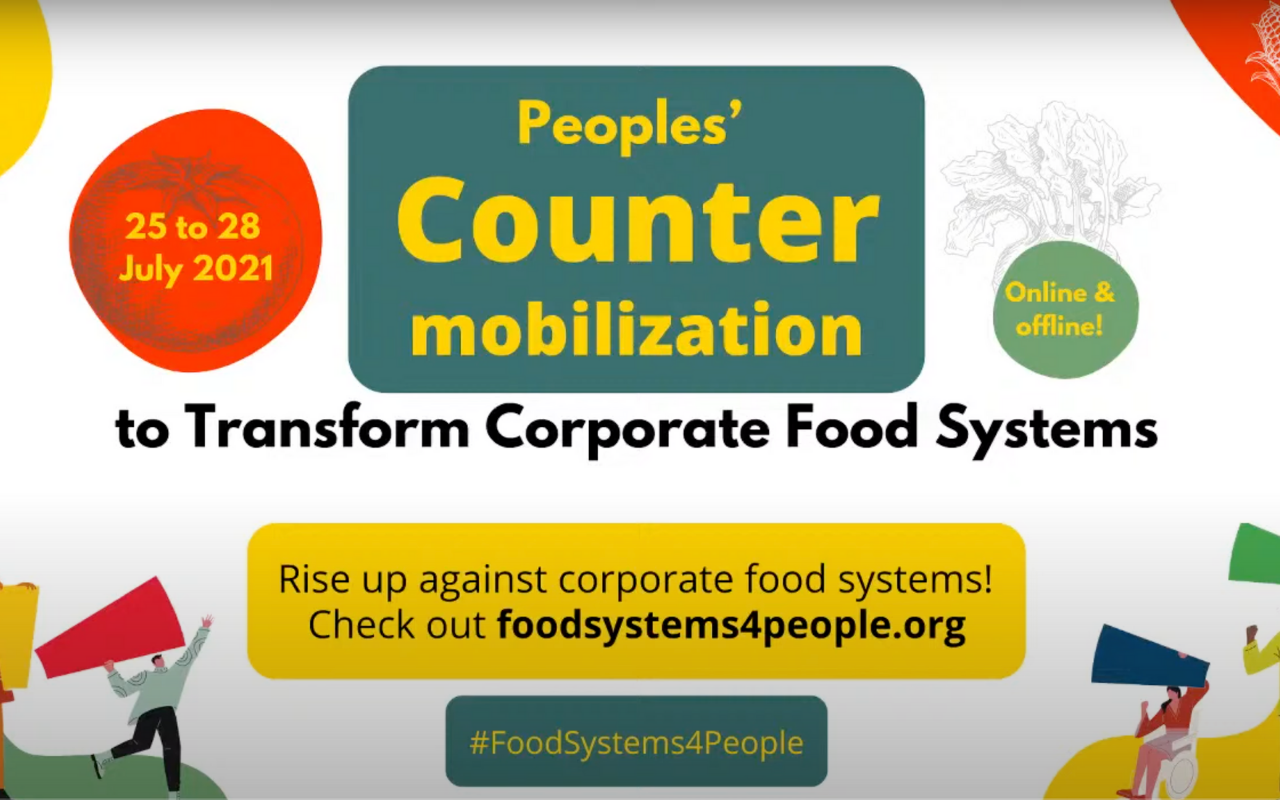
Brot für die Welt (Bread for the World) did not attend the UNFSS pre-summit. Instead, the organisation took part in a counter-summit that took place at the same time. A conversation with Francisco Marí about the reasons, the process - and an outlook for the future
From a circular food system in Rwanda to functioning cooled transports in Kenya: The lab of tomorrow addresses development challenges such as preventing food loss and waste
In Zambia, innovative approaches are used to address the problem of post-harvest losses in the groundnut value chain. GIZ's Rapid Loss Appraisal Tool (RLAT) can help to develop more such approaches.
Every one degree Celsius rise in temperature increases the risk of conflict by two to ten percent. The climate crisis is a humanitarian crisis, as the photos by Christoph Püschner and Frank Schultze illustrate.
At the climate conference in Glasgow, activists from various groups protested again – Leonie Bremer from ‘Fridays for Future’ was there too. How can climate protection and development cooperation work hand in hand?
Whether it's banana bread made from brown bananas, conscious shopping plans or foodsharing, we give you five tips on how to reduce your everyday food waste.
At LCOY Germany, the local youth climate conference, views on climate protection from all political spectrums are discussed. The Fairactivists, a programme of Fairtrade Germany, participated with a panel discussion on the link between social justice and climate justice.
There are only about 1 million jobs in the East African country. The majority of the population works in the informal sector, and it can be difficult for them to find customers. Biscate offers a digital solution - without the need for internet, data or smartphones.
Together they are stronger: In many African countries, young men and women are coming together to form youth organisations. These organisations help young people in rural areas to earn a living in the agricultural and food sector, creating prospects for the future in rural areas.
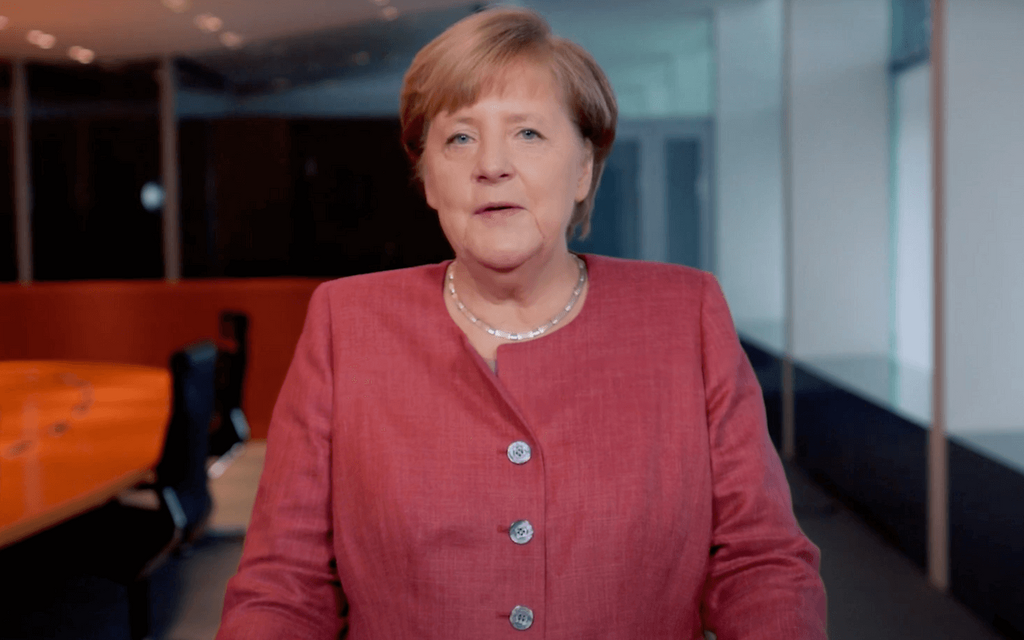
Chancellor Angela Merkel in the Podcast of the Federal Government
At the start of World Food Week around World Food Day on 16 October, Chancellor Angela Merkel stressed that the fight against global hunger will only be successful with international responsibility and solidarity (german only).
Africa’s largest youth generation has the potential to transform agriculture sustainably. Young entrepreneurs like Febelsa in Mozambique are building agricultural businesses that fuel local growth.
A conversation with Caroline Kayanja, Dr. Eileen Nchanji, & Theresa Herbold
A transformation of agricultural and food systems is not possible without overcoming structural gender inequalities. In this discussion, Caroline Kayanja (UCOBAC), Dr Eileen Nchanji (CIAT) and Theresa Herbold (Ministry of Development) reflect on the key challenges and solutions – from land access and representation to women-led collectives and innovative technologies.
The rural population and vulnerable groups should be involved in the implementation of the African Union's Kampala Declaration on the transformation of agricultural and food systems. This is the demand of sociologist Lawani Arouna, Vice President of the Regional umbrella organisation of farmers' associations in West Africa (ROPPA).
Nutrition rarely fails for lack of knowledge, but for lack of structure. In conversation with Dr. Sachin Gupte from PATH, attention turns to the often unseen foundations of food systems – where climate pressures, political frameworks, and economic realities shape what can endure, and what cannot.
Climate adaptation, youth empowerment, and food systems intersect with challenging social and political conditions. Lucky Andrianirina illustrates how young people in Madagascar navigate structural barriers, translate global agendas into local action, and understand agriculture as a space of agency and hope.
Climate change, shrinking grazing lands and a lack of investment are putting increasing pressure on pastoralist communities in Kenya. Jacinta Sajila Pamita, herself Maasai and working for IMPACT Kenya, calls for greater participation of Indigenous communities, more investment in locally led solutions and greater recognition of traditional knowledge. As she says, sustainable development begins when the people on the ground have a say in shaping it.
African countries still face huge gender gaps in terms of access to work and capital. What are the consequences of Corona for women in Africa? Jan Rübel interviewed Léa Rouanet on lockdowns and gender-based violence. The economist works at the Africa Gender Innovation Lab of the World Bank.
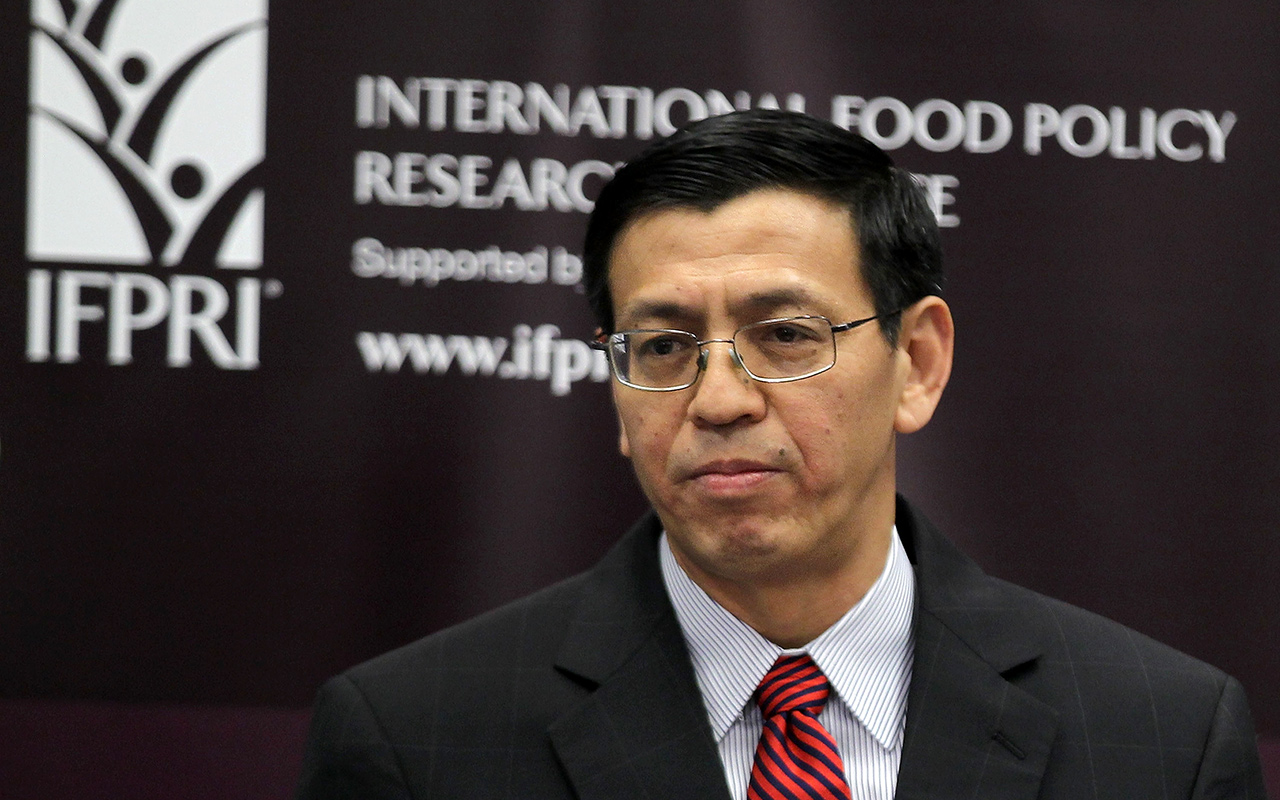
Shortly before ending his position as Director General of the International Food Policy Research Institute (IFPR) Dr. Shenggen Fan talks about the reforms and new modes of operation needed to achieve global food security in the coming decade.
110 speakers from 120 countries met virtually at the Global Forum for Food and Agriculture (GFFA) to discuss the challenges to global food supply. They asked the question: How can food systems support the health of people and the planet?
A quick and cost-effective method calculates living wages and incomes for many different countries. The GIZ together with Fairtrade International and Richard and Martha Anker have developed a tool that companies can use to easily analyse income and wage gaps.
Stefan Liebing is chairman of the Africa Association of German Business. The manager calls for a better structure of African farms. Jan Rübel asked him about small farmers, the opportunities for German start-ups and a new fund.
Supporting groups of smallholding women substantially contributes to strengthen rural operations economically. The organisation and associated group activities can help to reduce extreme poverty and improve the food situation.
Besides the well known impacts of Covid19 lockdowns for the adult population, the associated school closures led to 90 percent of the world’s children with no access to schools. However, school meals are in often the only daily meal for children. Without access to this safety net, issues like hunger, poverty and malnutrition are exacerbated for hundreds of millions of children.
Africa has a huge opportunity to make agriculture its economic driver. However, the potential for this is far from being made exhaustive use of, one reason being that women face considerable difficulties in their economic activities. The organisation AWAN Afrika seeks to change this state of affairs.
The majority of producers in developing countries are women. Although they contribute significantly to the food security of their families, they remain chronically disadvantaged in male-dominated agriculture in terms of access to land, credit, technology and education.
A contribution by Nadine Babatounde and Anne Floquet (MISEREOR)
To prevent malnutrition among young children and strengthen the role of women in their communities, Misereor, together with the local non-governmental organisation CEBEDES, is implementing a programme on integrated home gardens in Benin - a series of pictures.
A contribution by Dr. Kathleen Mar and Dr. Nicole de Paula
Against the backdrop of the COVID-19 pandemic, health is receiving unprecedented public and political attention. Yet the fact that climate change is also affecting the environmental and social determinants of health in a profound and far-reaching way deserves further recognition.
Three female entrepreneurs from Mozambique, Sri Lanka and Uganda tell their stories about starting organic businesses from scratch, now selling Baobab Oil, Gotukola powder and Shea butter in international markets. And they explain why their business is almost 100 percent female.
When women have control over the resources of a household and manage the income, it usually leads to a more balanced and healthier diet for the family. But often the decision-making power lies with the men. How can this gender inequality be addressed? The GIZ global project Food Security and Resilience provides insights into project work on gender-transformative approaches finances by the Federal Ministry for Economic Cooperation and Development (BMZ).
Agrivoltaics is a concept that combines photovoltaic electricity generation and agricultural production, providing the opportunity for a more efficient land use and contributing overall to the integration of food, energy and water systems. This can be particularly interesting for countries in the Global South, where rural electrification rates are often low and food security needs to be improved.
Rose Okello is a Matoke farmer and single mother living in a village near Mbarara, a town in southern Uganda. To ensure that she can pay for her family's food, her children's school fees and other expenses on time, Rose uses various financial services. Her story portrays hurdles but also hope for women in agribusiness.
In a new study, the international humanitarian agency CARE analyses how the economic and social barriers faced by women significantly reduces the global gross domestic product (GDP). At the current rate, it will take 152 years to close the economic gap between women and men – although closing this gap would be extremely profitable from an economic perspective.
A Contribution by Carlos Castellanos & Yvonne Bielfeld
The shoe manufacturer Cueros Vélez as a good example of private sector responsibility: the photo gallery shows how the bark of the rubber tree becomes a reliable yet deforestation free companion on our roads.
For everyone in the supply chain to benefit, it is essential that politics and business work together. The measurable successes of such partnerships are demonstrated by the following six projects: they show how cooperation with the business sector can make supply chains fairer, more resilient, and more sustainable step by step.
The International Year of the Woman Farmer (IYWF), launched by the United Nations for 2026, is more than a symbolic moment. It is a political opportunity – and responsibility – for German development cooperation. This is what the Federal Ministry for Economic Cooperation and Development (BMZ) emphasised during Grüne Woche trade fair in Berlin.
In southern Benin, Julienne processes soybeans into tofu. Rather than relying on subsidies, she has built her own business step by step. Her path shows how local financing, shared risk assessment, and entrepreneurial skills contribute to transforming agrifood systems.
Food systems shape social realities. Whether legal claims can be enforced also depends on access to legal institutions. Camara Castro from the Amka Africa Justice Initiative shows how legal work in Kenya helps reduce the gap between law and lived reality and contributes to making agri-food systems more just.
Disruption or transformation? With the new Strategic Foresight Report for Agriculture and Food Systems, the Deutsche Gesellschaft für Internationale Zusammenarbeit (GIZ) looks into future scenarios of the post 2030 era.
A focus on fragile contexts highlights development policy’s unique contribution to security policy and shows how the special initiative “Transformation of Agricultural and Food Systems“ itself needs to develop further. An article by Jes Weigelt, Head of Programmes at the TMG Think Tank for Sustainability.
Small farmers in developing countries must modernise their farming methods, but poorly understood reforms could exacerbate poverty instead of alleviating it.
In western Africa a new middle class is emerging. Their consumer behaviour is determining the demand for products – home-produced and imported goods, on the internet or at the village market. The people of Ivory Coast in particular are looking to the future with optimism.
Every child in Germany knows Ritter Sport – but most of the children harvesting cocoa on western African plantations have never even eaten chocolate. Can a chocolate manufacturer change the world? Conversation with Alfred Ritter about the power and powerlessness of a businessman.
At the moment, the agricultural industries of African countries exist in relative isolation. Imagine peasant farmers digitally connected to the value chains of the global food industry. How could this happen? A guidebook.
The Federal Government is fine-tuning a law that would require companies to ensure human rights – a supply chain law. What are the consequences for the agricultural sector? Dr Bettina Rudloff from the German Institute for International and Security Affairs (SWP) discusses linking policy fields with added value.
Why aren’t bars of chocolate made where cocoa is grown? Author Frank Brunner analyses the industry’s fragile value chain from the plantation to the supermarket
‘Fair’ and ‘sustainable’ are key words in Germany’s EU Council Presidency. At the same time, Germany pursues ‘modernization’ of the WTO and ‘rapid progress’ on free trade agreements. Are these goals really compatible? Can we be concerned about fairness and sustainability while continuing with ‘business as usual’?
In most African countries, the infection COVID-19 is likely to trigger a combined health and food crisis. This means: In order to cope with this unprecedented crisis, consistently aligning our policies to the Sustainable Development Goals (SDGs) is more important than ever, our author maintains.
COVID-19 has unprecedented effects on the world. As always, the most vulnerable are the hardest hit, both at home and - especially - abroad. A joint appeal by the German Federal Ministry for Economic Development and Cooperation (BMZ) and the Department for International Development (DFID).
Time to dig deeper: We can only benefit from technical progress if we have a solid legal framework for everybody. But so far, none is in sight - in many countries. Instead, international corporations grow ever more powerful.
What do electrical engineering, telecommunications and agriculture have in common? They arouse the passion of Strive Masiyiwa: Thirty years ago, he started an electrical installation company with $75, later riding the telecommunications wave as a pioneer. Today he is committed to transforming African agriculture.
The Cashew Council is the first international organisation for a raw material stemming from Africa. The industry promises to make progress in processing and refining cashew nuts - and answers to climate change
Enabling smallholders to trade across regions and borders promotes food security and economic growth. Although everyone is calling for exactly that, implementation is still difficult
As President of the IABM cooperative in Muhanga, Alphonsine Mukankusi is not simply focused on the figures. She has learned how to deal with people and how to take on responsibility. At the same time, her work helps her to come to terms with the past
A report by Bettina Rudloff and Annette Weber (SWP)
The Corona-Virus exacerbates existing crises through conflict, climate, hunger and locusts in East Africa and the Horn of Africa. What needs to be done in these regions? To face these challenges for many countries, all of these crises need to be captured in their regional context.
At the 8th German-African Agribusiness Forum (GAAF) representatives from business and politics discussed successful investment models to improve living conditions in Africa.
Based on a scientific study by TMG Think Tank, the authors highlight various challenges in the fight against the hunger crisis. The findings show that climate change, conflict and covid-19 are increasing food and energy prices.
The Africa Agriculture Trade Monitor 2022 (AATM) was published by IFPRI and AKADEMIYA2063. The report analyses the short- and long-term trends and drivers of African agricultural trade flows, including regional policies and the role of global markets.
An Artikel by the Initiative for Sustainable Agricultural Supply Chains (INA)
A study published by the Deutsche Gesellschaft für Internationale Zusammenarbeit (GIZ) examines the differences between globally traded agricultural commodities and domestic niche products in terms of economic, environmental and social impact on the region of origin. The results provide new evidence to make supply chains more sustainable.
Taking a look at the data (as of February 11th 2022) what the current price hike means for world hunger and what can be done to prevent from another food crisis.
Until Easter 2022, GIZ publishes a new episode every fortnight introducing people who are committed to fair and sustainable cocoa in Côte d'Ivoire and Germany.
A Contribution of the 'Initiative for Sustainable Agricultural Supply Chains' (INA)
Fair Trade organisations and the Initiative for Sustainable Agricultural Supply Chains (INA) have launched the #ichwillfair campaign during COP26 to highlight the link between global supply chains and climate change.
The oceans are important for our food supply, but they are overfished. To halt this trend the global community is now taking action against illegal fishing. Journalist Jan Rübel spoke with Francesco Marí, a specialist for world food, agricultural trade and maritime policy at "Brot für die Welt," and others.
The German government is struggling to pass a supply chain law. It is intended to address violations of human rights, social and environmental standards. What would the consequences be for business? A double interview with Veselina Vasileva from GEPA and economics professor Andreas Freytag.
A Contribution by Dr. Fatima Olanike Kareem and Dr. Olayinka Idowu Kareem
High agricultural prices affect developed and developing countries alike, but the problem is aggravated for the latter through the lack of or inadequate resilience measures. Dr. Fatima Olanike Kareem, AKADEMIYA2063, and Dr. Olayinka Idowu Kareem, University of Hohenheim, explain what can be done to mitigate the negative effects on food security.
gebana, a Swiss fair trade company, follows the principle of "sharing" with its corporate philosophy: farming families in the Global South participate directly in the sales of their online shop. Caroline Schaar, Marketing at gebana, explains the company's approach.
Many of ALDI SOUTH Group supply chains begin in the Global South. How does the food retailer assume its responsibility? Questions for Sally Roach, Senior Manager - International Sustainability Department at the ALDI SOUTH Group.
The Federal Ministry ofor Economic Cooperation and Development (BMZ) and the Federal Ministry of Food and Agriculture (BMEL) presented a revised version of the 10-Point Plan for a sustainable cocoa sector. The plan takes into account new supply chain legislations and current developments. A particular focus is paid to a living incomes, responsible purchasing practices and ecological and climate-friendly cocoa cultivation.
Maura Oerding has a mission: With the specialty coffee Angelique's Finest, she not only wants to enter new markets but also revolutionize the coffee industry. Her recipe for success? Empowering women from Rwanda and Uganda from cultivation to marketing. Oerding’s goal: quality, fairness, and self-determination in every bean.
Amid rising global hunger, urbanization, and shrinking international funding, informal food systems are crucial for food access and livelihoods in low-income African urban areas. The TMG Think Tank’s paper, “Working with Informality for Food Systems Transformation and Resilient Communities,” highlights the importance of recognizing and working with informality to achieve Sustainable Development Goal 2.
A Contribution by the German Institute for International and Security Affairs (SWP)
Against the backdrop of the current conflict in Iran and the associated closure of the Strait of Hormuz, the strategic significance of maritime infrastructure has acquired renewed urgency. A 2024 study by the Stiftung Wissenschaft und Politik (SWP) examines this relevance and discusses appropriate protective measures for different forms of critical infrastructure within the maritime space.
A world without hunger and with sufficient healthy food as well as climate-friendly agriculture can only be achieved if ideas are transformed into innovations and ultimately also applied - a conversation with BMZ Head of Division Sebastian Lesch on the Innovation Challenge programme of the new Agricultural Innovation Fund.
The United Nations plan a Food Systems Summit - and now the Corona-Virus is dictating the agenda. The Chief Economist of the UN World Food Programme takes stock of the current situation: a conversation with Jan Rübel about pandemics, about the chromosomes of development - and about the conflicts that inhibit them.
In Togo’s capital, Lomé, home-grown rice costs almost twice as much as the imported product from Thailand. Yet there are good reasons for preferring the local product
Happy youngsters in rural areas, green development and the connection to the digital age – professor Joachim von Braun believes in this future sceneraio for Africa. For three decades the agricultural scienties has been researching how politics can create prosperty on the continent.
By leasing a three hundred hectare fruit plantation in Ethiopia, Lutz Hartmann has realised a long-cherished dream: to run his own business in Africa. Now he has a personal interest in the issue of Africa’s development.
Small holders around the world are often forced to sell their harvests below market value due to a lack of market and pricing information. A new app by the UN World Food Programme (WFP) is going to change this.
It is 2080. We are on a farm somewhere in Africa. Everything is digital. The blockchain is an omnipotent point of reference, and the farm is flourishing. But then, everything goes wrong. A dystopian short story, written exclusively for SEWOH.
African inland fisheries are increasingly reliant on the capture of small fish species that are sundried and traded over long distances. They make an important contribution in alleviating “hidden hunger”: consumed whole, small fish are an important source of micronutrients. Only that, unfortunately, politicians haven’t yet realised this.
Lack of seasonal workers and virus explosion in slaughterhouses, rising vegetable prices, climate crisis – all this demonstrates: Our food system is highly productive and (at least for the rich inhabitants of planet earth) guarantees an unprecedented rich and steady food supply - but it is not resilient.
At the beginning of December 2018, AGRA's board of directors met in Berlin. The "Alliance for a Green Revolution in Africa" panel discussed the next steps in their policy of modernizing agriculture. How to go on in the next ten years? One question - many answers from experts.
The soybean is a natural crop that can be used to make a lot of food. So, Tata Bi started a small processing business first on her own, then with a few other women, which provides the women with an additional source of income year-round besides selling the soybeans.
Chancellor Merkel has begun an ambitious European political programme: Striving for compromise in budget negotiations, an orderly Brexit as well as an appropriate response to the corona crisis. Unfortunately, one of her positions that she previously held is nowhere to be found: Africa's prosperity is in the interest of Europe.
The region of Sub-Saharan Africa is on the decisive verge of a great development boost in farming: it could skip entire generations of technological development. But how? About possible roles and potentials of digital services.
Agnes Kalibata, AGRA president since 2014 and former minister of agriculture and wildlife in Rwanda, is convinced that Africa's economy will only grow sustainably if small-scale agriculture is also seen as an opportunity.
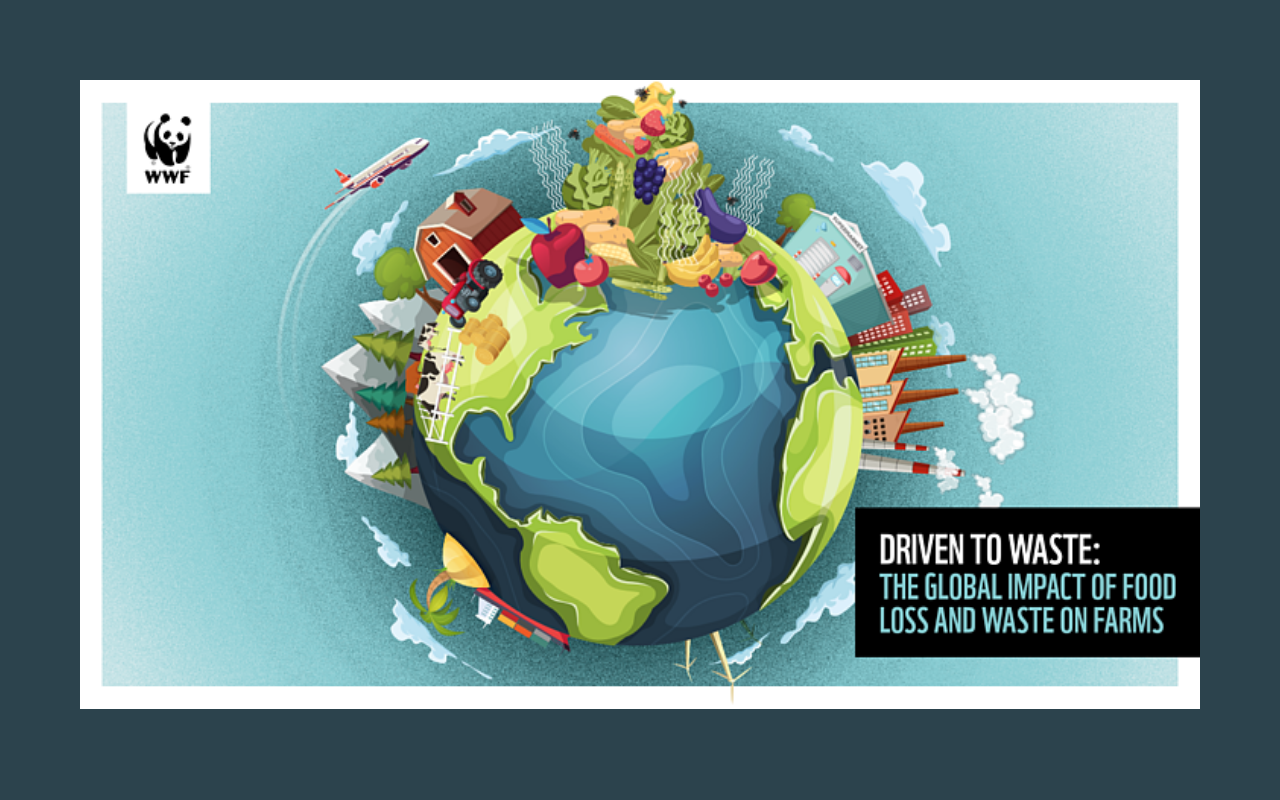
The WWF has published a sensational study on food waste. The focus: farm-stage food waste. Peter McFeely, Global head of communications and strategic planning at WWF, explains what needs to be done.
Fish is important for combating malnutrition and undernourishment. But it is not only notable for its nutritional value, but also secures the livelihoods and employment for 600 million people worldwide.
"One World no Hunger" (SEWOH) becomes one of the five core themes of the BMZ. Dirk Schattschneider, SEWOH Commissioner about previous approaches, future areas of action, and the political will to end hunger.
On the podcast ‘From the Field to the Shelf’, Marie Nasemann calls for new attempts to promote fair fashion. An evening about burnt returns, filterless washing machines and a lot of room for improvement.
The global trade in spices currently has a volume of over 10 billion euros. But at what price do these spices refine our Christmas cuisine? On closer inspection, aspects of the value chain leave a bitter taste.
Regarding deforestation free supply chains, there are challenges and opportunities for smallholder farmers as well as for international forest governance. Also, responsibilities for companies and potential incentives for manufacturers to use materials from fair trade and sustainable sources need to be explored. But what does “deforestation-free” actually mean?
Saskia Widenhorn, Head of the Cotton Component in Cameroon and the Sub-Saharan Cotton Initiative at GIZ, reports on the Bremer Cotton Week, which brought together international industry experts. The agenda included supply chain transparency, sustainability and new forms of cooperation between the private sector and partner countries.
New insights on trade and value addition in the rice sector in West Africa
Low import tariffs, smuggling activities, unpredictable tax exemptions and weak enforcement of food safety standards: The potential of local rice value chains is undermined in West African countries.
Protectionist policies like tariffs supposedly protect domestic producers if they cannot compete with cheaper imported products. Some African countries have therefore opted to impose such import restrictions for a number of products. For the case of chicken imports in Ghana, this study analyses whether restrictions would lead to overall positive or negative welfare effects among households.
Kenya is a large importer of vetable oils mainly from Indonesia and Malaysia - amongst them sunflower oil. Due to the Russian war of aggression against Ukraine, there were supply bottlenecks and food shortages, leading to less affordable vegetable oils in Kenya. As a response to the lack of supply, the Sanga'alo Institute of Science and Technology, took that impulse, teamed up with the GIZ and established regional cultivation and refinement of sunflowers.
The consequences of the Russian invasion of Ukraine have enabled many countries to open up new export markets for their agricultural goods. However, smallholder farms have been largely left out. Drawing on his experience in India, our author gives a brief overview of how this can be changed.
From measures to promote biodiversity in Germany to more sustainable cocoa cultivation methods in Ecuador: WWF works at many different levels. At the Green Week, it will be demonstrated just how multifaceted nature conservation work is and what role each individual's decision plays.
A Contribution by Initiative für nachhaltige Agrarlieferketten (INA)
The demand for sustainable products and supply chains is constantly increasing. DIASCA is an alliance that works on interoperability of digital solutions in agricultural supply chains through the development of open standards for forest monitoring, farm income and traceability.
Female founder Ebun Feludu wants to bring the coconut value chain to Nigeria with her start-up Kokari. In this interview, she explains why she envisions every coconut palm tree bearing its own name in the future and how digitalization can contribute to this.
The Nyayo Tea Zones Development Corporation is committed to the preservation of forests in Kenya: The establishment of so-called buffer zones counteracts deforestation by planting trees and tea. In addition to the production of environmentally friendly tea, the project benefits the resources of the forests and the livelihoods of the communities living near the forests, says project manager Wallace Gichunge.
The demand for fair-trade cocoa is growing – but how is the industry responding? In an interview, Claudia Brück, Executive Board Member of Fairtrade Germany, and Dr. Torben Erbrath, Managing Director of the Federal Association of the German Confectionery Industry, discuss progress as well as challenges, and why real change can only be achieved through long-term commitment along the entire supply chain.
We use cookies on our website. Some of them are essential, while others help to improve your user experience. Your consent is voluntary and can be revoked at any time on the "Privacy" page.
Protects against cross-site request forgery attacks
Retention period: This cookie remains only for the current browser session.
Saves the current PHP session.
Retention period: This cookie remains only for the current browser session.
Content from third-party providers, such as YouTube, which collect data about usage. Third-party content embedded on this website will only be displayed to you if you expressly agree to this here.
Provider: Google Ireland Ltd., Gordon House, Barrow Street, Dublin 4, Ireland
Retention period: Here you can learn more about the storage period of the cookie: https://policies.google.com/privacy.
Provider: Vimeo, Inc. / 555 West 18th Street New York, New York 10011, USA
Retention period: Here you can learn more about the storage period of the cookie: https://vimeo.com/privacy.
We use Matomo analytics software, which collects anonymous data about website usage and functionality to improve our website and user experience.