Newsletter
Don't miss a thing!
We regularly provide you with the most important news, articles, topics, projects and ideas for One World – No Hunger.
Newsletter
Don't miss a thing!
We regularly provide you with the most important news, articles, topics, projects and ideas for One World – No Hunger.
Please also refer to our data protection declaration.
An Interview by Anke Schneider (GIZ)
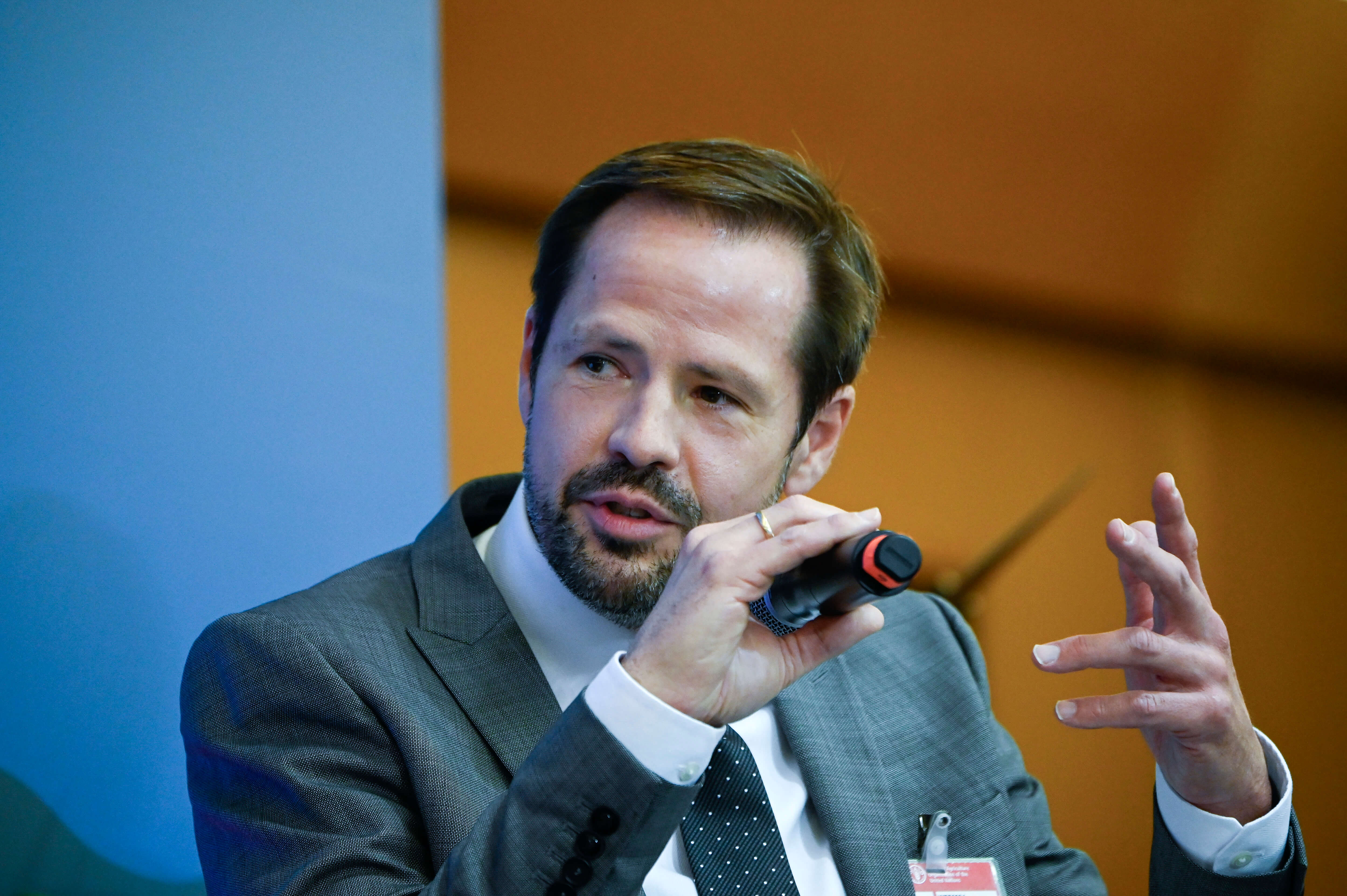
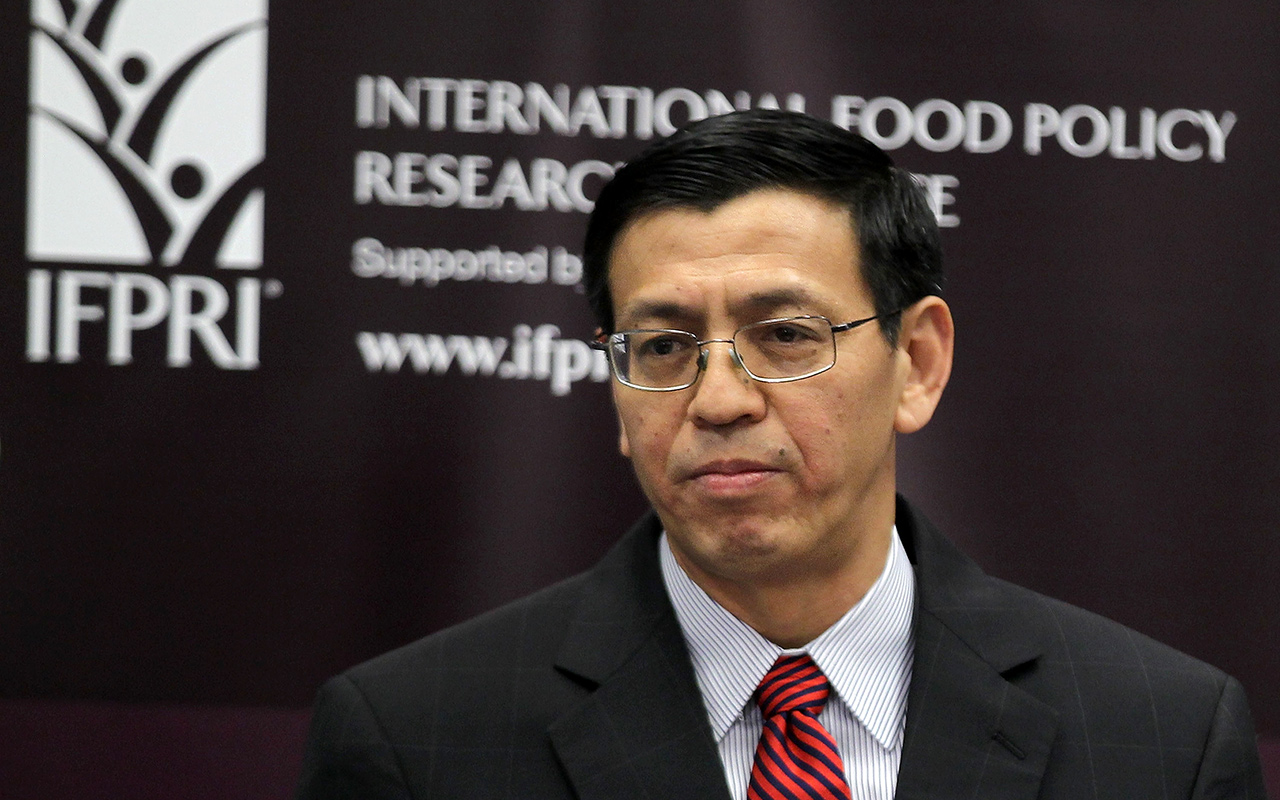
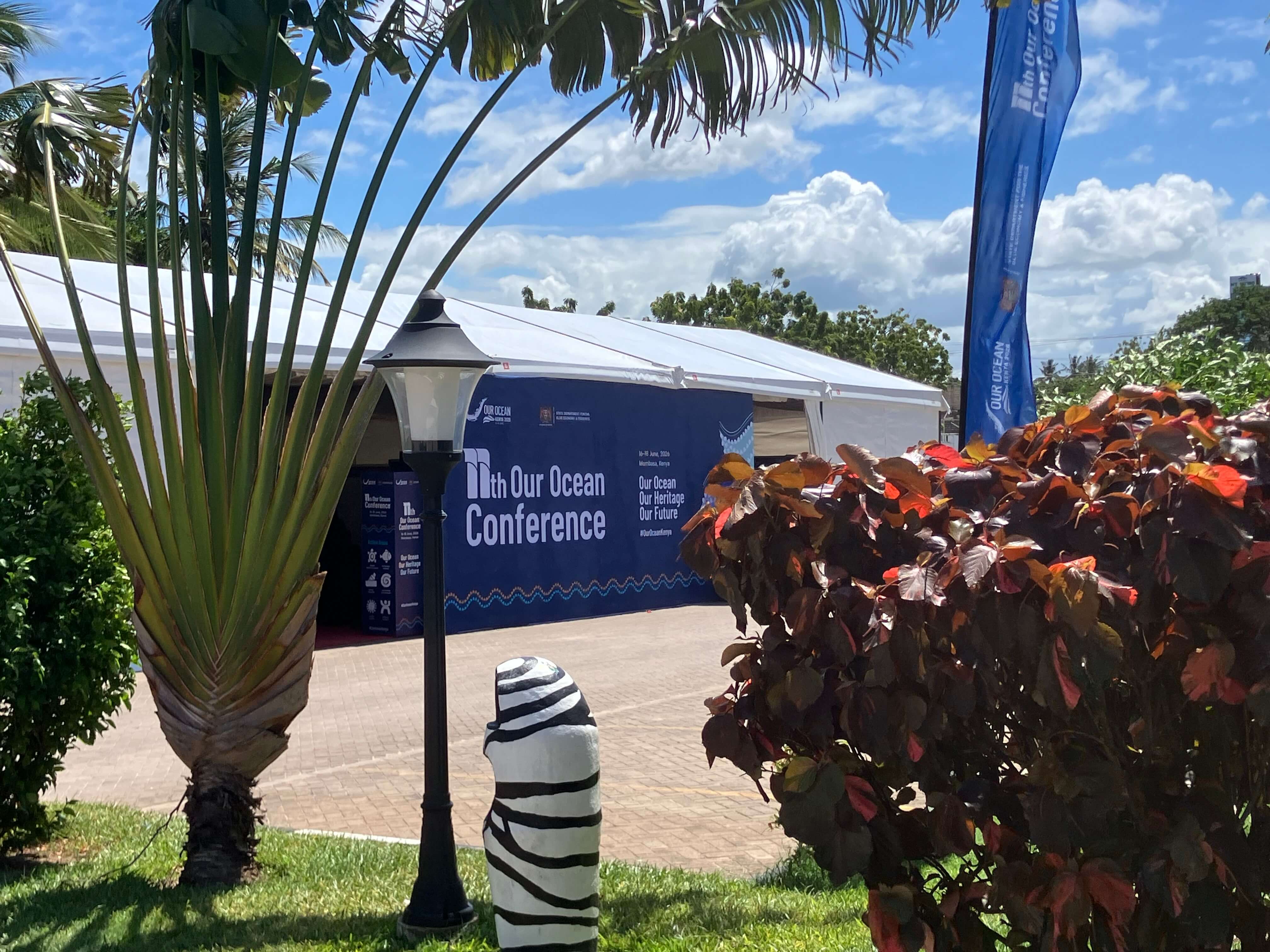
Against the backdrop of the eleventh Our Ocean Conference in Mombasa, Kenia, leading fisheries economist Rashid Sumaila and Andreas Schaumayer, German Federal Ministry for Economic Cooperation and Development (BMZ), reflect on the state of global fisheries in 2026. From the hidden economic power of small-scale fishing communities to the data gaps that leave millions of fishers uncounted, the two experts discuss what it will take to make fisheries policy work for the people who depend on it most and for the ocean that sustains them all.

Mr. Sumaila, considering the discussions held here in Mombasa as well as last year's UN Ocean Conference in Nice – how would you assess the current state of sustainable fisheries management globally in 2026, and what would you consider a constructive path forward?
Rashid Sumaila: It has indeed been a remarkably active year for the ocean sector, marked by numerous high-level meetings and significant developments. Among the most notable has been the entry into force of the WTO Agreement on Fisheries Subsidies (WTO-AFS), plus the ongoing discussions on its extension in a second part. The WTO has convened at least three times over the past twelve months to advance this so-called "Fish 2" agreement.
Many in our community welcomed the first part of the agreement, known as "Fish 1," while acknowledging its limitations. Its three core provisions prohibit subsidies to vessels operating on stocks already declared to be overfished, to vessels engaged in illegal, unreported and unregulated fishing, and to fishing activities in unregulated high seas areas. While each of these provisions carries a certain logic, they are largely reactive in nature addressing harm after it has already occurred, rather than preventing it at the outset. International negotiations are, of course, inherently complex, and the achievement of Fish 1 is nonetheless to be recognized. What many of us advocate for in Fish 2 is a more preventive approach: a categorical prohibition on subsidies that could contribute to overfishing, thereby protecting fish stocks before depletion occurs rather than responding to the fact. Regrettably, Fish 2 remains stalled and has not progressed yet. On a separate but equally important front, the 30x30 commitment has seen some movement through the entry into force of the High Seas Treaty, with a first conference of the parties now planned. The scientific community continues its work on the optimal placement of Marine Protected Areas in international waters.
As for the new SOFIA report (The State of the World Fisheries and Aquaculture 2026), that was just released yesterday here at the conference, a preliminary review of its highlights suggests that the findings are broadly consistent with the previous edition. From a scientific standpoint, stability is rarely the natural state of fish populations, which tends to be either recovering or declining. A more thorough reading of the full report will be necessary before drawing firm conclusions.
Mr. Schaumayer, what have been the key developments over the past year, and what are your main takeaways from the discussions here at the conference?
Andreas Schaumayer: Since the UN Ocean Conference in Nice last year, I agree that the WTO-AFS stands out as a landmark achievement. As the German Government, we have not only been actively supportive of the WTO agreement but have also invested significantly in the Fisheries Transparency Initiative (FiTI), celebrating its tenth anniversary last year in Berlin. This initiative represents an important steppingstone toward the successful implementation of the WTO-AFS, as adherence to the FiTI standard provides a critical foundation for effective compliance. We are proud of our commitment to supporting the FiTI, and it is equally encouraging to note that the initiative has seen a growing membership, with several new members joining over the past year. Taken together, these developments demonstrate that, from the perspective of the German Development Corporation, progress has been made on both fronts in which we are invested: multilateral governance processes and transparency in the fisheries sector.
Sumaila: The FiTI merits strong endorsement, as transparency is widely recognized as a cornerstone of effective governance. Making information publicly accessible fosters trust, both with coastal and indigenous communities and with market actors. This trust is fundamental to adding value across the entire fisheries sector. Germany's investment in this initiative is therefore commendable, as the potential consequences for the entire fish value chain and for the livelihoods of the communities we are committed to support are considerable.
Schaumayer: This was further illustrated at this morning's FiTI side event, where the Minister of Ghana spoke about the challenges encountered when bringing the FiTI ratification legislation into parliament. A central issue was that the discussions about the small-scale fisheries were not consistently based on the facts – an important aspect given that the WTO-AFS makes explicit provisions for exemptions in favor of small-scale fisheries. It is essential that these aspects of the agreement are highlighted and clearly communicated. The German Development Corporation aims to contribute to this through targeted measures and information sharing on the content of the agreement and has thereby, for example, supported the ratification process in Madagascar – a significant achievement, not only for the German Development Corporation, but also for those governments that make deliberate policy decisions to pursue the twin objectives of environmental preservation and economic development. This, in our view, represents the way forward.
You mentioned small-scale fisheries specifically. Given that small-scale fishers fear losing essential financial support through the implementation of the WTO-AFS and that uncertainty remains as to whether the agreement will ultimately deliver on its objectives of food security and stock sustainability: what are the key challenges that need to be addressed in the implementation of Fish 1 and the ongoing negotiations on Fish 2?
Sumaila: The dynamic between small-scale and large-scale fisheries first came to my attention when I was invited to the British House of Lords to talk about subsidies in the context of G20 countries. On that occasion the Speaker of the House of Representatives of Indonesia raised a pointed challenge to my position. When I presented the evidence on harmful subsidies, he made clear that his government intended to continue providing them. When I asked him to explain his reasoning, he stated that they wished to support their small-scale fishers and alleviate poverty. My response was unequivocal:
If the goal is to combat poverty among fishing communities, then I am a committed ally in that cause. However, directing subsidies toward the very activities that undermine the resource base upon which these communities depend is not a viable path to achieving that objective.
This exchange in fact motivated me to initiate a dedicated study on the distribution of subsidies between small-scale and large-scale fisheries. The research revealed that approximately 80 percent of fisheries subsidies flow to large-scale operations through mechanisms such as fuel subsidies while only 20 percent reaches small-scale fishers.
To address your question directly, there are three key considerations. The first is the matter of information and evidence. Research clearly demonstrates that removing harmful large-scale subsidies would in fact benefit small-scale fishers indirectly by allowing fish stocks to recover and thereby increasing the availability of fish for those with lower fishing capacity. The second consideration concerns the reallocation of subsidy resources. Rather than simply eliminating harmful subsidies and withdrawing support from affected communities, the financial resources freed up should be redirected toward assisting those communities to adapt and develop sustainable livelihoods. The third is to enhance the ability of small-scale fishing communities and their governments to understand and access the funds made available under the agreement. The Minister of Ghana serves as a commendable example in this regard having proactively assembled a team to prepare and submit a application for such resources. Supporting countries in navigating these processes is an essential component of effective implementation.
Schaumayer: Let me just put the scale of the issue in perspective: the 80 percent of subsidies flowing to large-scale fisheries amounts to more than 30 billion euros. The WTO-AFS offers a practical and targeted instrument to address overfishing and biodiversity loss through the mechanism of subsidy reform. It comprises just seven pages and is easy to read and understandable for all stakeholders. Compared to other agreements, like for example the mentioned High Seas Treaty with over 50 pages, this accessibility itself is a significant asset.
While the agreement is expected to reduce large-scale fishing operations globally and, in the medium term, create new opportunities for small-scale fisheries in developing countries, the main challenge lies in the short term. Fish stocks will not recover overnight, and the benefits for small-scale fishers will only materialise gradually as stocks recover. Addressing this transitional period requires coordinated efforts among governments, development cooperation partners and the scientific community to clearly communicate what a realistic trajectory might look like: one year ahead, three years ahead and across a five-to-ten-year timeframe. That is why BMZ commissioned a study on the socio-economic impacts of both Fish 1 and Fish 2 on small-scale fisheries in Africa with the aim of supporting the positioning of African delegations in ongoing negotiations.
What is your advice on how best to promote the perspectives of small-scale fishers in political negotiations and implementation processes?
Sumaila: Community engagement is fundamental and several elements are required to make it effective. Fishing communities need access to information and raise awareness. They need to understand the political and collective power they hold. Civil society and local NGOs have an important role to play in establishing dedicated communication channels between communities and their political representatives. A compelling illustration of this was provided yesterday by the Minister of Ghana who. in a session I attended, acknowledged two NGOs. She stated unequivocally that without their work she would not have been able to achieve the policies she secured. These included the establishment of Ghana's first Marine Protected Area and the extension of the inshore exclusion zone from six to twelve nautical miles. The NGOs were instrumental in both processes: working directly with the ministry and engaging with fishing communities across 22 locations. This community-level engagement generated the political backing necessary for the Minister to bring the proposals to the President with the full support of the fishing communities behind her. This is precisely the model of interaction between leaders and their constituents that needs to be replicated and scaled.
Schaumayer:
An important complementary dimension is the need to transparently acknowledge and properly quantify the economic significance of small-scale fisheries.
Their contribution to GDP (gross domestic product) is consistently underestimated due to the high degree of informality in the sector. At international forums such as the Our Ocean Conference small-scale fisheries tend to be cited only in terms of their contribution to food provision. Their broader economic contribution remains insufficiently recognised. This is an area where further collaborative research with academic institutions could shed considerable light and we would encourage work in this direction to go forward.
Sumaila: This has been a matter of considerable concern within our research group. The Sea Around Us identified a fundamental gap in the FAO data which is provided by countries and predominantly covers commercial fish stocks. Subsistence catches consumed directly by fishing households is systematically undercounted. This gap is particularly pronounced in Pacific Island countries, for example, where tuna dominates official statistics while the fish consumed daily by local communities goes mostly unrecorded. In response we initiated an effort to systematically count the fish consumed by households in the small-scale and informal sectors.
Our findings indicate that the actual global fish catch is approximately 50 percent higher than what FAO officially reports and that this additional volume is attributable mostly to small-scale fisheries.
When this is translated into monetary terms the contribution of small-scale fisheries to GDP becomes substantially more significant than current estimates suggest. This reinforces precisely the point you raise and presents an opportunity to work with specific countries to develop detailed case studies that illustrate to governments the extent to which they are undervaluing their small-scale fisheries sectors.
Schaumayer: If I recall correctly your study identified a peak of approximately 130 million tons of fish catch globally instead of the official figure of almost 90 million tons.
Sumaila: That is correct. The additional volume amounts to some 40 to 50 million tons on top of official figures. In certain developing countries more than 50 to 60 percent of actual catch goes uncounted. The Sea Around Us has documented this gap extensively and it has at times placed us in direct disagreement with the FAO.
Schaumayer: This brings us full circle in a sense and illustrates precisely why fisheries transparency through initiatives such as FiTI is so important. In Mauritania, for example, it is now possible to calculate with considerable precision how much was caught and where.
Another decision that fisheries-rich developing countries face is whether to grant foreign fleets access to their fishing grounds or to build their own domestic fisheries capacity. From an economic perspective: how should they approach this choice?
Sumaila: This is an interesting question, and I don’t think it is an either-or-decision. The appropriate approach varies considerably depending on the developmental stage and existing capacity of each country. Those that already possess the institutional and technical capacity to manage their fisheries effectively should be supported in doing so. Those that currently lack such capacity may find it necessary in the short term to grant access to foreign fleets. However, this should not be an open-ended arrangement. Such countries ought to have clear plans in place to develop their own capacity over time and partner countries with more advanced fisheries sectors have a corresponding responsibility to facilitate this transition in a manner that generates genuine mutual benefit rather than simply extracting resources for consumption elsewhere. The overarching principle is not to choose between two alternatives but to follow a process of structured progression: creating the conditions and the time for countries to develop knowledge and the institutional frameworks to manage their own resources sustainably. Dependency is not a desirable or sustainable outcome for any party.
Coming back to the SOFIA report and the importance of aquatic foods for nutrition. The report once again highlights a significant misalignment between the distribution of fisheries resources and the prevalence of nutrient deficiencies globally. What are the key challenges to making food and nutrition security a priority in fisheries policy to tackle this issue?
Schaumayer: This is a broad and multifaceted question. It is important to recall a key finding from last year's SOFIA report: per capita fish consumption needs to increase substantially, particularly across Africa. Current average consumption on the continent stands at approximately nine kilograms per person per year compared to around 20 kilograms in countries such as Germany. Aquatic foods represent an essential source of protein and nutrition. The fundamental challenge, however, is that while the global population continues to grow, wild capture fisheries are unable to meet rising demand. This is driving the need for expanding sustainable aquaculture, creating attractive investment opportunities in the sector: Meeting even the current average of nine kilograms per capita in Africa over the coming years will require aquaculture production on the continent to increase by more than 75 percent. This is a substantial undertaking and necessitates meaningful investment in sustainable aquaculture standards across both small and large-scale operations. With the Prosper Blue project and in particular the new Sustainable Western Indian Ocean programme (SWIOP), launched jointly with the European Union here at the Our Ocean Conference, BMZ supports in the sustainable development of the Blue Economy in Africa and ensures that investments are equitable and create genuine opportunities for local communities.
On the question of how to translate this into improved nutrition outcomes for populations one of the German Development Corporation's approaches is through school meal programmes. We are working to integrate aquatic foods from local small-scale aquaculture and fisheries into these programmes, as in most of our partner countries the school meal programmes constitute the largest social safety net and functioning public procurement system - a significant lever for improving nutritional outcomes for children. This is not without its complexities: school meals have to be tasty for children, they must remain affordable and they must meet food safety standards. The German Development Cooperation is already tackling these challenges to scale school meal programmes in Africa and globally. Through the School Meals Accelerator launched in January in partnership with the Rockefeller Foundation, Novo Nordisk and the World Food Programme we now have the instruments to provide high quality technical guidance.
While much of our discussion has focused on small-scale fisheries, we just heard from Mr Schaumayer, that aquaculture also plays an increasingly significant role in global aquatic food production. What is your assessment of its potential and the challenges involved?
Sumaila: There is reason for optimism regarding aquaculture, though the current picture is highly uneven. China alone accounts for over 60 percent of global aquaculture production and if the broader Asian region is included that figure rises to approximately 90 percent. The remaining share of just 10 percent is distributed across the rest of the world. Africa presents a particular challenge. Despite sustained efforts to develop aquaculture on the continent over many years, meaningful scale has not been achieved. Egypt and to a lesser extent Nigeria are notable exceptions, but overall progress has been limited. Production remains concentrated in small family ponds with little evidence of the scaling up that would be required to make a substantial contribution to food security.
Feed costs represent a structural barrier: in some contexts, they account for up to 70 percent of total production costs. Innovation has a role to play in addressing this, but the challenge is significant. Feed also raises a broader concern related to fish meals and fish oil derived from small pelagic species such as anchovies and sardines. China is establishing fish processing facilities in countries such as Mauritania and Gambia, extracting fish that would otherwise be consumed locally and converting it into feed for export. These dynamics merit serious attention in any discussion of how to develop aquaculture in a manner that benefits local populations.
Schaumayer: In the short term the priority response must be investment in hatchery and in local feed production capacity in Africa. Feed production however is intrinsically linked to trade policy questions as no single country can sustain a viable feed supply chain in isolation. A more open continental market for feed and aquaculture inputs is therefore a prerequisite for scaling up production and ensuring supply stability. Export bans between countries create severe disruptions: an aquaculture operation can become entirely unviable overnight if feed imports are suddenly restricted. Regulatory predictability is therefore of critical importance. Looking further ahead there is a more fundamental task: calculating the true cost of extracting fish from African waters and processing it abroad for consumption elsewhere. The full economic and ecological costs of this model have not been adequately accounted for and doing so must be a longer-term priority.
Sumaila: I fully agree. The current accounting simply does not add up.
Schaumayer: This is why the WTO-AFS is such an important starting point. By addressing subsidy flows directly it creates the conditions to resolve a range of interconnected problems simultaneously.
Sumaila: For example, equity is one of the most significant of these. We have already established that 80 percent of subsidies flow to large-scale operations. When one considers the gender dimension this inequity becomes even more pronounced. Women engaged in small-scale post-fishing activities, for example gleaning in places such as Zanzibar, receive virtually no financial support whatsoever. Young people equally are unable to enter the sector through large vessel operations. The inequities are therefore compounded across multiple dimensions.
To illustrate the broader absurdity of the current situation: if one were to ask the fish themselves what they make of a system in which humanity benefits from their abundance yet uses public funds to overfish and deplete juvenile populations the answer would likely be one of profound bewilderment at human behavior. And yet it must be acknowledged that humanity is not a monolithic actor. Within the broader collective there are those who come to conferences such as this one genuinely committed to changing the system and there are those outside these rooms whose actions continue to perpetuate the very problems we are seeking to address.

Read more Let Me Tell You: How Zambia Uses Comics and Animation to Inspire Healthy Eating

Read more “Corona exposes the weaknesses of our nutritional systems"

Read more 5 questions to F. Patterson: Why is there more hunger?

Read more Climate Adaptation Summit 2021: ‘We can do better’

Read more Small-scale farmers’ responses to COVID-19 related restrictions


Read more Video diaries in the days of Corona: Voices from the ground

Read more Resilient small-scale agriculture: A key in global crises

Read more A global signpost: What way is the market, please?

Read more The state of food security in Cape Town and St. Helena Bay

Read more The hype about urban gardening: farmers or hobby gardeners?

Read more How the self-help approach empowers smallholder women

Read more Global responsibility: Tackling hunger is the only way forward

Read more Gender equality: Essential for food and nutrition security

Read more Success story allotment garden: Food supply and women's empowerment

Read more Developing countries hit doubly hard by coronavirus

Read more Statement from GAFSP Co-Chairs: GAFSP and COVID-19 Pandemic

Read more This is how developing countries can adapt better to droughts

Read more What do you expect from this Pre Summit, Mr. Haddad?

Read more Mr. Campari, how do we create sustainable food systems?
Read more Mr. Marí, what happened at the alternative summit?
Read more What is wrong with our nutrition in Germany, Mr. Plagge ?

Read more How Can We Feed The World in Times of Climate Change?

Read more Food System Transformation Starts and Ends with Diversity

Read more Sustainable Artisanal Fisheries and Aquaculture in Rural Areas

Read more Land Rights for Secure Livelihoods: My Land is My Life

Read more City, Country, Sea: 6 Innovations in the Fight Against Climate Change

Read more Engaging the Community to Solve the Bushmeat Crisis

Read more German G7 Presidency – fighting hunger with all our might

Read more ‘Invite yourself’ – Farmers organisations as key stakeholders of food systems

Read more The lessons learned from the last food crisis - A solution?

Read more ‘Preserving and restoring fertile soils is a global responsibility.’

Read more What does it take to truly shift the paradigm on food systems?

Read more Strengthening food markets across the rural-urban continuum

Read more A dashboard as a key tool for global food security

Read more The importance of water for sustainable rural development
Read more How the War against Ukraine Destabilizes Global Grain Markets
Read more The Black Sea Breadbasket in Crisis: Facts and Figures

Read more Fair Trade and Climate Justice: Everything is Conntected

Read more The Rice Sector in West Africa: A Political Challenge

Read more 5 Questions for Jann Lay: What is Corona doing to the economy?

Read more Sustainable, feminist and socially just: The new Africa strategy of the BMZ

Read more The goals of transformation should leave no one behind

Read more BMZ releases video on the transformation of agricultural and food systems

Read more “More of the same is not enough - we need to rethink”

Read more Agricultural prices and food security – a complex relationship

Read more Strengthening the market linkages of smallholders in the face of global supply shocks

Read more Innovative donor approaches and sustainable finance – A Review of UNFSS+2

Read more What is needed for a long-term fertiliser strategy?

Read more What the Middle East conflict means for the children in Gaza

Read more Agricultural Financing – from a broader Perspective

Read more Where can international cooperation in Gaza come in, Ms. Asseburg?

Read more A framework for sustainable and fair agriculture and food systems

Read more From Pledges to Progress: Nutrition at the Heart of Inclusive Development

Read more Working with Informality: Unlocking Community-Led Solutions Towards Zero Hunger