Newsletter
Don't miss a thing!
We regularly provide you with the most important news, articles, topics, projects and ideas for One World – No Hunger.
Newsletter
Don't miss a thing!
We regularly provide you with the most important news, articles, topics, projects and ideas for One World – No Hunger.
Please also refer to our data protection declaration.
Risk Reduction is his job. As Head of Disaster Risk Management at the Intergovernmental Authority on Development (IGAD), Dr. Ahmed Amdihun works at the intersection of climate resilience, early warning systems and humanitarian preparedness across the Greater Horn of Africa. In this interview, he explains what is needed to strengthen resilience in one of the world's most fragile regions.

Why is food security a decisive factor for security?
Dr. Ahmed Amdihun: I think the agenda of food security and food sovereignty is most important. When a community or a country is not achieving this, it will contribute to issues of conflict and humanitarian crisis. But the reverse is truer:
Where there is conflict and where there is instability, food security becomes the victim.
Whenever a country descends into conflict, in most cases food security deteriorates almost immediately – not only because food becomes less available, but because conflict disrupts people's access to it, markets close, supply chains are interrupted, livelihoods are lost, and humanitarian assistance struggles to reach those most in need.
Let's look at Sudan. What was there first, the food insecurity or the political conflicts?
We can argue both ways, but I think the most important and defining event was when Sudan descended into conflict in April 2023. This has severely disrupted agricultural production, markets, humanitarian access and displaced millions of people. In a displacement setting, which is a consequence of the war, getting a daily bite becomes a struggle and in such context, food availability and access become critically constrained, often deteriorating rapidly into extreme and catastrophic levels of food insecurity.
Why have food insecurity and widespread hunger spread so rapidly and on such a massive scale?
The Sudan conflict started from the capital city, Khartoum and spread out rapidly expanding to other areas but also turned out of control and thousands flee the city. The current estimate is over 13 million people have been displaced, if not more. And the number of people who are food insecure or need humanitarian assstance due to the conflict is over 30 million according to UNOCHA. So you can see the level of devastation that the Sudan conflict has caused. But that said, peace efforts have been being pursued through multiple complementary tracks. IGAD and the African Union continue to support an African-led, Sudanese-owned political process, while the United Nations, the League of Arab States, the Jeddah process, and the Quad comprising the United States, Saudi Arabia, Egypt, and the United Arab Emirates actively engaged.
What would happen if the conflict were to end tomorrow?
Then people could find their way to produce food. The value chain of food will be restored from the producer to the final consumer. Although it takes time, the enabler of food security now is to stop the war. So we are urging all partners to focus all their efforts to address mediation towards resolving the conflict, which definitely would open up an opportunity for displaced people to go back to their homes, start their livelihood activities, including farming, and also easily open access to food from neighboring countries and from any source that can reach the communities. One thing just to add is that in addition to a lack of food, the most important part is also access to food in Sudan. For instance, the humanitarian situation becomes dire because of access.
Conflict does not only destroy lives, it disrupts food systems. Where conflict persists, food insecurity inevitably follows.
What did IGAD do on negotiations?
IGAD continued collaborating with the African Union Commission and all key partners that are working to bringing peace to Sudan. Until now, IGAD has been engaged in many meaningful discussion, particularly to call for a lasting peace.
Hence, IGAD has become kind of a peace broker.
It has been a peace broker even in other conflicts in the region. IGAD is always there to broker peace. If you look at the IGAD structure, we have three pillars as per the new strategy. The first pillar is stability, The second pillar is regional integration. We want to open up borders and countries to work together and have strong regional integration. And the third pillar is resilience. We work on climate resilience. We work on early warning systems, With IGAD Climate centre in Nairobi (ICPAC).
Are these three pillars still working in the Sudan region?
IGAD has remained steadfast in its commitment to supporting peace efforts in Sudan and will continue to stand with the Sudanese people during this challenging period.
On the resilience front, IGAD, through its Climate Prediction and Applications Centre (ICPAC), has been hosting Sudanese technical experts in Nairobi for nearly two years, recognizing that Khartoum remains inaccessible. This support has provided a temporary operational base for staff from the Sudan Meteorological Authority, the National Council for Civil Defence (NCCD), and other key national institutions, enabling them to continue delivering essential technical services despite the ongoing crisis. This initiative reflects IGAD's unwavering solidarity with Sudan and its commitment to preserving critical national capacities while strengthening resilience and preparedness during a time of unprecedented need.
What else did you do in order to support Sudanese society?
In Sudan, we are closely working with the technical departments. For example, with Save the Children. We are working to release a mobile application which sends alerts, especially to keep people out of harm's way – whether it's a flood or a risk to their security. I think that this will be launched soon. Even a month ago, we were together with Sudanese counter parts in Kenya. IGAD/ICPAC wants to make sure that the hydrometeorological and disaster risk management functions are still running and continuing as we speak. We are working with the Sudan Meteorological Authority and other stakeholders to develop a national roadmap on anticipatory action. Those functions must run despite the conflict situation.
It is a double engagement: the peace negotiation on one side and the technical work trying to support normal operations in such difficult and fragile settings.
Do these technical procedures contribute to reaching peace?
Maybe indirectly. When a country is at war, institutions will be weakened. That's what we are trying to stop, actually. As we help the peace process, we also help the technical institutions to continue functioning and operating. So there is a way that one helps the other.
You are an expert in disaster management. Why did you choose this job?
Actually, I was an assistant professor at Addis Ababa University. I decided to join IGAD in order to transform their data systems, hazard monitoring, early warning, and so on. When I went there, I got so interested in the work that I continued supporting the region. And now if you come to Nairobi, you'll find our climate center is one of the best centers in Africa, monitoring the region for drought and floods and issuing early warnings to member states.
Do you see any hope for Sudan?
Of course we do. We do. At the end of the day, all wars end in a discussion, not with bullets. There must be a discussion and we really hope and encourage the parties to come to the table as soon as possible because the people are suffering. People are in a difficult displacement settings. The food security, the food access issue and the humanitarian situation is still the biggest challenge. So having seen all this, I think the warring parties must come together. And they should negotiate peace for the future of Sudan. We are very hopeful that they will do that, sooner than later.
Disclaimer: This interview is given by Dr. Ahmed Amdihun at his personal capacity and may not reflect the official position of IGAD or ICPAC.

Read more “Corona exposes the weaknesses of our nutritional systems"

Read more 5 questions to F. Patterson: Why is there more hunger?

Read more Climate Adaptation Summit 2021: ‘We can do better’

Read more Small-scale farmers’ responses to COVID-19 related restrictions


Read more Video diaries in the days of Corona: Voices from the ground

Read more Resilient small-scale agriculture: A key in global crises

Read more A global signpost: What way is the market, please?

Read more The state of food security in Cape Town and St. Helena Bay

Read more The hype about urban gardening: farmers or hobby gardeners?

Read more How the self-help approach empowers smallholder women

Read more Global responsibility: Tackling hunger is the only way forward

Read more Gender equality: Essential for food and nutrition security

Read more Success story allotment garden: Food supply and women's empowerment

Read more Developing countries hit doubly hard by coronavirus

Read more Statement from GAFSP Co-Chairs: GAFSP and COVID-19 Pandemic

Read more This is how developing countries can adapt better to droughts

Read more What do you expect from this Pre Summit, Mr. Haddad?

Read more Mr. Campari, how do we create sustainable food systems?
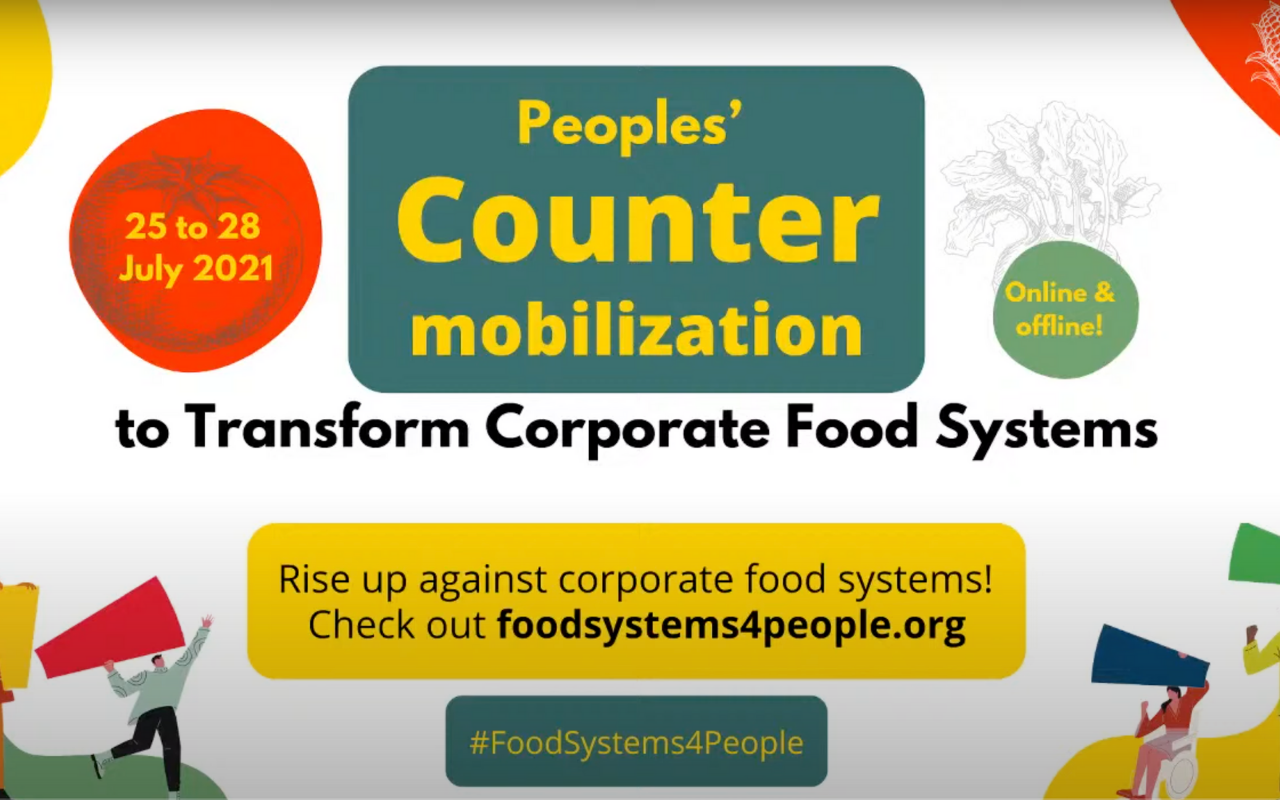
Read more Mr. Marí, what happened at the alternative summit?
Read more What is wrong with our nutrition in Germany, Mr. Plagge ?

Read more How Can We Feed The World in Times of Climate Change?

Read more Food System Transformation Starts and Ends with Diversity

Read more Sustainable Artisanal Fisheries and Aquaculture in Rural Areas

Read more Land Rights for Secure Livelihoods: My Land is My Life

Read more City, Country, Sea: 6 Innovations in the Fight Against Climate Change

Read more Engaging the Community to Solve the Bushmeat Crisis

Read more German G7 Presidency – fighting hunger with all our might

Read more ‘Invite yourself’ – Farmers organisations as key stakeholders of food systems

Read more The lessons learned from the last food crisis - A solution?

Read more ‘Preserving and restoring fertile soils is a global responsibility.’

Read more What does it take to truly shift the paradigm on food systems?

Read more Strengthening food markets across the rural-urban continuum

Read more A dashboard as a key tool for global food security

Read more The importance of water for sustainable rural development
Read more How the War against Ukraine Destabilizes Global Grain Markets
Read more The Black Sea Breadbasket in Crisis: Facts and Figures

Read more Fair Trade and Climate Justice: Everything is Conntected

Read more The Rice Sector in West Africa: A Political Challenge

Read more 5 Questions for Jann Lay: What is Corona doing to the economy?

Read more Sustainable, feminist and socially just: The new Africa strategy of the BMZ

Read more The goals of transformation should leave no one behind

Read more BMZ releases video on the transformation of agricultural and food systems

Read more “More of the same is not enough - we need to rethink”

Read more Agricultural prices and food security – a complex relationship

Read more Strengthening the market linkages of smallholders in the face of global supply shocks

Read more Innovative donor approaches and sustainable finance – A Review of UNFSS+2

Read more What is needed for a long-term fertiliser strategy?

Read more What the Middle East conflict means for the children in Gaza

Read more Agricultural Financing – from a broader Perspective

Read more Where can international cooperation in Gaza come in, Ms. Asseburg?

Read more A framework for sustainable and fair agriculture and food systems

Read more From Pledges to Progress: Nutrition at the Heart of Inclusive Development

Read more Working with Informality: Unlocking Community-Led Solutions Towards Zero Hunger

Read more From Subsidies to Sustainability: The Future of Global Fisheries

Read more Alternative Proteins as a Contribution to Future-Proof Food Systems Worldwide

Read more Is the international community still on track in the fight against hunger?

Read more A Climate of Hunger: How the Climate Crisis Fuels the Hunger

Read more How are transformation and crisis intervention related, Dr. Frick?