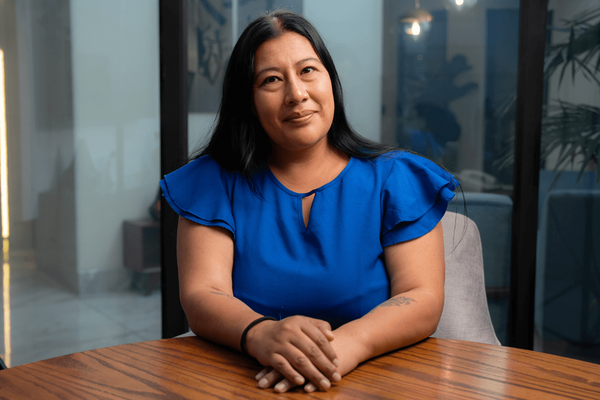
Women as guardians of our ocean
In coastal communities, women are closely connected to the ocean as processors, traders, and holders of local ecological knowledge. Yet their contributions to fisheries and marine governance often remain invisible, despite being essential for the sustainable use and protection of marine resources.

Our ocean is an important source of life for billions of people worldwide: It provides nutritious aquatic food and secures livelihoods in vulnerable coastal communities. Yet, this huge ecosystem is under severe threat. Overfishing, pollution and climate change are driving marine biodiversity to the brink. Sustainable use and protection of ocean resources are urgently needed.
Women in small-scale fishing communities are central actors in this challenge – they are at the forefront of managing marine protected areas, hold critical ecological knowledge and act as conversation champions. They live close to the ocean, they use it and care for it. They conserve it and depend directly and indirectly on it. Women constitute almost half of the fisheries workforce, primarily in small-scale, household-level pre-processing and marketing. Despite this, their role and contributions are often underestimated and not fully acknowledged. As in many parts of the world, they are constrained by gender norms, limiting their entrepreneurial involvement and access to opportunities such as training, networking, and credit. In over 80% of small-scale fisheries, women have little to no participation in management decisions.
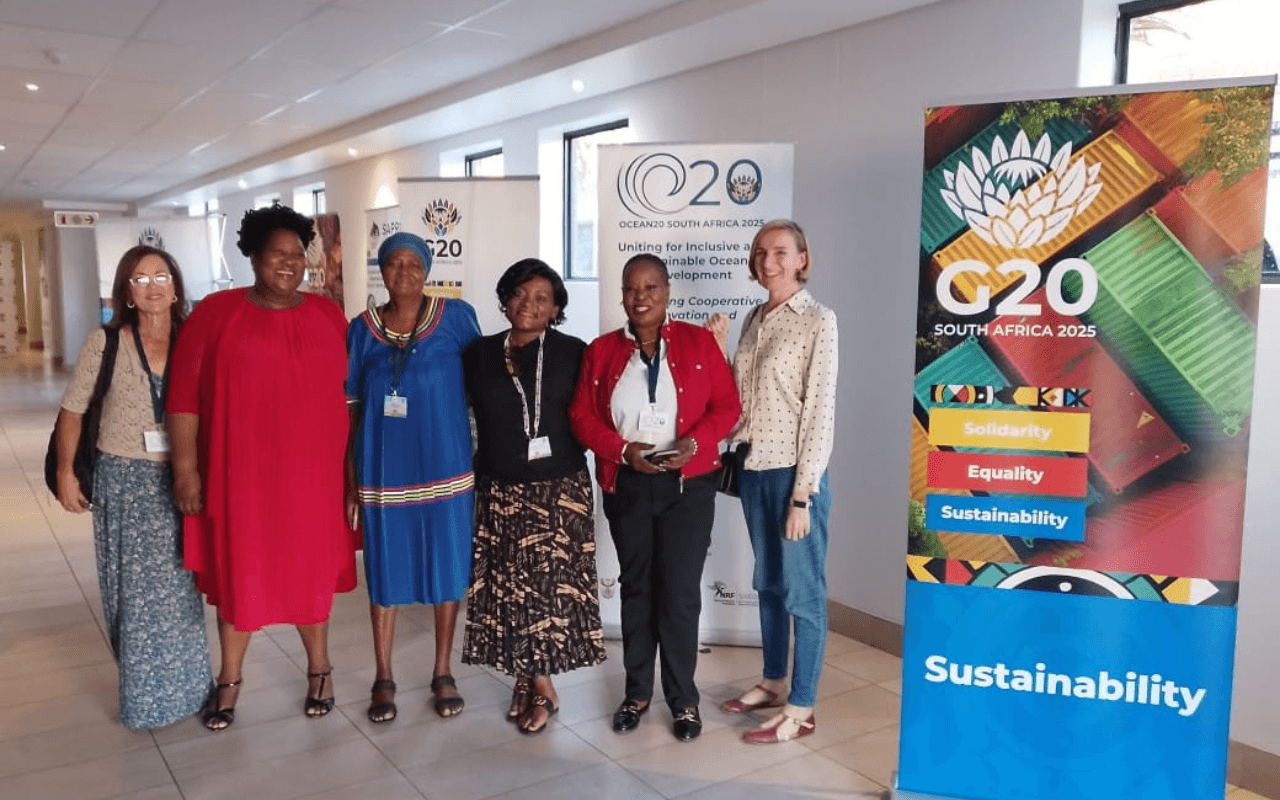
This is why Deutsche Gesellschaft für Internationale Zusammenarbeit (GIZ) GmbH is committed to strengthening women in small-scale fisheries at global, regional and local level. The Global Programme “Sustainable Aquatic Foods” (SAF) is commissioned by the German Federal Ministry for Economic Cooperation and Development (BMZ) and co-funded by the European Union. It enhances women’s advocacy power in political platforms and builds their capacities to improve their internal organisational and lobbying capacities, ensuring a better inclusion in management decisions. As part of this mission, the programme supports the South African Network for Women in the Fisheries and Aquaculture Sector (SANWFA). The network could participate at the G20 Ocean Summit in Cape Town 2025. It pushed for higher ambitions and better technical and financial capacity development of women in fish processing and enhanced market access conditions.
Including women in political debates and decision-making processes makes their valuable contributions to sustainable ocean governance visible and drives progressive policy development. Strengthening women's roles in coastal communities is not just a matter of equity – it is a cornerstone for effective ocean biodiversity conservation and resilient food systems.
Related articles

From pond to plate – how aquaculture leverages women empowerment in Myanmar
Read more From pond to plate – how aquaculture leverages women empowerment in Myanmar

Leidy: Coffee producer who creates opportunities for women and young people
Read more Leidy: Coffee producer who creates opportunities for women and young people

Sowing Seeds of Leadership: Ahalya Sahu’s Journey in Natural Farming
Read more Sowing Seeds of Leadership: Ahalya Sahu’s Journey in Natural Farming

Kristina Rampang: A Mother, A Farmer, A Community leader
Read more Kristina Rampang: A Mother, A Farmer, A Community leader

Cultivating Resilience in Times of Climate Change: Madam Racheal’s Journey in Soy Farming
Read more Cultivating Resilience in Times of Climate Change: Madam Racheal’s Journey in Soy Farming

Farming Hopes: Haribati's Journey of Empowerment and Resilience
Read more Farming Hopes: Haribati's Journey of Empowerment and Resilience

Her land, her rights: Justice through technology

The International Year of the Woman Farmer: Women as Drivers of Change
Read more The International Year of the Woman Farmer: Women as Drivers of Change