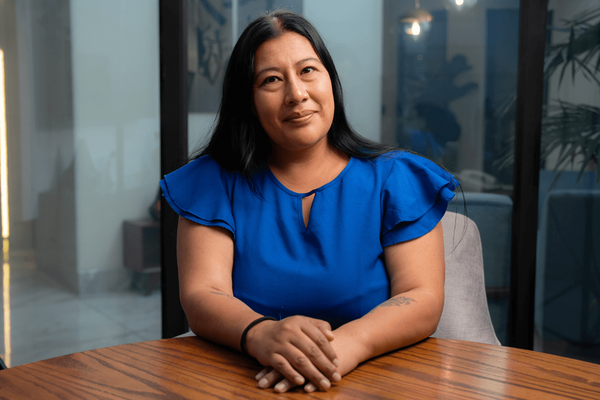
Sowing Seeds of Leadership: Ahalya Sahu’s Journey in Natural Farming
Ahalya Sahu, a farmer from Pondi village in Madhya Pradesh, India, exemplifies the strength and leadership of women in agrifood systems. Though her education ended after eighth grade due to early marriage, she turned experience into expertise, building a successful livelihood through natural farming and becoming a respected community leader.


Ahalya’s journey started in May 2022, when Ms Bhumkka, a Community Resource Person from the Andhra Pradesh Community Managed Natural Farming (APCNF) programme, introduced her to natural farming. Motivated by the promise of healthier soils and reduced input costs, Ahalya decided not only to transform her own farm, but also to inspire change beyond it.
She began organising Mahila Sabhas, that is women-led village assemblies that provide a collective platform for women farmers to discuss farming practices, share knowledge, and participate in local decision-making and village-level meetings to raise awareness about natural farming with the goal to encourage more women farmers to adopt sustainable agricultural practices.
With support from the Indo-German cooperation project ‘Soil Protection and Rehabilitation for Food Security in India’ (ProSoil), implemented by the Deutsche Gesellschaft für Internationale Zusammenarbeit (GIZ) GmbH on behalf of the Federal Ministry for Economic Cooperation and Development (BMZ), she was able to expand her natural farming practices. The project helps scale up sustainable farming methods across Madhya Pradesh, supporting farmers like Ahalya to build productive and resilient livelihoods.
With guidance from Natural Farming Community Resource Persons (NF-CRPs), Ahalya began practising natural farming on her one acre of land. Within a month, she adopted the Pre-Monsoon Dry Sowing (PMDS) model, sowing fifteen indigenous seed varieties. This diversified approach improved soil health, enhanced structure, and lowered cultivation costs. She also rears goats, adding to her income and strengthening crop–livestock integration.
The impact of the PMDS model was substantial. Ahalya observed that her soil became friable and well-suited for paddy transplantation, leading to almost 40 percent reduction in cultivation costs. Since adopting natural farming in 2022, she has earned a higher income than she previously did through chemical farming. She now produces her own fertilisers and bio-pesticides using animal excreta, cow urine, neem, bio-compost and other locally available natural materials. This has reduced her dependence on external inputs while safeguarding soil biodiversity and environmental health.
Beyond her fields, Ahalya inspires women farmers, promoting natural farming for food security and resilience.
“When women understand their soil, they understand their strength,” she says, adding: “If one woman learns and succeeds, many more will follow.”
Related articles

Kristina Rampang: A Mother, A Farmer, A Community leader
Read more Kristina Rampang: A Mother, A Farmer, A Community leader

Leidy: Coffee producer who creates opportunities for women and young people
Read more Leidy: Coffee producer who creates opportunities for women and young people

From pond to plate – how aquaculture leverages women empowerment in Myanmar
Read more From pond to plate – how aquaculture leverages women empowerment in Myanmar


Cultivating Resilience in Times of Climate Change: Madam Racheal’s Journey in Soy Farming
Read more Cultivating Resilience in Times of Climate Change: Madam Racheal’s Journey in Soy Farming

Farming Hopes: Haribati's Journey of Empowerment and Resilience
Read more Farming Hopes: Haribati's Journey of Empowerment and Resilience

Her land, her rights: Justice through technology

The International Year of the Woman Farmer: Women as Drivers of Change
Read more The International Year of the Woman Farmer: Women as Drivers of Change