


From "Just a Young Girl" to a Leader
As a young leader in northern Uganda, Sarah Awor had to overcome stereotypes, limited resources, and family resistance. Today, she represents a new generation of women farmers who see agriculture as a space for entrepreneurial and collective transformation.

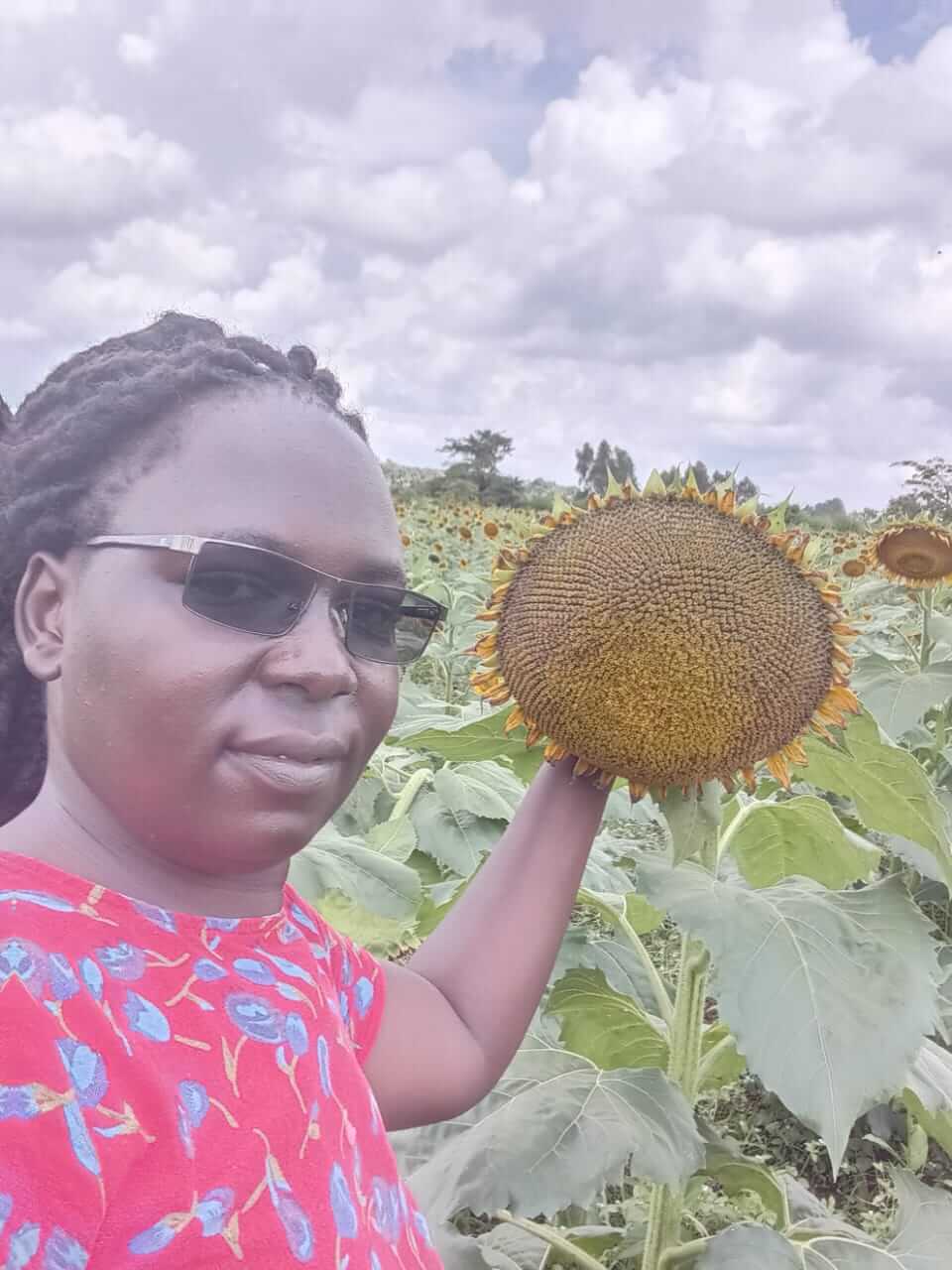
At the age of 32, farmer Sarah Awor was known as a youth leader in the Lira district in Northern Uganda. However, her leadership role came with significant challenges. Many dismissed her as ‘just a young girl’. She lacked the financial resources, meeting spaces and reliable transport to reach the communities. Her family doubted her leadership, and it was difficult to balance her domestic duties with mobilising the communities.
“It was a challenge getting my family, especially my husband, to accept my role as a leader. There were many things I couldn’t do because my family doubted the whole thing.”
At that time, Sarah farmed just one hectare of land. This made it hard for people to believe that one could be successful in agriculture. The youth groups she was trying to mobilise were discouraged by a lack of money and land, volatile markets and the perception that agriculture was not a serious livelihood.
As part of the Global Programme Strenghening Farmers Organisations for Sustainable Agricultural Development, dlv-LandFrauen gGmbH has been working in Ghana and Uganda to provide targeted support for women in rural areas. Since 2017, dlv-LandFrauen gGmbH has been the international division of the German Rural Women’s Association (dlv). For over 75 years, the dlv has been committed to the economic, social and political empowerment of women in rural areas. Guided by the principle ‘By rural women – for rural women’, dlv-LandFrauen gGmbH built a bridge between local realities and global solutions. dlv has promoted solidarity-based learning across national borders. Through close cooperation with local partners, networks have grown in which women not only raised awareness of their concerns but also actively took on responsibility and jointly found ways to drive sustainable change in their communities.
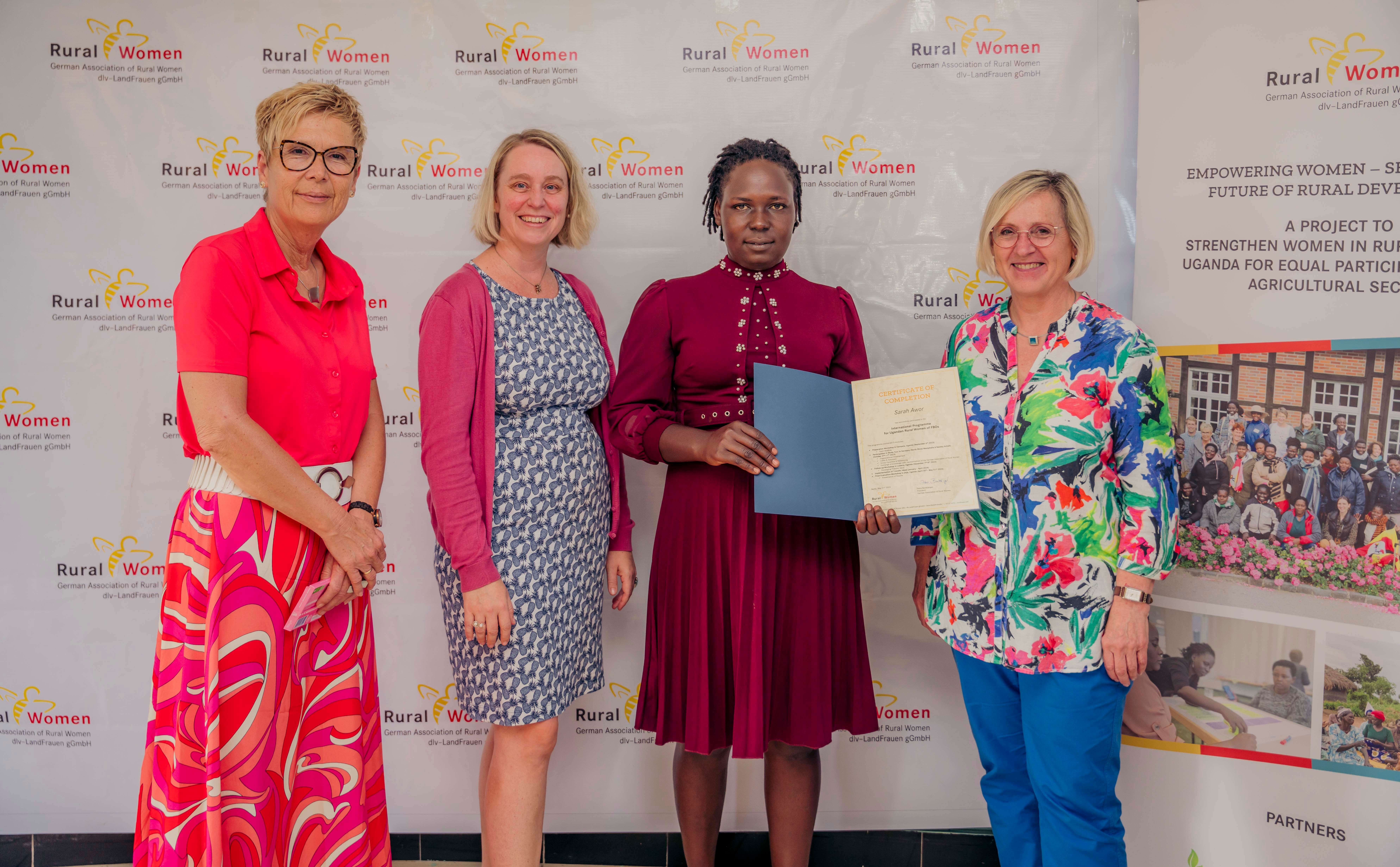
dlv-LandFrauen gGmbH supported Ugandan rural women in taking on leadership roles and expanding their networks. The participants were able to take part in exchanges and training courses in Germany. There, they learnt how to further develop their organisations, represent their interests and take on leadership roles. During visits to farms, the rural women also gained insights into animal husbandry and farming methods in Germany. They subsequently put the knowledge they had acquired into practice in Uganda. At the same time, they shared their experiences within their respective women’s organisations, thereby empowering other women farmers and their communities.
Being selected for the international programme as a young woman boosted Sarah’s self-confidence and personal development. During the study trip to Germany, her perspective broadened and she developed a new confidence to put her ideas into practice.
When she returned home, Sarah launched her transfer initiative: she wanted to encourage women and young people to get involved in the agricultural sector and environmental protection. She organised four youth groups, registering over 600 members. She trained the members in the use of better, certified seeds and showed them how to store and process their produce more effectively. She also established tree nurseries that both generate income and contribute to reforestation in the region.
What grew from this commitment is tangible: Sarah expanded her land from one to six hectares and increased her income and savings. Her leadership skills are now recognised beyond the region because she works with district authorities, national organisations such as UNYFA and international partners. The women in her youth groups have changed their attitude towards farming and now see themselves as businesswomen. They have established financial foundations to save the money they earn.
“If you have the chance to do something, give it your all – and if it works, help others,” says Sarah.
Her journey proves that young women, when trusted and supported, can bring about significant change.
Related articles

Leidy: Coffee producer who creates opportunities for women and young people
Read more Leidy: Coffee producer who creates opportunities for women and young people

From pond to plate – how aquaculture leverages women empowerment in Myanmar
Read more From pond to plate – how aquaculture leverages women empowerment in Myanmar


Sowing Seeds of Leadership: Ahalya Sahu’s Journey in Natural Farming
Read more Sowing Seeds of Leadership: Ahalya Sahu’s Journey in Natural Farming

Kristina Rampang: A Mother, A Farmer, A Community leader
Read more Kristina Rampang: A Mother, A Farmer, A Community leader

Cultivating Resilience in Times of Climate Change: Madam Racheal’s Journey in Soy Farming
Read more Cultivating Resilience in Times of Climate Change: Madam Racheal’s Journey in Soy Farming

Farming Hopes: Haribati's Journey of Empowerment and Resilience
Read more Farming Hopes: Haribati's Journey of Empowerment and Resilience


