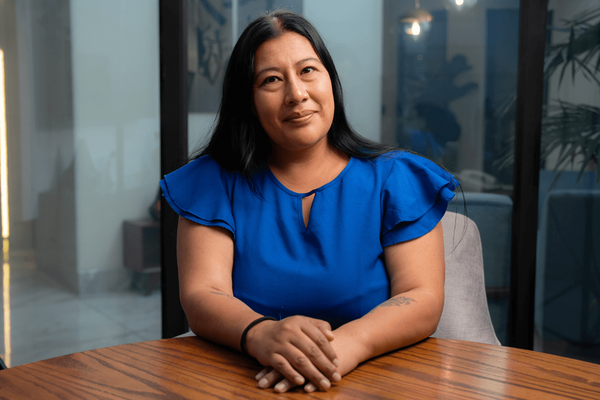
From pond to plate – how aquaculture leverages women empowerment in Myanmar
In rural Myanmar, aquaculture is a key source of food and income for many households, yet remains highly vulnerable to instability and rising production costs. For women like Daw Ni Ni Than, fish farming is increasingly becoming a pathway from economic dependency towards greater stability and self-determination.

Before the sun breaks over the horizon in Rakhine State, Daw Ni Ni Than is already at her fishpond. In the quiet morning mist, she checks the water quality and prepares feed by hand. As a mother of three and a grandmother, she is the main provider for her family. For many years, she struggled with low production, high costs, and limited technical training. Living in a conflict-affected area made farming even harder.
“There were times when I wanted to give up,” she says. “Each poor harvest made me feel like I was failing my family.”
A large portion of Myanmar’s population relies on subsistence farming and faces fluctuations in food supply due to seasonal and structural conditions. One in six households is affected by food insecurity, both in terms of the quantity and quality of food. Especially women living in rural areas are additionally experiencing a steady decline in their income. Faced with shrinking household incomes, women report skipping meals, taking out loans, and selling anything of value just to make ends meet.
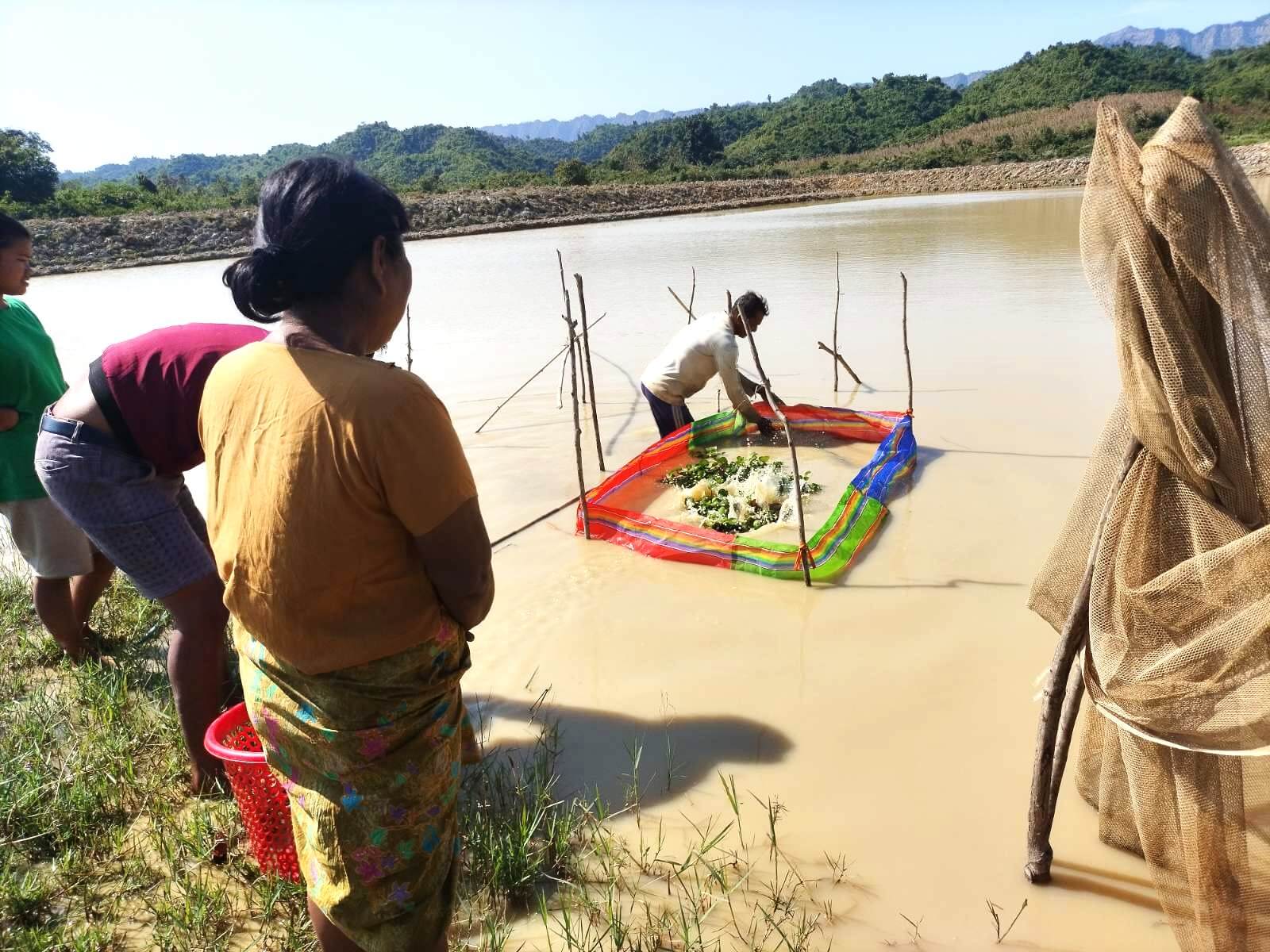
Aquaculture presents a crucial source of nutritious aquatic foods like fish. It is a great opportunity for women in Myanmar to gain economic independency and empowerment. But the aquatic food sector has faced several challenges: When local fish hatcheries shuttered, fingerlings had to be transported from far away, and many died on the way. With unstable income and high production costs, food security was never a certainty.
Daw Ni Ni Than’s life began to change, when she joined the Food and Nutrition Security – Rakhine (FNS-R) project. It is funded by the German Federal Ministry for Economic Cooperation and Development (BMZ) and implemented by Deutsche Gesellschaft für Internationale Zusammenarbeit (GIZ). The project aims to enhance dietary and hygiene practices among communities in Myanmar and addresses the complex causes of malnutrition by prioritizing women’s needs, promoting climate awareness and implementing multi-dimensional approaches. Activities include capacity building of small-scale fish farmers and processors on best production methods and post-harvest handling and processing as well as implementing climate adaptation strategies and disaster risk management systems to improve responses to climate-related challenges.
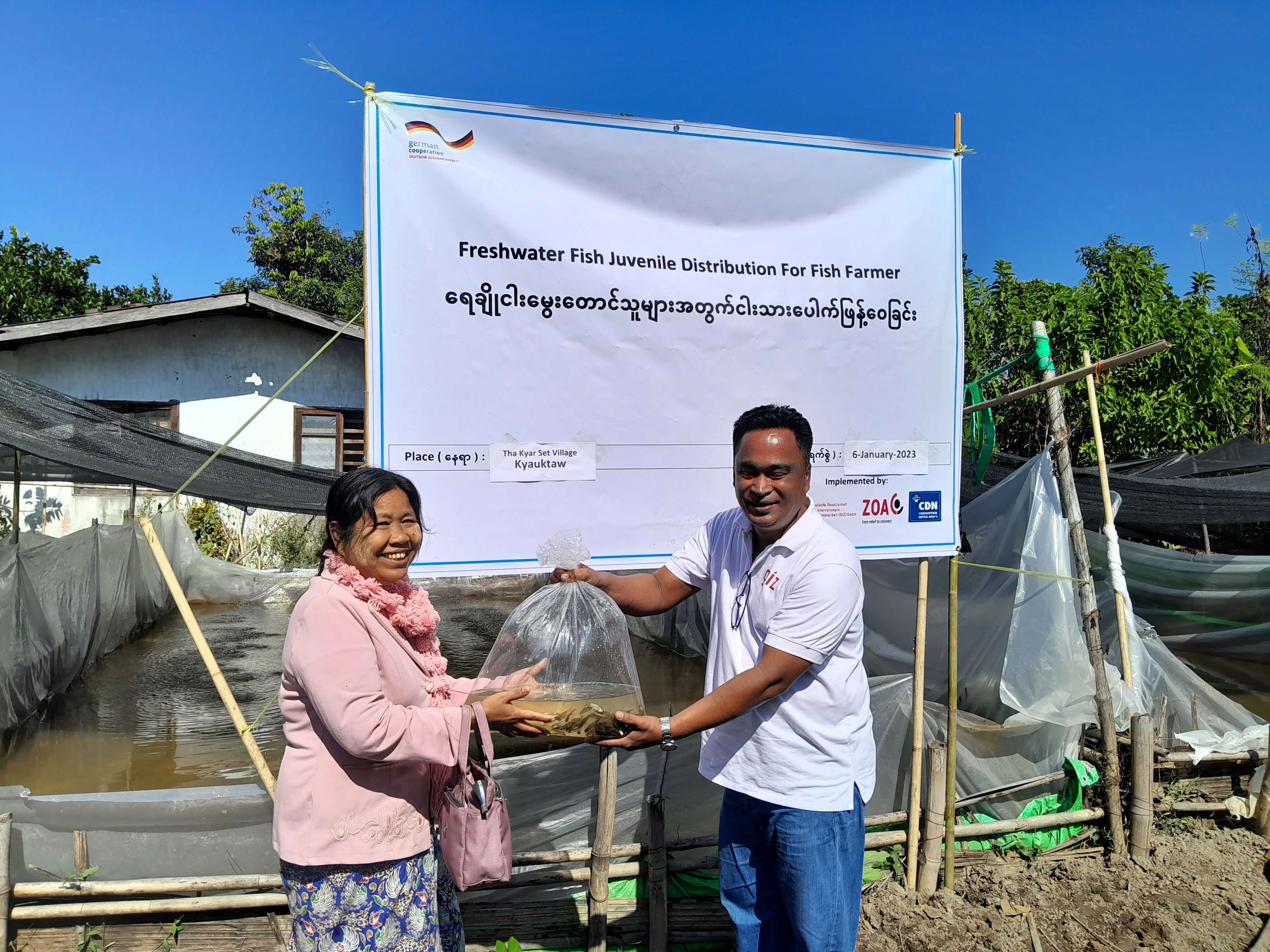
With support to renovate her pond, new equipment, and practical training, she learned how to manage water quality, prevent disease, and produce fingerlings locally. “Every morning, I check the water quality and feed the fish myself,” she explains. “These ponds are my responsibility and my pride.”
After seven months, her hard work paid off. Her harvest increased from 192 to 980 kilograms, and her income more than doubled to 6.8 million MMK. This allowed her family to eat better, send her children to school, and reinvest in upgrading her business.
“When the fish grew strong, I knew hunger would no longer control our lives,” she says. “We had food and hope.”
Today, she is one of the few local fingerling producers in her village. She trains and advises other women farmers, helping them improve their livelihoods and confidence. By sharing her skills, she strengthens local food systems and reduces dependence on outside suppliers. “I want other women to believe in themselves,” she says. “If I can do this, they can too. If you have a dream,” she says, “keep learning and never stop working for it. Our future is in our hands.”
Related articles

Cultivating Resilience in Times of Climate Change: Madam Racheal’s Journey in Soy Farming
Read more Cultivating Resilience in Times of Climate Change: Madam Racheal’s Journey in Soy Farming

Leidy: Coffee producer who creates opportunities for women and young people
Read more Leidy: Coffee producer who creates opportunities for women and young people


Sowing Seeds of Leadership: Ahalya Sahu’s Journey in Natural Farming
Read more Sowing Seeds of Leadership: Ahalya Sahu’s Journey in Natural Farming

Kristina Rampang: A Mother, A Farmer, A Community leader
Read more Kristina Rampang: A Mother, A Farmer, A Community leader

Farming Hopes: Haribati's Journey of Empowerment and Resilience
Read more Farming Hopes: Haribati's Journey of Empowerment and Resilience

Her land, her rights: Justice through technology

The International Year of the Woman Farmer: Women as Drivers of Change
Read more The International Year of the Woman Farmer: Women as Drivers of Change