Newsletter
Don't miss a thing!
We regularly provide you with the most important news, articles, topics, projects and ideas for One World – No Hunger.
Newsletter
Don't miss a thing!
We regularly provide you with the most important news, articles, topics, projects and ideas for One World – No Hunger.
Please also refer to our data protection declaration.
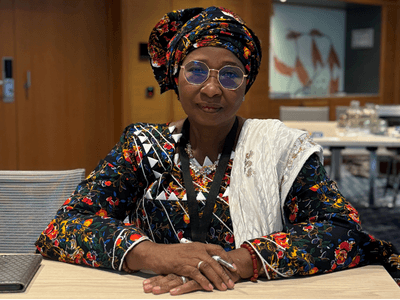
In Mali, women farmers are facing multiple challenges at once. Climate change is degrading land and making natural resources increasingly scarce, while conflict is forcing communities to leave behind their livelihoods. At the same time, women continue to produce food, feed their families and contribute to peace and community development. We spoke to Fatoumata Goundou Sissoko, President of the Réseau des Femmes pour les Droits Environnementaux (REFEDE Mali, english: Network of Women for Environmental Rights), about what resilience means for women farmers in Mali, the barriers they continue to face and why women need to be at the heart of decisions about the future of food systems.

When you think about the farming communities you work with in Mali, what does resilience look like today?
Fatoumata Goundou Sissoko: The resilience of communities, particularly women, is their capacity to continue producing, feeding their families, and investing in peace and community development. Despite security challenges, climate change and economic difficulties, these women continue to produce and ensure the nutrition of their families.
Women are not only on the front line when it comes to these challenges. They also drive solutions.
What are currently the biggest challenges preventing women from contributing fully to resilient food systems in Mali?
One fundamental problem is access to land, particularly because of traditions and customs. In rural areas, there is still the idea that land should not be given to a woman because she will eventually marry and join another family. If she owns land belonging to her family, the concern is that she will take it into another family. But things are gradually changing. Mali’s agricultural law requires a share of developed agricultural land to be allocated to women.
Editor’s note: Under Mali’s 2017 Agricultural Land Law, at least 15 percent of agricultural land developed by the state or local authorities is to be allocated to women’s and youth groups and associations.
And is the situation different in urban areas?
In urban areas, this problem is different because if women have sufficient income, they can buy land and work without these obstacles. But in rural areas, women often do not have the financial resources or access to finance to buy land for their production. That is why we work together with village chiefs and local authorities so that, through consultation, women can access land. Rather than allocating plots individually, women can organise themselves into cooperatives or groups. The land is then allocated to their organisation with an official administrative document so that it cannot simply be taken away once they have invested in it.
Beyond access to land, what other challenges do women face?
Women also lack access to training in technologies and innovations, as well as financing and participation in decision-making. In rural areas, boys are still more likely to go to school, while women often have fewer educational opportunities. They carry the burden of domestic work and often marry very young. As a result, they do not always have the opportunity to develop the skills and capacities they need to participate in decision-making bodies and defend their own concerns and needs.
Climate change is another major challenge. We are facing land degradation while natural resources, particularly water, are becoming increasingly scarce. Yet, water is essential for agricultural production.
And in Mali specifically, we also have the security challenge. Insecurity often forces people to move from one area to another. Once you leave your community, you also leave behind your means of production and your livelihoods. You have to start a new life somewhere else. This requires significant support and financing. People need the means to restart income-generating activities, support their families and ensure that their children can continue going to school. There is also the challenge of illiteracy and access to digital technologies. In today's world, women need to be able to use these tools to access information and markets. All of these are challenges facing our rural women.
Among these interconnected challenges, which feel most pressing for women in Mali today?
That is difficult (to answer) because climate change is a major challenge today. All factors of production are linked to it. Climate change affects almost everything we undertake. And then there is security. These are two of the biggest challenges we face.
Can you share an initiative that has already made a real difference for women and rural communities?
Yes. We developed a project supporting the resilience of communities in Djenné, Mopti and the district of Bamako in the context of climate change. One of the main areas we worked on was women's participation in decision-making. It can open opportunities for financing, strengthen community resilience and increase women's participation in community and solidarity initiatives. At the time, Mali's National Disaster Risk Reduction Strategy was being revised. We used this opportunity to advocate for gender issues to be included in the strategy, bringing together technical and financial partners, government institutions, NGOs, women's organisations and youth organisations in consultation workshops.
And was the advocacy successful?
Yes. Women's concerns were incorporated into the national document. Similar processes were carried out in Mopti and Djenné so that (the perspectives of) different actors could be represented in strategic policies at national, regional and local levels. And the second part of the project focused on income-generating activities, supporting young people in central Mali whose livelihoods are affected by insecurity and climate change. We provided equipment and working capital for activities such as market gardening, poultry and fish farming, combined with a mentoring system to provide continued support beyond the project.
What message would you like policymakers and decision-makers to take from the experiences of women farmers in Mali?
The message I would like to give is that women farmers are not just beneficiaries, but drivers of solutions. Their local knowledge needs to be valued, and women need to be able to take ownership of financing mechanisms that already exist. Local authorities should integrate women's resilience and food systems transformation into their development plans, because women are at the beginning and at the end of the food system.
They need to be at the heart of decisions and strategies, whether at national, regional or local level.

Read more Digital participation in the agrofinance sector: rural development and women's inclusion

Read more Towards Climate Justice: Securing Women’s Land Rights for a Resilient Tomorrow

Read more Gender-Transformative Approaches – Unlocking Everyone’s Potential

Read more A political opportunity to overcome structural barriers for women farmers

Read more Food Systems, Law, and Social Inclusion: Reflections from Kenya

Read more It Takes the Whole Family: Why Family Farming Builds (Climate) Resilience

Read more “Corona exposes the weaknesses of our nutritional systems"
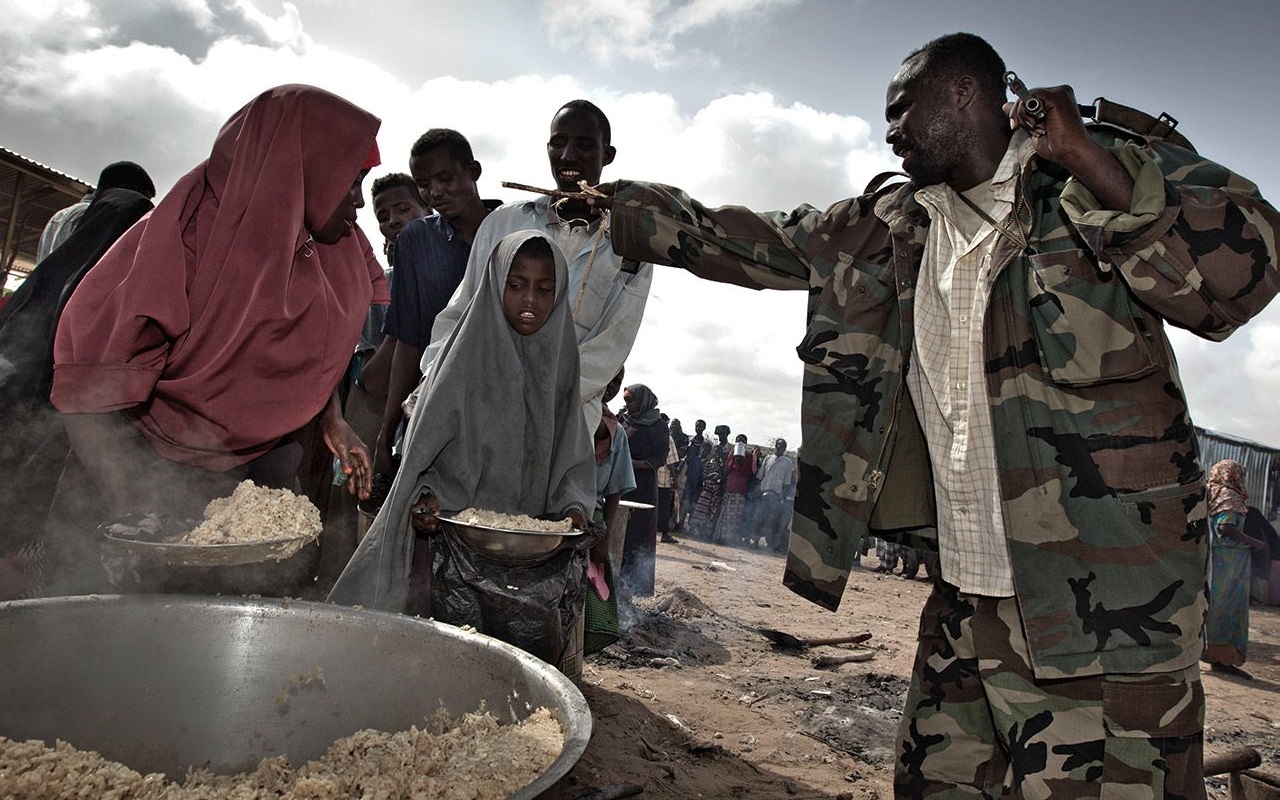
Read more 5 questions to F. Patterson: Why is there more hunger?

Read more Is the international community still on track in the fight against hunger?


Read more Global responsibility: Tackling hunger is the only way forward

Read more A Climate of Hunger: How the Climate Crisis Fuels the Hunger

Read more How are transformation and crisis intervention related, Dr. Frick?
Read more How the War against Ukraine Destabilizes Global Grain Markets
Read more The Black Sea Breadbasket in Crisis: Facts and Figures

Read more What the Middle East conflict means for the children in Gaza

Read more "Climate change is unifying people from the region"

Read more Where can international cooperation in Gaza come in, Ms. Asseburg?

Read more “Sooner or later, peace will have to be negotiated for the future of Sudan”

Read more Climate Adaptation Summit 2021: ‘We can do better’

Read more Mr. Samimi, what is environmental change doing to Africa?

Read more Resilient small-scale agriculture: A key in global crises

Read more Gender equality: Essential for food and nutrition security


Read more Planetary Health: Recommendations for a Post-Pandemic World

Read more This is how developing countries can adapt better to droughts

Read more The North bears the responsibility, the South bears the burden

Read more How Can We Feed The World in Times of Climate Change?
Read more Nine Harvests Left until 2030: How Will the BMZ Organise Itself in the Future?

Read more Innovate2030: Digital Ideas against Urban Climate Change

Read more ‘None of the Three Traffic Light Coalition Parties is Close to the Paris Agreement’

Read more How to Enhance Soil Organic Carbon – Uniting Traditional and Innovative Practices

Read more Building Better Resilience to Transboundary Threats

Read more Building climate-resilient and equitable food systems: Why we need agroecology

Read more Fair Trade and Climate Justice: Everything is Conntected

Read more COP27: Agri-food systems in the focus of the climate discussion

Read more G7 Sustainable Supply Chains Initiative: From Commitment to Action

Read more Climate, biodiversity and nutrition are inextricably linked

Read more Why biodiversity is important for climate protection & food security - and vice versa

Read more Social justice and climate justice: Fair Vibe at the Youth Climate Conference