Newsletter
Don't miss a thing!
We regularly provide you with the most important news, articles, topics, projects and ideas for One World – No Hunger.
Newsletter
Don't miss a thing!
We regularly provide you with the most important news, articles, topics, projects and ideas for One World – No Hunger.
Please also refer to our data protection declaration.
20 years of international engagement, 10 years of successful collaboration with Deutsche Gesellschaft für Internationale Zusammenarbeit (GIZ) GmbH. Andreas Hermes Akademie (AHA) has achieved a very special milestone and invited partners to discuss what has worked in the past and what is needed in the future to create resilient agricultural and food systems. On this occasion, AHA also launched its new publication Farmers’ Organisations, a handbook, which is now available online for practitioners worldwide.

Experts from the agricultural and food industry, representatives of the private sector, and key decision-makers from politics and associations — including the Federal Ministry for Economic Cooperation and Development (BMZ) and the Federal Ministry of Agriculture, Food and Rural Identity (BMLEH): They all gathered on 20 May 2026 in Berlin to show their appreciation for the long term collaboration and achievements with Andreas Hermes Akademie (AHA). Nicole Bolomey, Director of AHA International, opened the evening by reminding the audience of the turbulent times and the role of agriculture within it: “In a world that is up-side down, our attitude, humility and mutual trust must be the foundation for new ways of working together and building an agricultural and food sector that benefits the wellbeing of us all.”
“In a world that is up-side down, our attitude, humility and mutual trust must be the foundation for new ways of working together and building an agricultural and food sector that benefits the wellbeing of us all.”
AHA is a national educational institution supported by 13 member organizations from the agricultural sector and rural communities. Internationally, its core tasks are training, leadership development and organisational development – a tailored approach to support farmers, farmers’ organisations, cooperatives, networks of young farmers, and other actors in the agricultural and food industry in Africa, Asia and other parts of the world. One important element are entrepreneurship trainings (b|u|s), AHA has set up and is providing together with regional and international trainer pools. Among the trainers present at the celebration, Tewodros Eshetu, who has been coordinating and providing trainings for over 1.500 farmers in Seed Producing Cooperatives in Ethiopia. Various activities, such as, bookkeeping courses and round-table discussions, helped the cooperatives to manage their businesses more professionally and attract new members.
This was also thanks to the support of the “Global Programme Strengthening Farmers’ Organisations for Sustainable Agricultural Development” of GIZ. Throughout more than ten years, the programme has supported AHA and other partners in their activities in Ethiopia, Burkina Faso, Kenya, Uganda, Togo, Zambia, Benin, South Africa and India. Overall, around 800 trainers have trained approximately 40,000 people in entrepreneurship, leadership and advocacy. Around 600 organisations have received organisational development.
“In a time, where not only budgets, but also spaces of civil society are shrinking, BMZ would like to emphasise the importance of organisations like Andreas Hermes Akademie for German development cooperation”, Dr Andreas Schaumayer, head of BMZ division on Food security and water[CJ1] [JP2] , said in his keynote address. “Over the past ten years, we have seen how your experience and local connections have been essential for the successful support of partner organisations around the world.” Reflecting on the future role of young farmers, Dr Andreas Schaumayer added: “The next decade will offer significant opportunities for young agripreneurs — not only in farming, but across the broader agricultural economy: processing, logistics, repair and maintenance services, digital traceability, climate advisory services, input provision, certification support, renewable energy and local food businesses.”
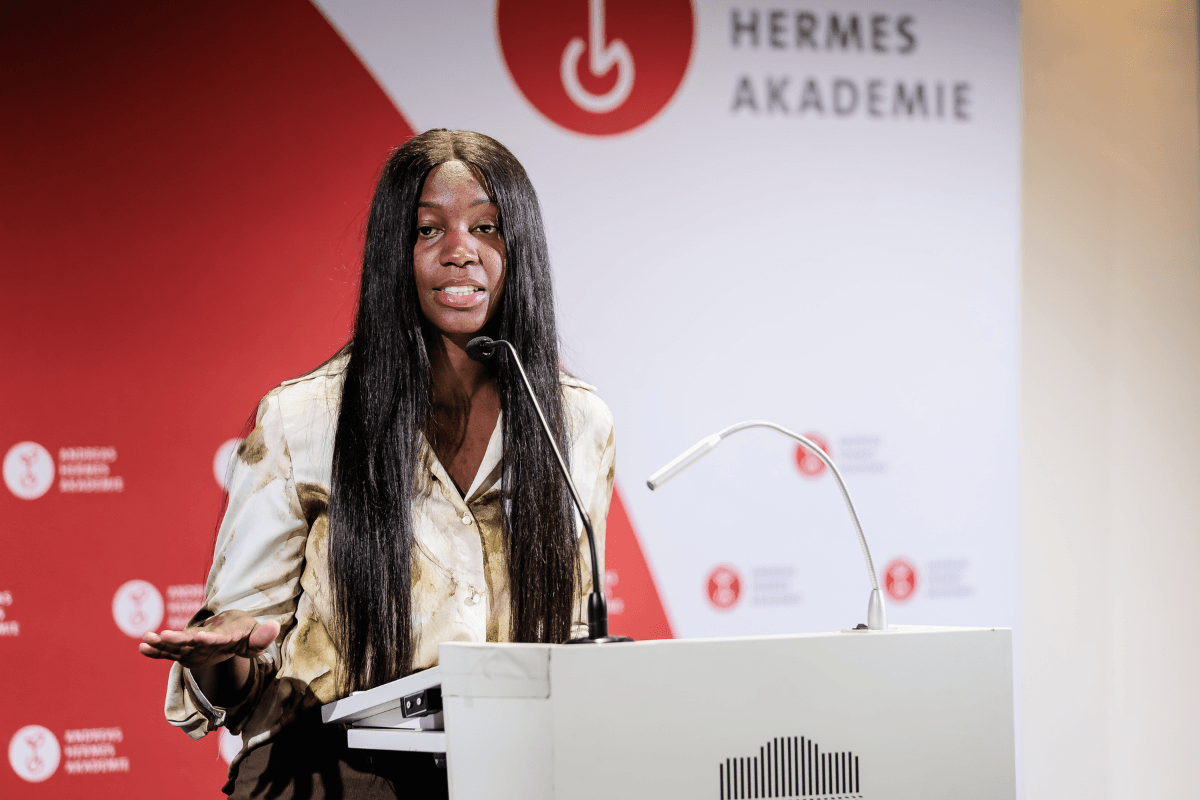
How young farmers can be seen as custodians of the transformation of agricultural and food systems became evident through the impressive journey of Kakunandunda Kaikajora Oshoveli Katuuo, a young female farmer from Namibia. She provided insights on the challenges and opportunities for young farmers in rural areas. Her journey into horticulture began unexpectedly during the COVID-19 lockdown in 2020. Kakunandunda and her family were placed in Aminuis, a small community in one of Namibia’s most drought-prone regions. Borders closed, stores emptied, and the stark reality of food insecurity became impossible to ignore. “I remember walking through the village and realizing that if we didn’t act, families here would go hungry,” she recalls. That moment planted the seed for Orevia Green Farms. What started as a response to crisis quickly grew into a thriving enterprise supplying fresh produce to schools, retailers, and regional institutions. At Orevia Green Farms, Kakunandunda demonstrates how women sustain agricultural and food systems through leadership, care, and domestic responsibility. She shaped her leadership skills with the Young Leadership Incubation Programme (YLIP), facilitated by AHA in cooperation with the Southern African Confederation of Agricultural Unions (SACAU). Her leadership extends beyond the farm gates: she engages with policy discussions and youth farming initiatives, ensuring that women and young people have a voice in shaping Namibia’s agricultural future.
Martina Englhardt-Kopf, Parliamentary State Secretary of the Federal Ministry of Agriculture, Food and Rural Identity (BMLEH), reacted on this success story by saying that Kakunandunda is a role model for women in agriculture. She reminded the audience of the International Year of the Woman Farmer the United Nations have called for 2026, highlighting the important role women play in agricultural and food systems. Mrs. Engelhardt-Kopf reaffirmed also the importance of education for young and women farmers. “As a centre of expertise for personal and organisational development, the AHA is a cornerstone of agricultural training and education”, she emphasised.
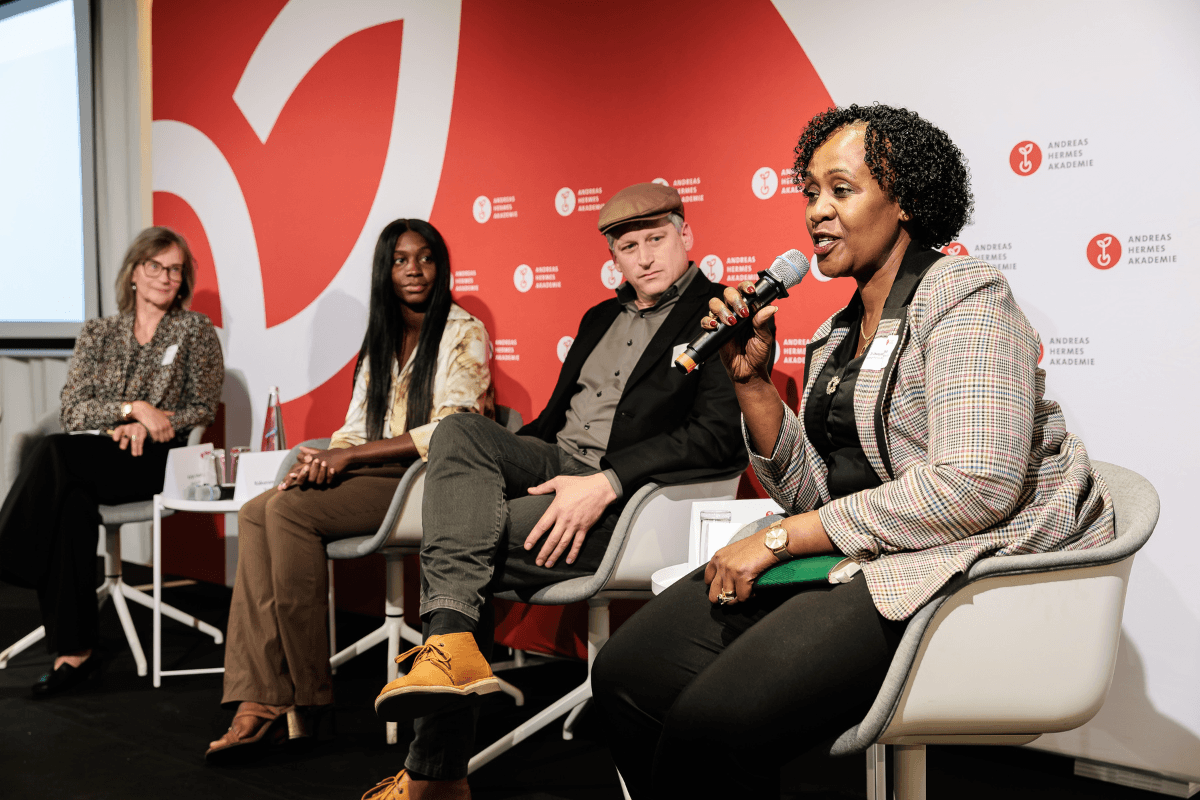
During the panel discussions, participants addressed both the challenges and opportunities facing agricultural entrepreneurship and farmer empowerment. Jaqueline Mkindi, CEO of the Tanzania Horticultural Association (TAHA), highlighted persistent logistical barriers to inter-regional and intercontinental trade, while also pointing to the significant market potential within Africa itself. She further emphasised the importance of capacity building for smallholder farmers, stressing that “smallholders on the ground must understand what is required of them” in order to engage meaningfully in business transactions and benefit from new market opportunities.
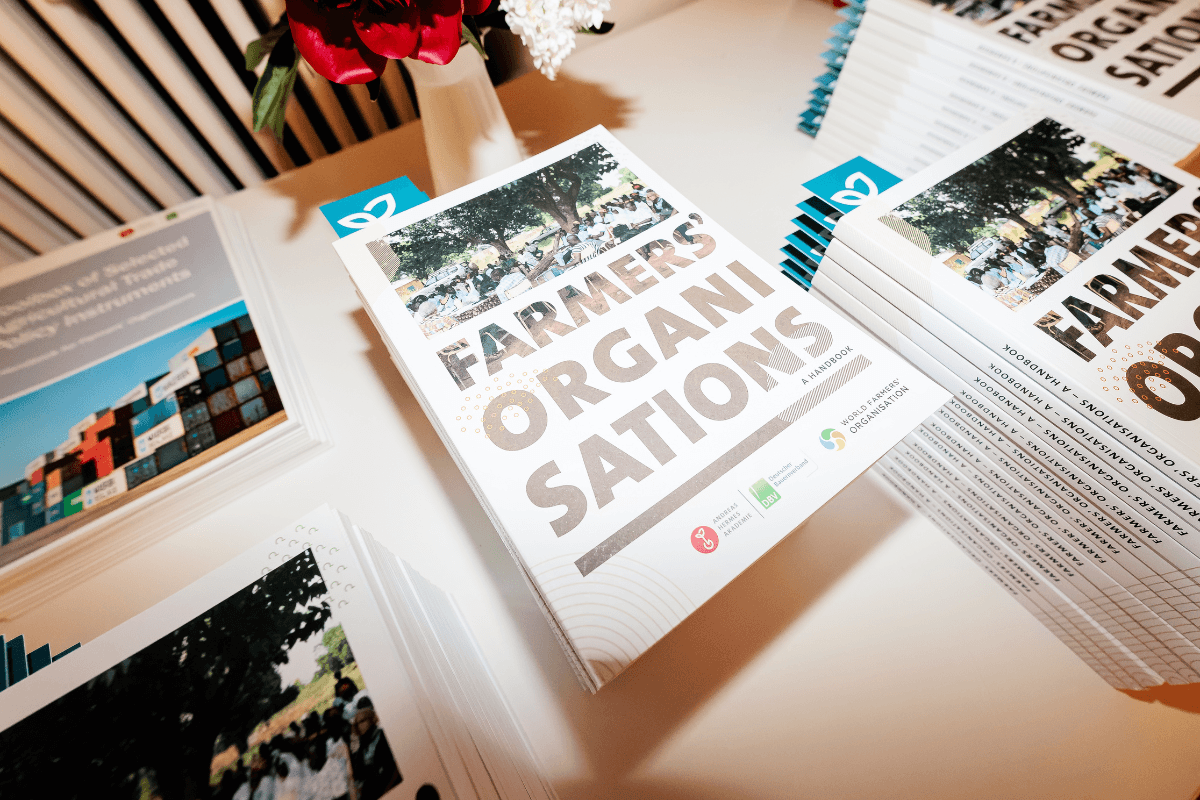
The evening concluded with the launch of the newly published book by AHA: ‘Farmers’ Organisations, a handbook’. The handbook aims to provide guidance in navigating the complexity of organised farming system and the various types of organisations. It does not offer a rigid typology or universal blueprint but rather a framework to foster a better understanding of the wide range of farmers’ organisations and the role they play. By highlighting key distinctions, recurring patterns, and practical lessons, it equips readers with the means to identify, support, and work effectively with these organisations. Financially supported by the BMZ, the handbook is downloadable for free for non-commercial use.

Read more How the self-help approach empowers smallholder women

Read more Global responsibility: Tackling hunger is the only way forward

Read more ‘Invite yourself’ – Farmers organisations as key stakeholders of food systems

Read more Governor's Day with Farmers – For more discussion with local actors

Read more Farmers' organizations want to be involved in designing agricultural policy

Read more Strengthening the market linkages of smallholders in the face of global supply shocks

Read more "We have high expectations of the Kampala Declaration"

Read more Financing Agrifood Systems for People, Planet and Prosperity

Read more “I feel the weight of hundreds of millions of farmers”
Read more 5 questions to F. Patterson: Why is there more hunger?


Read more Developing countries hit doubly hard by coronavirus

Read more Statement from GAFSP Co-Chairs: GAFSP and COVID-19 Pandemic

Read more What do you expect from this Pre Summit, Mr. Haddad?

Read more Mr. Campari, how do we create sustainable food systems?

Read more How can the private sector prevent food loss and waste?

Read more From lost products to safe food - Innovations from Zambia

Read more Land Rights for Secure Livelihoods: My Land is My Life

Read more The Future of Development Politics: Voices from the Parliamentary Groups
Read more Cooperation and Effective Incentives for Sustainable Land Use

Read more Together towards Sustainable Development: Private Sector Cooperation
Read more World Soil Conference ends with resolutions on drought management and land restoration

Read more German G7 Presidency – fighting hunger with all our might

Read more The Rice Sector in West Africa: A Political Challenge

Read more “More of the same is not enough - we need to rethink”

Read more Partners for change - Network meeting on transforming agricultural and food systems

Read more Innovative donor approaches and sustainable finance – A Review of UNFSS+2

Read more The common thread is the importance of collaboration

Read more From the Tree to the Street: The Story of Natural Rubber