Halfway through the 2030 Agenda, the BMZ invited participants to a network meeting entitled "Partners for change - Transformation to a food secure, resilient and sustainable future". Experts from around the world developed recommendations in a consultation process and then consolidated them in Berlin. A site visit.
Jan Rübel is author at Zeitenspiegel Reportagen, a columnist at Yahoo and writes for national newspapers and magazines. He studied History and Middle Eastern Studies.
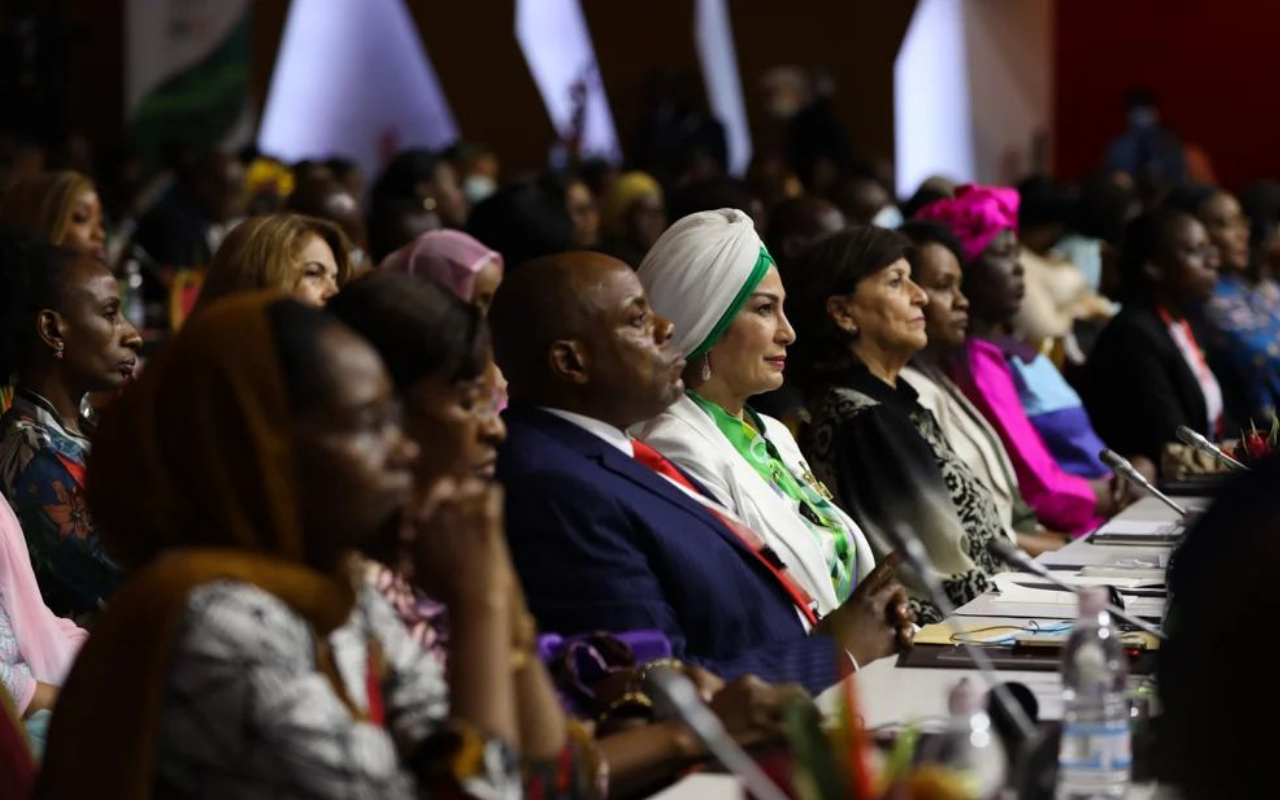
They stream in from two different directions. In a courtyard in Prenzlauer Berg, two lines of people meet on a green lawn - "Partners for Change," as the exchange is called. One from the main building of the "Hotel Oderberger" in Berlin, the other from the southern wing behind the courtyard. Over 200 people from 20 countries, one goal: What has been achieved since the proclamation of the 17 UN Sustainable Development Goals (SDGs) in 2015? What still needs to be done by the deadline of 2030?
It is Thursday, June 14. The experts have come together to get to know each other before continuing in working groups the following day. The German Federal Ministry for Economic Cooperation and Development (BMZ) has invited to the network meeting. Representatives from politics, agriculture, civil society, and science want to jointly develop policy recommendations under the title "Partners for change - Transformation for a food secure, resilient and sustainable future". In the capital, they will put their heads together on how a transformation of agricultural and food systems can succeed. It is the preliminary conclusion of a lengthy consultation process. Over the course of months, the stakeholders met in small groups, participated in online queries, developed recommendations, and discussed them in various constellations. In these two days, they will come together in one place to finalize the results and jointly draft policy recommendations.
The situation at the halfway point of the SDGs cannot be glossed over. Since 2015, there has been only a slight reduction in global hunger. Agriculture, which emits many greenhouse gases, is an accelerator of climate change. Developing and pooling concrete ideas - that is the task of the next two days. At the networking event, people are standing together in small groups; the meeting is intended to be informal at first, but the discussions are all about technical matters: What needs to be done by 2030? A young man rests briefly in a folding chair. William Madudike, 28, chairs the Youth Board of the Zimbabwe Farmers Union.
What brought you to Berlin? Madudike: I represent the young farmers of southern Africa.
What do you think of the SDG "Zero Hunger"? We need this goal. Even if it will still be a long way until then. One that will certainly not be over by 2030.
What challenges do you see for your farmers?
There is a lack of access to adequate financing. And a lot of land belongs to the state, otherwise you can only inherit or buy. This deprives us of the basics of successful cultivation.
What is your situation? I rented twelve hectares and grow four to five varieties of potatoes. I did that right after I graduated in agronomy, my parents have other professions.
And are you arming yourself against different market prices, climate change? I grow one field at a time, never all at the same time. I can always harvest a little, cushion failures and price developments.
What should the international community do to improve the situation? First, each country should look at what it can change on its own doorstep. For Africa, for example, I would like to see the African Union (AU) develop in the direction of the European Union (EU). So far, it has only had a rather ceremonial function. And we need more intraregional trade. For me, it is easier to sell my potatoes to Europe than to my neighboring countries.
In the garden, the conversations continue. Sara Worku, 44, gets a glass of water at a bar. She works for "Alliance2015," a strategic network of European NGOs, in her native Ethiopia as a coordinator.
What message did you come to Berlin with? Worku: That we need to transform our food systems, and do so inclusively. Marginalized groups are far from being sufficiently included.
And how do you do that?
It starts with listening. After studying geography and environmental sciences in Addis Ababa, I traveled through the rural areas - I didn't know them myself before. My insight was that there is a lot of potential for empowerment, especially among women.
What is missing? So far, at events like this one, there has been too much talk about the "what". We should leave that behind. Now it is time to discuss "how" we transform. We need more speed. International funders think too short term, but there needs to be more flexible funding with less rigid ideas.
The network meeting is based on a bottom-up process. Not only is the event intended to send out a signal for joint action to combat hunger, poverty, and inequality. Experiences from the BMZ's various global programs are also to be exchanged in the transformation workshops, bundled into thematic clusters, and processed as joint, political recommendations for action. All participants come from the partner structures of the BMZ special initiative "Transformation of Agricultural and Food Systems". Among them is Daniel M.M. M'Mailutha, the 43-year-old who heads the Kenyan farmers' association KENAF. Ninety percent of them, he says, are smallholder farmers.
How many hectares do you farm? M'Mailutha: Two and a half. I specialize in livestock, have 54 cows. One hundred is my goal.
With what feeling did you get on the plane? That we not only belong at the table, but also in the kitchen. We are the practitioners. Without us, there is no transformation. That's why we must not only have a say in the plans in advance, but also accompany their implementation in an advisory and decision-making capacity. This is the only way to increase productivity.
What does it take?
Five important points come to mind: More knowledge, a land distribution system with farmers' needs in mind, more infrastructure such as electricity and roads, an improved post-harvest structure, and ultimately a state that supports.
Two meters away, a man leans against a bar table. As far as the role of the state is concerned, he comes to a sober assessment. Emmanuel Atamba Oriedo, 28, shakes his head.
You are an expert on agricultural and food systems and are involved in Kenyan civil society. What impulses come from there? Atamba Oriedo: The political leadership alone can't do it. That's why people are helping themselves - also with innovations.
What is the problem? After getting my bachelor's degree in agricultural science, I asked myself: Why are so many people starving? It's not so much a problem of production, but of access to food. No one cares, no one takes responsibility. It should be made clear to every state: There is a right to food.
And how do the SDGs play into that? With them, too, there is no one who can be held accountable. They had no real value from the beginning. A controlling and obligatory mechanism should have been implanted with them.
And now?
It needs a broad multi-stakeholder process. Money is less the problem than how it is used. That of international donors should certainly not be used to replace government spending.
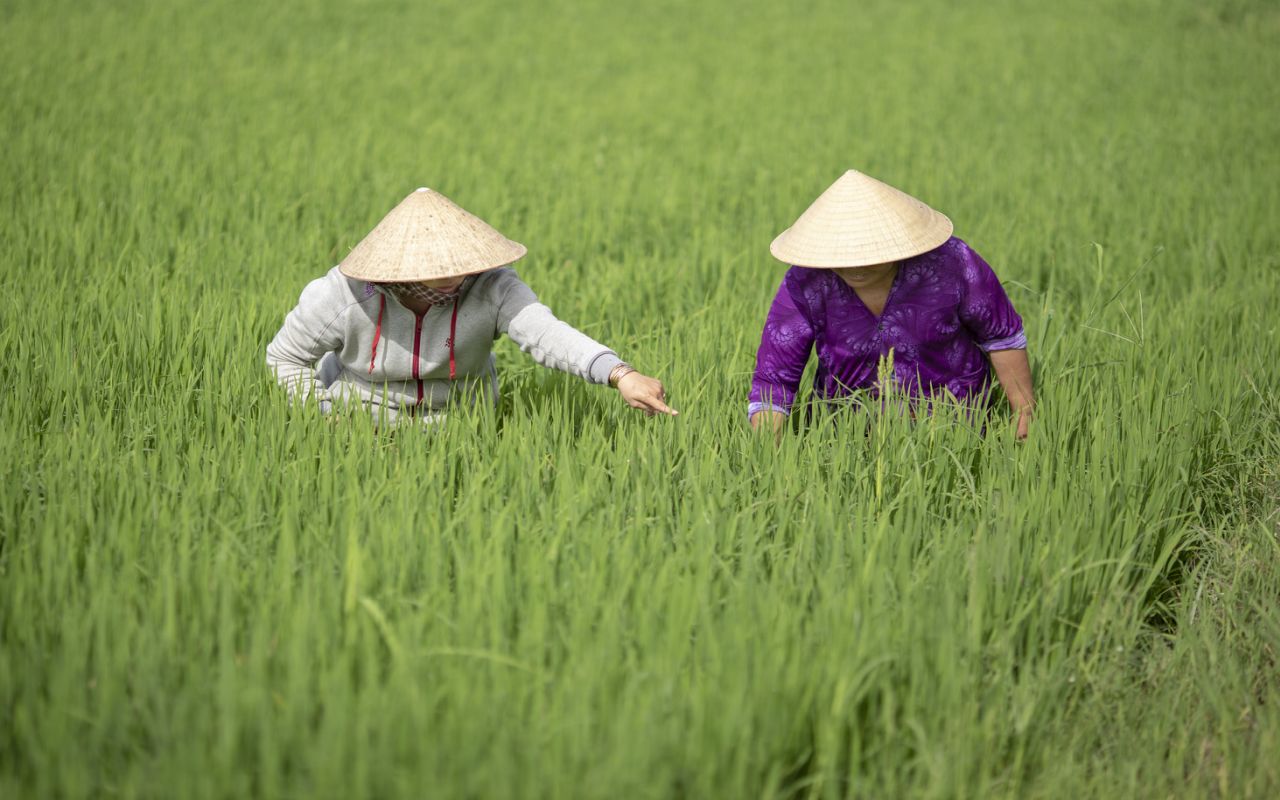
The evening sun is bending, turning orange. A young woman stands a little apart, spooning from a bowl of chickpea curry. Shamika Mone presides over a huge movement. INOFO is an autonomous organization within the International Federation of Organic Agriculture Movements (IFOAM), which includes some 800 organizations in 120 countries. At this moment, Mone says, she is thinking about her farm, her rice fields.
Are you on the road a lot? Mone: This year I was away for three months. That's funny. When I'm on my farm, I'm happy. I don't really want to leave there.
How's it going there? Quite well. But we had to sell one of our two cows to finance expenses. The traditional rice that we grow, on the other hand, is developing excellently.
Is your work at INOFO worthwhile? There is progress, but everything is too slow. The world is dying, our mindset is not changing fast enough. Farmers are getting more influence, yes. And organic farming is a success everywhere it is practiced. It's also being talked about more. She smiles. I try to keep a balance between my own farm and activism, not to lose my roots. But we lack operational funding, there is too much on too few shoulders.
But there are so many farmers behind you! Yes, but we have a single secretary, for two hours a day. The situation is different for the conventional farmers' associations.
The next day, the experts will gather again in the capital to discuss topics such as resilience, food environments, agricultural trade, and digitalization in eight transformation workshops. "We have been transforming agricultural and food systems for decades," Caren Smaller begins in her introductory keynote. "In 1945, it was determined that half the world's population was not getting enough calories," says the executive director of the Shamba Centre for Food and Climate. With the so-called Green Revolution, hunger has been drastically reduced, she said. "But it did so at a high cost: to health and to the planet." Not everyone has benefited from it, she said. "And those are the ones who are being punished today for something they are not responsible for," she says, referring to climate change. Now, she says, a new, equitable transformation is needed. "There is too much focus on economic growth," she says, "spending on the environment and women is stagnant." There is no shortage of capital, she adds. Governments should reward banks for taking on more risk for less return.
Maximo Torero of the United Nations Food and Agriculture Organization (FAO) now addresses those gathered. "FAO is working very hard to increase resilience." Changing investments is complex, he said. "There is a need to become more efficient while reducing emissions." And then he says something that many will repeat throughout the day: "Transformation has to be evidence-based."
In the subsequent High Panel, BMZ State Secretary Jochen Flasbarth will immediately have to take stock of the situation: What has happened in the past twelve months? "We have been in an accelerating multi-crisis," he answers, "spread across climate change and soil loss" - not to speak of the aftermath of the Corona pandemic and the war in Ukraine with its economic shock waves. "We have to get out of this vicious cycle of humanitarian aid!" Then he picks up Smaller's impulse. "There is no contradiction in focusing on economic growth with the poorest countries. Because that's what's needed." Later, she will counter, "Yes, we need great economic growth. But we need to think about credit. We've lost the sense of global solidarity."
Julian Lampietti of the World Bank also talks about financing. "The money we put into the food system as an institution is little compared to what countries themselves put into their systems," he says. "Out of one dollar of public spending, only 35 cents reach the farmer. We need better, evidence-based interventions."
Then the transformation workshops start, behind closed doors. Hours later, the participants of the network meeting come together again in the large hall. Yang Sang Koma, undersecretary at Cambodia's Ministry of Agriculture, notes, "We focused a lot on production. Now it's time for us to implement the ideas at the local level." And Alexander Kalimbira, an agriculture professor at Lilongwe University in Malawi, added what is needed is a focus on policies that promote public health. "And it should be more decentralized: The government needs to transfer power." Sonja Vermeulen, of the Consultative Group on International Agricultural Research, points out, "If it comes to the issue of land, it quickly becomes political. Many people have this as their only livelihood. Anyone who takes it away from them is threatening them," concludes Dirk Meyer, head of department at the BMZ. He reports that, in addition to the Partners for Change network meeting, another BMZ event on social protection took place this week. "I feel the same spirit, the same energy." One is flooded with negative news, he said, "so sometimes you need such fountains of enthusiasm." Stefano Fotiou of the FAO expresses his gratitude for the valuable contribution the recommendations have made to the preparatory process for the UN Food Systems Summit Stocktaking in Rome at the end of July. In his conclusion, he recalls a quote by boxing legend Muhammad Ali: "The impossible is temporary".
Intensive hours and days lie behind the experts. They have drawn up roadmaps for the final spurt. The UN Sustainable Development Goals remain in focus. At the end, State Secretary Flasbarth concludes, addressing the participants: "You look fresh, it must have been encouraging." He continues: "The many recommendations on how we can jointly progress in transforming agricultural and food systems are not only valuable for the further implementation of our Special Initiative, but also serve as inputs to our various multilateral processes. During this year, these include the High Level Political Forum in New York ahead, the UN Food Systems Summit Stocktaking and COP 28."
An Interview with Shamika Mone (INOFO) and Elizabeth Nsimadala (EAFF)
At the UN Food Systems Summit, farmers organizations have been represented on the international stage for the first time ever. Two representatives talk about bridging personal aspirations with the representation of regional needs and international negotiations.
Why are short- and long-term responses important to address current and future global crises? Sebastian Lesch, Head of the Agriculture Division at the German Federal Ministry for Economic Cooperation and Development (BMZ), provides answers to these and other questions in an interview with the Global Donor Platform for Rural Development (GDPRD) and explains how much Germany welcomes all donors pulling together and acting in concert.
The potential the African food sector holds is still far too strongly associated with the continent’s natural resources, Ben Leyka maintains. He seeks to change this with the African Agri Council.
After a two-year break due to Corona, the doors of the International Green Week (IGW) in Berlin are opening again. From 20th to 29th January, visitors from all over the world can discover, marvel and taste the produce. But the event is not only feasting and fun. The BMZ stand asks questions about where food comes from & where it goes – and in the process becomes a crash test for many habits.
The transformation of food systems is regarded as the new magic code, but effective strategies are lacking. A new group of experts discussed the prerequisites for efficiently managing this process. The experts representing politics, youth, civil society, farmers' organizations, private sector, and academia unanimously concluded: transformation is possible, but it needs a strong drive from within.
Russia's war against Ukraine and its impact on food, energy and fertiliser prices is worrying farmers all over the world. Young farmers, farmer organisations and politicians from Kenya, Chad and Ukraine tell their stories and what keeps them in agriculture.
During the trade Grüne Woche, school classes visited the BMZ (German Federal Ministry for Economic Cooperation and Development), Brot für die Welt and Misereor. Each class spends one hour at their stand to learn about the global challenges posed by food systems. A review by Jan Rübel.
An Artikel by the Initiative for Sustainable Agricultural Supply Chains (INA)
A study published by the Deutsche Gesellschaft für Internationale Zusammenarbeit (GIZ) examines the differences between globally traded agricultural commodities and domestic niche products in terms of economic, environmental and social impact on the region of origin. The results provide new evidence to make supply chains more sustainable.
The Import Promotion Desk (IPD) accompanied organic producers from developing and emerging countries to Biofach. In an interview, Dr Julia Bellinghausen, head of the IPD, explains the importance of organic certification in export promotion.
Taking a look at the data (as of February 11th 2022) what the current price hike means for world hunger and what can be done to prevent from another food crisis.
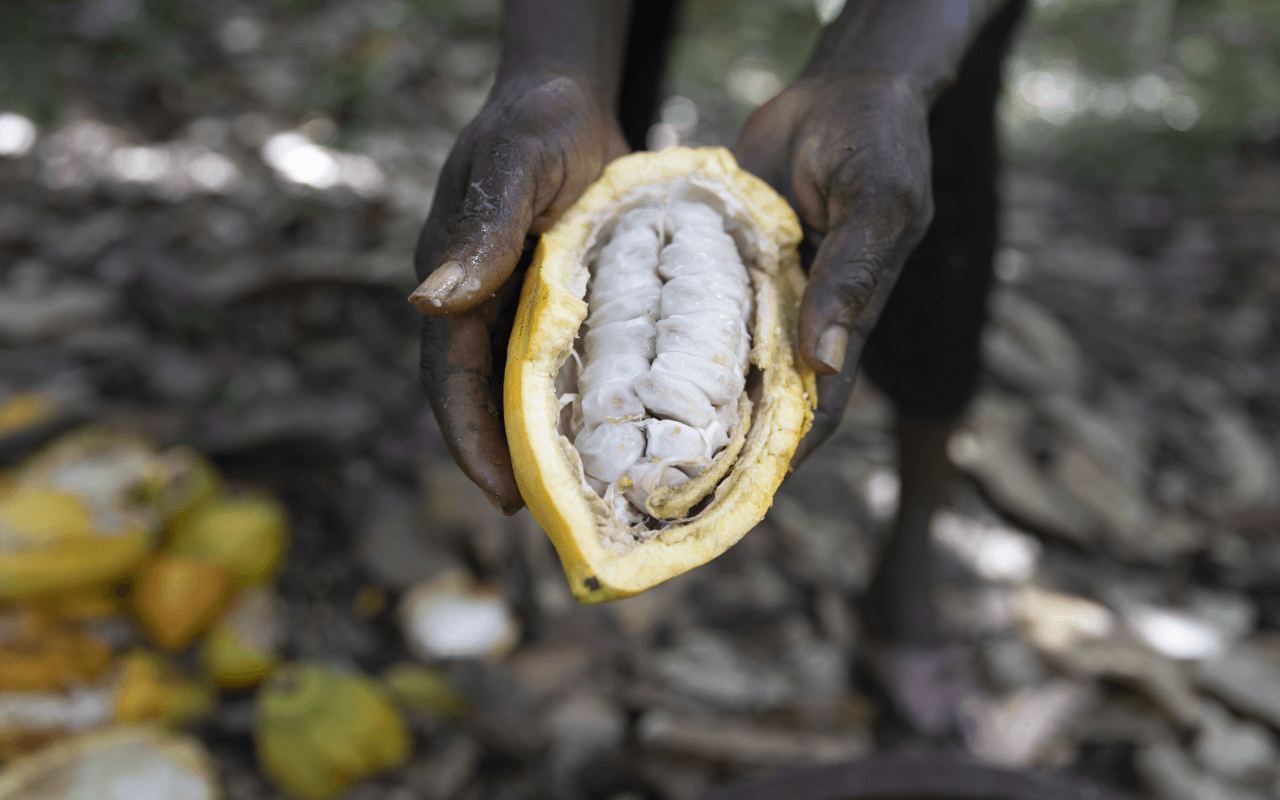
Until Easter 2022, GIZ publishes a new episode every fortnight introducing people who are committed to fair and sustainable cocoa in Côte d'Ivoire and Germany.
Stephanie Heiland, Project Manager at Sector Project Agriculture and part of this year’s Observer Delegation of the Deutsche Gesellschaft für Internationale Zusammenarbeit (GIZ) at COP27, shares her insights on the role of agriculture and food systems at the climate conference. Among other things, she reports from GIZ’s COP27 side event ‘Climate resilient agriculture and food systems in times of multiple crises and fragility’.
The Federal Ministry for Economic Cooperation and Development (BMZ) has released a video on the transformation of agricultural and food systems. In the video, Federal Minister Svenja Schulze also speaks about the urgent need to combat global hunger and contribute to resilient agricultural and food systems.
Experts from Burkina Faso, Cambodia, Ethiopia, India, Kenya and Malawi came together to discuss inclusive governance in a workshop entitled "Inclusive Governance of Food Systems Transformation". Daniel Montas, TMG Research, on the findings.
A Contribution by the Federal Ministry for Economic Cooperation and Development
At the network meeting "Partners for change - Transformation to a food secure, resilient and sustainable future", almost 250 participants from over 20 countries came together to exchange experiences and ideas on the transformation of agricultural and food systems. The final product, joint recommendations to transform agricultural and food systems, can now be read online.
The complex interrelationships of the sustainable transformation of agricultural and food systems are not always easy to understand - the Agri-Food Map, an interactive online app, makes the comprehensive relations accessible by providing a wide range of comprehensibly prepared information.
A Contribution by Harry Hoffmann (TMG) & Nathalie Demel (WHH)
At the halfway mark of the 2030 Agenda and two years after the UN Food System Summit 2021, a stocktaking moment was held in Rome to analyze the progress of countries on the commitments to action in transforming food systems. Dr Harry Hoffmann, TMG Think Tank, and Nathalie Demel, Welthungerhilfe, were on site and take stock as well.
The production of animal-source foods is becoming increasingly difficult due to the impact of climate change on the livestock sector in Africa. Though, Livestock make a crucial contribution to food security in Africa. Three papers by the Federal Ministry for Economic Cooperation and Development (BMZ), GIZ, ILRI and World Bank analyze, how Africas future livestock sector can look like.
How can rural economies become viable and modern? William Madudike, youth representative of the Zimbabwe Farmers Union (ZFU) and a potato farmer himself, examines this question. He argues that the whole rural economy and actors from producers to consumers need to be considered. An interview on the initiative role of youth.
In the midst of global climate discussions, a resounding call emerges: Women's land rights must be the cornerstone of our climate actions. They're not just pieces of the puzzle; they form the foundation for true climate resilience. TMG Think Tank for Sustainability reports from the first African Climate Summit.
In a world facing crises – from pandemics, armed conflicts, and climate change – how do we ensure everyone has enough food within planetary boundaries? A new podcast by Food4Transformation discover solutions talking to government officials, scientists, NGOs and farmers around the world.
Partnerships are needed to face the multiple shocks for food systems. This is what Dr. Jacqueline Mkindi, president of the Agriculture Council Tanzania (ACT) and CEO of the Tanzanian Horticulture Association (TAHA) states.
It takes the joint efforts of diverse actors to achieve a transformative impact on the global food system. Barbara Rehbinder, Scaling Up Nutrition Movement (SUN), discusses four people-centred principles to get closer to this goal.
Shu Wen Ng is a health economist. She knows what is best suited to go on a plate. But how can this be achieved on a mass scale in countries with lower incomes? "The solutions to gett there already exist," she says, "but what is often missing is courageous leadership to implement them."
Global food systems are confronted with multiple stresses. It is more urgent than ever to make them more resilient, healthier and more sustainable. A key tool in such a transformation is reforming agricultural policies and repurposing agricultural support, as discussed in an online seminar co-organised by the International Food Policy Research Institute (IFPRI).
This year's network meeting of the Partners for Change (P4C), a network of the German Federal Ministry for Economic Cooperation and Development (BMZ), took place in Nairobi, Kenya, on 26 and 27 June 2024. Kah Walla, moderator of the event and CEO of Strategies!, gives an insight into the key findings and learnings.
Africa’s largest youth generation has the potential to transform agriculture sustainably. Young entrepreneurs like Febelsa in Mozambique are building agricultural businesses that fuel local growth.
The bioeconomy movement is fundamentally changing agriculture and food production: through innovative ideas, environmentally friendly approaches and the realization that we need to work together globally to ensure that change truly benefits everyone. At this years’ German Forum for Food and Agriculture (GFFA), the German Federal Ministry for Economic Cooperation and Development (BMZ) focused on this topic.
In 2025, GIZ and the Import Promotion Desk (IPD) celebrate ten years of successful cooperation. With their joint stand at BIOFACH trade fair in Nuremberg, they were able to introduce over 300 organic companies of partner countries to the European market. And the journey continues – despite challenges on the global market.
In March, delegations from nine partner countries met in Berlin at the Partner Conference Scaling Access to Finance for Agripreneurs. Alongside AUDA-NEPAD, IFAD, BMZ, GIZ, and others, around 100 participants worked on practical solutions to support financial inclusion in agricultural transformation and hand over their conclusions to the AU's Kampala CAADP process.
The international soil conference ‘Partners for Change - SOILutions for a Food Secure, Resilient, and Sustainable Future’ brought together almost 150 different stakeholders in Berlin from 20 to 22 May. Its aim: to take stock of existing conservation programmes and pave the way for the future.
With a simple but effective idea to combat malnutrition: in Nairobi, Fabio Rappenecker and his start-up TenX Nutrition produce mandazi, which become a real power biscuit thanks to added micronutrients. The aim is to strengthen food security through local, affordable and healthy food.
A Conversation with Shakuntala Thilsted & Andreas Schaumayer
On the sidelines of the UN Ocean Conference (UNOC 2025), Andreas Schaumayer, Head of Division at the German Federal Ministry for Economic Cooperation and Development (BMZ), and Shakuntala Thilsted, Senior Nutrition Expert at CGIAR, discussed the crucial role of aquatic foods in nutrition, livelihoods, and climate resilience.
In May, this year's "Partners for Change – SOILutions for a Food Secure, Resilient, and Sustainable Future" conference took place. Kah Walla, Moderator of the Conference and Director of Strategies!, summarises the discussions and declares that healthy soils are not just the foundation of agriculture, but the cornerstone of a resilient, equitable, and climate-smart future.
As part of the “Let Me Tell You” series, children across Zambia are discovering fun stories that teach the importance of good food and healthy habits such as fish. Let’s dive into one of these tales together…
A Contribution by Global Donor Platform for Rural Development
The Global Donor Platform for Rural Development has recently published a new White Paper titled “Financing Agrifood Systems for People, Planet and Prosperity.” It outlines a practical agenda to unlock the capital, partnerships, and innovation required to drive change at scale.
Climate adaptation, youth empowerment, and food systems intersect with challenging social and political conditions. Lucky Andrianirina illustrates how young people in Madagascar navigate structural barriers, translate global agendas into local action, and understand agriculture as a space of agency and hope.
A focus on fragile contexts highlights development policy’s unique contribution to security policy and shows how the special initiative “Transformation of Agricultural and Food Systems“ itself needs to develop further. An article by Jes Weigelt, Head of Programmes at the TMG Think Tank for Sustainability.
At this year’s Partners for Change (P4C) Network Meeting in Berlin in June, participants from more than 40 countries came together to consolidate the outcomes of 18 months of collaboration across the network and develop a shared advocacy agenda for the transformation of agri-food systems. Discussions focused on messages around inclusion, governance, financing, evidence, and country-led implementation – and on how these can translate into concrete policy impact.
A contribution by Humboldt-Universität zu Berlin and TU Berlin
Alternative proteins could make an important contribution to future-proof food systems. Particularly in the Global South, they offer potential to conserve resources, strengthen food security, and enhance resilience to climate change.
Insurance companies could provide protection during droughts in Africa. How exactly this could be done is what the industry is currently trying to figure out. First experiences are available. An interview with the Managing Director of the Munich Re Foundation, Thomas Loster
Over a period of two years, the Ceres2030 team spent researching answers to the questions of how much it will how much it will cost to realize SDG 2 and where that money should be spent most effectively. IISD Senior Advisor and Ceres2030 Co-director Carin Smaller about small farmers, machine learning and women empowerment.
For years, place-based approaches to development have been considered important features in development cooperation, at the BMZ and in FAO. Both organisations are aiming at advancing these approaches: an interview with Adriano Campolina from the FAO on territorial and landscape perspectives.
The Global Hunger Index (GHI) 2020 shows that the world is not on track to meet the international goal of “zero hunger by 2030”. If we continue at our current speed, around 37 countries will not even have reached a low hunger level by 2030.
The CGIAR agricultural research organization is systematically repositioning itself. We spoke with Juergen Voegele, Vice President for Sustainable Development at the World Bank, about progress to date - and discuss what needs to be done collectively to stop global hunger in ten years.
110 speakers from 120 countries met virtually at the Global Forum for Food and Agriculture (GFFA) to discuss the challenges to global food supply. They asked the question: How can food systems support the health of people and the planet?
With the help of sustainable farming methods, soils can be preserved and made fertile again. The investment required is also worthwhile from a financial perspective.
Africa is home to the world’s youngest and fastest growing population. For many young people, agriculture could offer a job perspective. But to improve the living conditions and job prospects of young people in rural areas, political reforms and investments are desperately needed, as these people will be at the centre of agriculture and agricultural development in the future.
A contribution by Heike Baumüller, Christine Husmann, Julia Machovsky-Smid, Oliver Kirui, Justice Tambo
Any initiative whose aim is to reduce poverty in Africa should focus first on agriculture. But what kind of investment has the greatest impact? The use of scientific criteria provides some answers.
What are the consequences of using synthetic pesticides in agriculture? Where do they help, where do they harm? Lena Luig, expert for the development policy organization INKOTA, and science journalist Ludger Weß discuss this controversial topic of international scope.
At the beginning of December 2018, AGRA's board of directors met in Berlin. The "Alliance for a Green Revolution in Africa" panel discussed the next steps in their policy of modernizing agriculture. How to go on in the next ten years? One question - many answers from experts.
Joe DeVries is a breeder – and Vice President of AGRA (Alliance for a Green Revolution in Africa). What are the chances and risks of a ’green revolution‘ in Africa? A discourse between Jan Rübel and him about productivity, needs, and paternalism.
Stefan Liebing is chairman of the Africa Association of German Business. The manager calls for a better structure of African farms. Jan Rübel asked him about small farmers, the opportunities for German start-ups and a new fund.
Chancellor Merkel has begun an ambitious European political programme: Striving for compromise in budget negotiations, an orderly Brexit as well as an appropriate response to the corona crisis. Unfortunately, one of her positions that she previously held is nowhere to be found: Africa's prosperity is in the interest of Europe.
Africa has a huge opportunity to make agriculture its economic driver. However, the potential for this is far from being made exhaustive use of, one reason being that women face considerable difficulties in their economic activities. The organisation AWAN Afrika seeks to change this state of affairs.
The Global Agriculture and Food Security Program (GAFSP) was launched by the G20 countries in 2010 in response to the 2008-09 food price crisis to increase both public and private investment in agriculture. An overview of the programme's approach, results and impact.
The COVID 19 pandemic is hitting developing and emerging countries and their poorest populations particularly hard. It is important to take countermeasures at an early stage. Companies in the German agricultural sector want to make their contribution to ensuring the availability of urgently needed operating resources.
The region of Sub-Saharan Africa is on the decisive verge of a great development boost in farming: it could skip entire generations of technological development. But how? About possible roles and potentials of digital services.
Stig Tanzmann is a farmer and adviser on agricultural issues at ‘Bread for the World’. Jan Rübel interviewed him about his reservations about AGRA's strategy.
What do electrical engineering, telecommunications and agriculture have in common? They arouse the passion of Strive Masiyiwa: Thirty years ago, he started an electrical installation company with $75, later riding the telecommunications wave as a pioneer. Today he is committed to transforming African agriculture.
In this article, the author describes what we know about interlinkages, what role agriculture has to play in the sustainable use and conservation of biodiversity, and what the necessary changes in agricultural systems might look like, both on small and large-scale farms.
An Interview with Francisco Marí (Brot für die Welt)
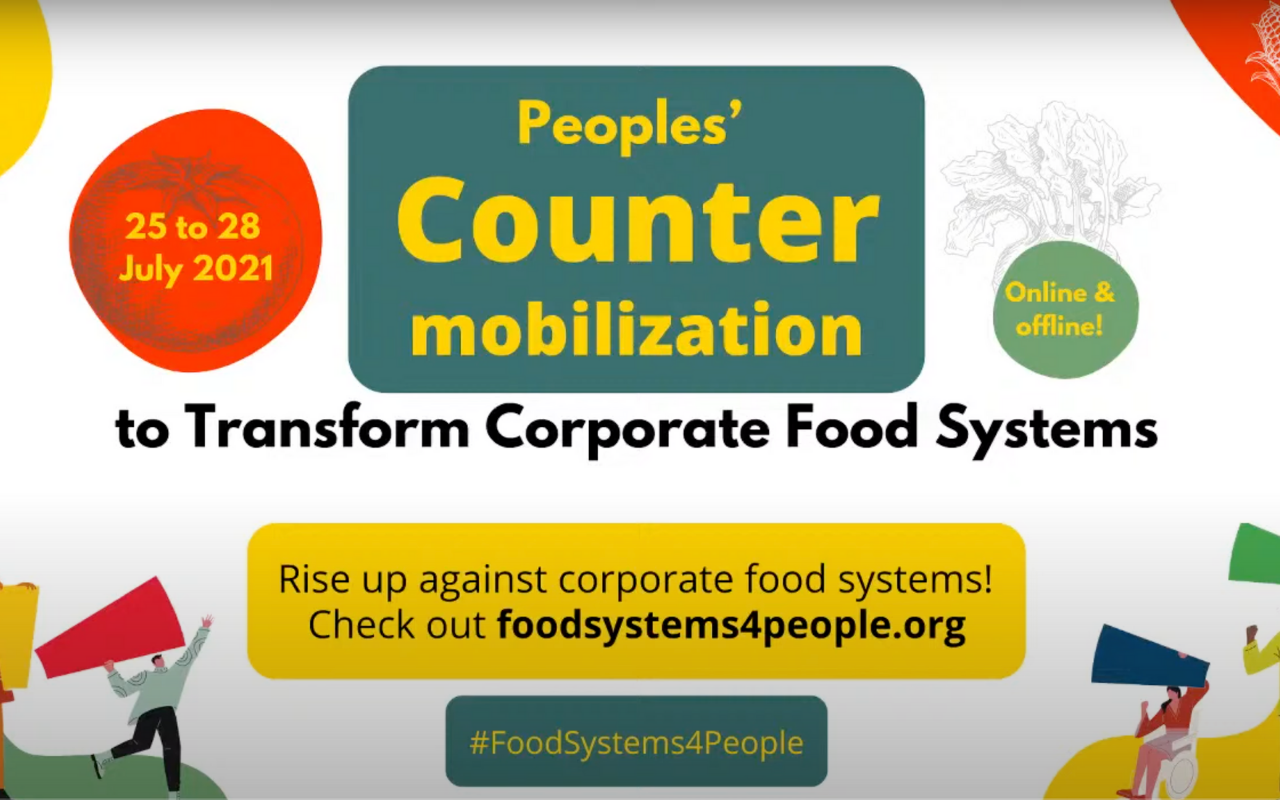
Brot für die Welt (Bread for the World) did not attend the UNFSS pre-summit. Instead, the organisation took part in a counter-summit that took place at the same time. A conversation with Francisco Marí about the reasons, the process - and an outlook for the future
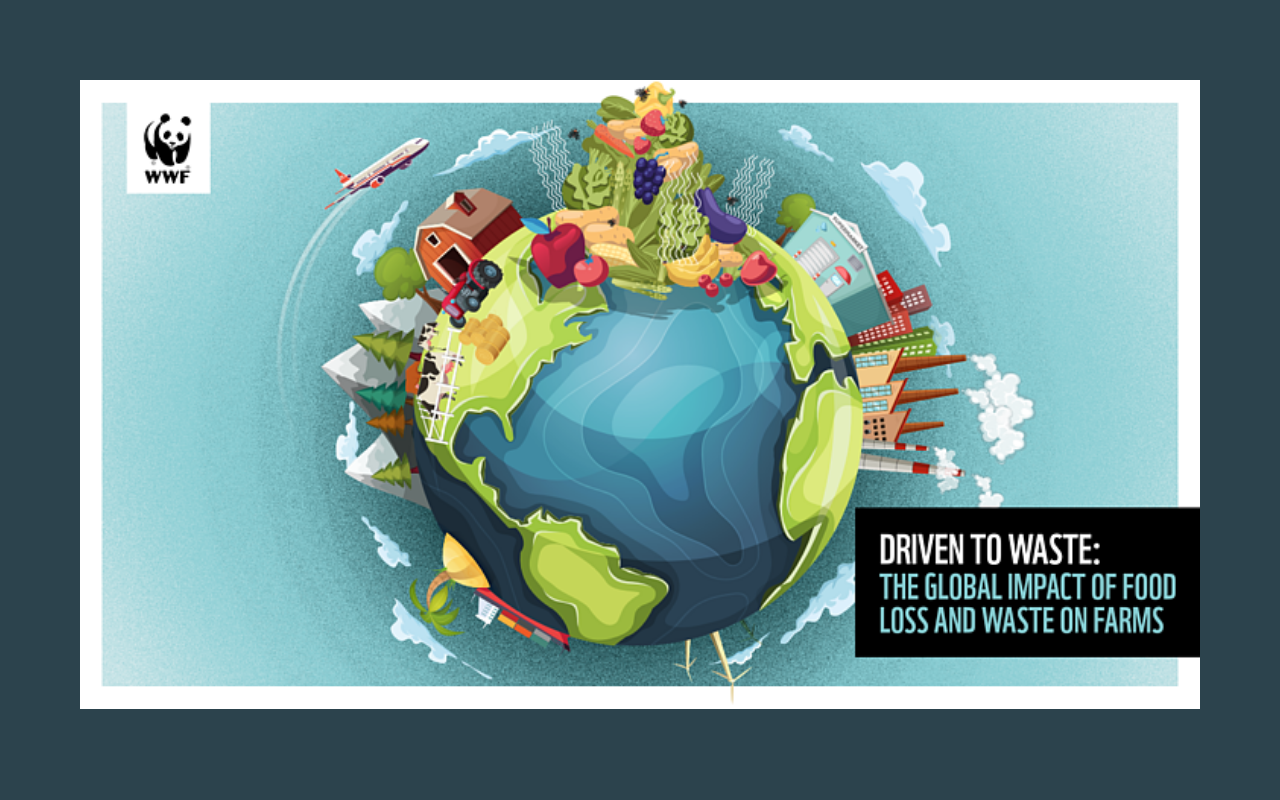
The WWF has published a sensational study on food waste. The focus: farm-stage food waste. Peter McFeely, Global head of communications and strategic planning at WWF, explains what needs to be done.
Vitamin-poor nutrition must become more expensive, in-vitro meat is not a panacea, and agricultural systems should be more decentralised. Bioland President Jan Plagge in an interview about the challenge of (future) world nutrition.
Genetically modified bacteria become edible proteins, cows graze on pasture, and no waste is produced in an industrial circular economy. Journalist Jan Grossarth sees a silver lining for the future of world nutrition
Out of 40 consortia that applied from all over the world, 14 were invited to present their innovative concept on agroecological approaches in the form of an online pitch and to face the questions of an international jury of experts. Find out which six semi-finalists were selected by the jury and what happens next in this article.
The future is rural. Young African entrepreneurs gave their generation a vocie during the G-20 conference in Berlin. "World Without Hunger" asked six of them, how more jobs can be created in rural areas.
"One World no Hunger" (SEWOH) becomes one of the five core themes of the BMZ. Dirk Schattschneider, SEWOH Commissioner about previous approaches, future areas of action, and the political will to end hunger.
How the UN Voluntary Guidelines on the Responsible Governance of Tenure of Land, Fisheries and Forests (VGGT) contribute to fairer and more secure land access.
Indian farmers restore precious soil material combining traditional with innovative approaches. A case example how governance, agriculture and development cooperation can work together to combat climate change.
At the ICTforAg conference in March 2022, the digital agriculture community exchanged on the challenges and opportunities associated with the next green revolution.
Based on a scientific study by TMG Think Tank, the authors highlight various challenges in the fight against the hunger crisis. The findings show that climate change, conflict and covid-19 are increasing food and energy prices.
Nations adopted four goals and 23 targets for 2030 to foster biodiversity conservation and counter acceleration in the global rate of species extinction at the UN Biodiversity Conference (COP15).
How can the challenges related to water, rural development and climate resilient agriculture be addressed? What innovations need to be promoted? The Water and Energy for Food (WE4F) initiative presents strategies and innovations for sustainable, integrated water management in German and international cooperation.
A Year of Multiple Crises: Russian war against Ukraine, extreme weather events, high prices for energy and fertilizer, food crisis had severe implications for food security and agriculture globally and especially in Sub-Saharan Africa. A Transformation of the food systems is needed.
Regarding deforestation free supply chains, there are challenges and opportunities for smallholder farmers as well as for international forest governance. Also, responsibilities for companies and potential incentives for manufacturers to use materials from fair trade and sustainable sources need to be explored. But what does “deforestation-free” actually mean?
The Africa Agriculture Trade Monitor 2022 (AATM) was published by IFPRI and AKADEMIYA2063. The report analyses the short- and long-term trends and drivers of African agricultural trade flows, including regional policies and the role of global markets.
Since early February 2022, two of the biggest grain and oilseed exporters have been at war. An overview, which countries are affected most severely by the destabilized grain markets, and what comes next.
The German government is struggling to pass a supply chain law. It is intended to address violations of human rights, social and environmental standards. What would the consequences be for business? A double interview with Veselina Vasileva from GEPA and economics professor Andreas Freytag.
The Corona pandemic is hitting economies around the world very hard - but developments in African countries are quite diverse. There are different speeds, resiliences and vulnerabilities. What are the reasons for this? Apl. Prof. Jann Lay of the GIGA Institute provides answers.
A contribution by Prof. Dr. Anna-Katharina Hornidge
In the video format "#99SecondsWith" of the German Institute of Development and Sustainability (IDOS), Prof. Dr Anna - Katharina Hornidge talks about the new Africa-Strategy of the Federal Ministry for Economic Cooperation and Development (BMZ).
Protectionist policies like tariffs supposedly protect domestic producers if they cannot compete with cheaper imported products. Some African countries have therefore opted to impose such import restrictions for a number of products. For the case of chicken imports in Ghana, this study analyses whether restrictions would lead to overall positive or negative welfare effects among households.
Kenya is a large importer of vetable oils mainly from Indonesia and Malaysia - amongst them sunflower oil. Due to the Russian war of aggression against Ukraine, there were supply bottlenecks and food shortages, leading to less affordable vegetable oils in Kenya. As a response to the lack of supply, the Sanga'alo Institute of Science and Technology, took that impulse, teamed up with the GIZ and established regional cultivation and refinement of sunflowers.
Four interviews kick off the relaunch under the new name „Food4Transformation“, asking the same questions from different perspectives. "Women and young people need access to land. And they need financial support to cultivate this land." - says Kolyang Palebele, President of the Pan African Farmers Organisation (PAFO).
Four interviews kick off the relaunch under the new name „Food4Transformation“, asking the same questions from different perspectives. Dr Julia Köhn, Chair of the German AgriFood Society, points out in the interview: Only if innovation and transformation are profitable in the medium term can they close the food gap in the long term.
Four interviews kick off the relaunch under the new name „Food4Transformation“, asking the same questions from different perspectives. Dirk Meyer, Federal Ministry for Economic Cooperation and Development, thinks: less individual solutions are needed, but more systemic approaches. Because in addition to the goals for food security, the issues of climate and biodiversity must also be taken into account.
Agrivoltaics is a concept that combines photovoltaic electricity generation and agricultural production, providing the opportunity for a more efficient land use and contributing overall to the integration of food, energy and water systems. This can be particularly interesting for countries in the Global South, where rural electrification rates are often low and food security needs to be improved.
The world is currently experiencing a historic food crisis. High fertiliser prices are part of the problem. In addition to the necessary short-term aid measures, the crisis ought to be made use of to develop and implement longer-term fertiliser strategies for sustainable, in particular smallholder increases in production in the Global South.
Given the urgency of transforming agricultural and food systems, GIZ India's Food Systems and Agroecology Working Group is exploring the potential of agroecology in collaboration with Think20 partners. A policy brief has now been published.
Every second, worldwide, we lose valuable and healthy soil with the size of four football fields. This was only one of the many facts being presented to a wide audience in Bonn and worldwide via livestream at the World Desertification and Drought Day on 17th June 2024. This was the 30th anniversary of the United Nations Convention on Combatting Desertification (UNCCD), which was celebrated at the Bundeskunsthalle in Bonn.
During the Women Leadership Programme in May 2024, around 20 women from African countries and Germany met again for a one-week workshop in Bavaria, Germany to become fit for leadership in their organisations. One topic that concerns the women across countries is climate change, but also violence against women and their discrimination in agriculture.
As a passionate social scientist and entrepreneur from Malawi, Ngabaghila Chatata knows that she can overcome any challenge. Her story stands out in a country faced with high unemployment, particularly in its rural areas. As the managing director of Thanthwe Farms, she has set out to inspire the next generation of young agripreneurs – proving that successful business starts with the right mindset, not only capital.
The guiding orientation framework developed by the Deutsche Gesellschaft für Internationale Zusammenarbeit (GIZ) summarizes the requirements for the transformation of agriculture and food systems – and identifies principles and approaches for transformative change.
From January 9 to 11, 2025, heads of state and government of the African Union met in Kampala, Uganda. With a clear vision and concrete measures, the Kampala Agenda aims to make the continent's agricultural and food systems climate-resilient, fair and future-proof by 2035.
The Federal Ministry ofor Economic Cooperation and Development (BMZ) and the Federal Ministry of Food and Agriculture (BMEL) presented a revised version of the 10-Point Plan for a sustainable cocoa sector. The plan takes into account new supply chain legislations and current developments. A particular focus is paid to a living incomes, responsible purchasing practices and ecological and climate-friendly cocoa cultivation.
The demand for fair-trade cocoa is growing – but how is the industry responding? In an interview, Claudia Brück, Executive Board Member of Fairtrade Germany, and Dr. Torben Erbrath, Managing Director of the Federal Association of the German Confectionery Industry, discuss progress as well as challenges, and why real change can only be achieved through long-term commitment along the entire supply chain.
A Conversation with Carmen Torres Ledezma & Oluwaseyi Kehinde-Peters
Female Leadership is vital to the transformation of agriculture and food systems. Therefore, it is so important to advance gender-sensitive approaches to increase the presence of women in leadership positions in agricultural production and to make these systems more equitable, sustainable and resilient.
Studies show that women often manage agricultural resources more effectively and sustainably. With equal access to production resources, agricultural yields could increase by up tp 30 per cent. But this is about more than just productivity. How can gender-transformative approaches (GTA) drive meaningful change and why are GTA key to sustainable change?
At the Nutrition for Growth 2025 Summit in Paris, Team Europe, comprising the European Commission and Member States, put nutrition at the centre of international politics as a driver for resilience, equality and human rights. There is a consensus on the results of the summit: to turn commitments into concrete progress through strong partnerships and innovative approaches.
The global fight against malnutrition needs more than just words - as demonstrated by the Nutrition for Growth summit in Paris. With comprehensive commitments and clear receivables, a signal has been sent: Healthy nutrition must become a global priority. But what do participants from countries such as Yemen and Timor Leste think?
Two new podcast formats from the Deutsche Gesellschaft für Internationale Zusammenarbeit (GIZ) bring stories from on-the-ground project work to life: "Over to you!" from Malawi and "Voices of Change – Beneficiary Story Book" from Zambia. At the heart of these podcasts are the people behind the changes toward sustainable food security.
The International Year of the Woman Farmer (IYWF), launched by the United Nations for 2026, is more than a symbolic moment. It is a political opportunity – and responsibility – for German development cooperation. This is what the Federal Ministry for Economic Cooperation and Development (BMZ) emphasised during Grüne Woche trade fair in Berlin.
Disruption or transformation? With the new Strategic Foresight Report for Agriculture and Food Systems, the Deutsche Gesellschaft für Internationale Zusammenarbeit (GIZ) looks into future scenarios of the post 2030 era.
The results of twelve years of cooperation: a compendium by the Deutsche Gesellschaft für Internationale Zusammenarbeit (GIZ) takes stock of the work of green innovation centres in 16 countries. It brings together experiences, documents successes and challenges, and collects key findings for practical application and policy-making.
The future of agriculture lies in the hands of young people. Genna Tesdall from the International Netwrok Young Professionals for Agricultural Development (YPARD) discusses what they need.
Stunting as a sign of chronic undernutrition, alongside overweight and obesity: Astrid Prange de Oliveira explains why poorer countries in particular are facing the double burden of malnutrition and why this is a development policy challenge.
A new voice for farmers worldwide: Following his recent election as president of the World Farmers’ Organisation, Mwendah M’Mailutha outlines his vision for the future of global agriculture. From strengthening farmers’ voices on the international stage to tackling climate change and food security, what are the priorities that will shape his presidency?
An Interview with Carolina Jaramillo Ferrer and Felix Strauss
How can sustainable solutions grow without losing sight of local realities? Carolina Jaramillo Ferrer (Uniban) and Felix Strauss (ALDI SOUTH Group) discuss what it takes to bring successful solutions to scale.
Countries across Africa coordinate their efforts in the fight against corona by the Centre for Disease Control (CDC) of the African Union in Addis Abeba. Until now, the curve of new infections has been successfully flattened – why? Dr. Ahmed Ouma, Deputy Director, explains the work of CDC in an interview with Tilman Wörtz.
Every year in October, the "Welthungerhilfe" aid organisation, with the Irish "Concern Worldwide" NGO, publishes the Global Hunger Index, a tool with which the hunger situation is recorded. What are the trends - and what needs to be done?
In August, Germany’s development ministry set up a division concentrating on One Health topics. Parliamentary State Secretary Maria Flachsbarth on knowledge gaps at the human-animal-environmental interface, the link between One Health and food security, and lessons learnt from previous pandemics.
Financial innovations can prevent a crisis turning into a catastrophe. The livelihoods of people in affected areas may well depend on intervention before a crisis – and on risk funds.
Innovation is the only way to end hunger worldwide by the deadline we have set ourselves. The secret lies in networking and sharing ideas – and several initiatives are already leading by example.
After four years of Donald Trump in the White House, it is time to take stock: What policies did the Republican government pursue in African regions? And what will change in favor of Joe Biden after the election decision? Here is an evaluation.
Even though COVID-19 poses a threat to the health of humanity, the reaction to the pandemic must not cause more suffering than the disease itself. This is particularly relevant for poor developing countries, where the impact of the corona crisis on food security is even more severe!
Corona makes it even more difficult to achieve a world without hunger by 2030. So that this perspective does not get out of sight, Germany must play a stronger role internationally - a summary of the Strategic Advisory Group of SEWOH.
In most African countries, the infection COVID-19 is likely to trigger a combined health and food crisis. This means: In order to cope with this unprecedented crisis, consistently aligning our policies to the Sustainable Development Goals (SDGs) is more important than ever, our author maintains.
COVID-19 has unprecedented effects on the world. As always, the most vulnerable are the hardest hit, both at home and - especially - abroad. A joint appeal by the German Federal Ministry for Economic Development and Cooperation (BMZ) and the Department for International Development (DFID).
Time to dig deeper: We can only benefit from technical progress if we have a solid legal framework for everybody. But so far, none is in sight - in many countries. Instead, international corporations grow ever more powerful.
What contribution does development cooperation make to conflict prevention? What can it do for sustainable peace? Political scientist Karina Mroß talks to Raphael Thelen about post-conflict societies and their chances for peaceful development.
The Cashew Council is the first international organisation for a raw material stemming from Africa. The industry promises to make progress in processing and refining cashew nuts - and answers to climate change
Enabling smallholders to trade across regions and borders promotes food security and economic growth. Although everyone is calling for exactly that, implementation is still difficult
Agnes Kalibata, AGRA president since 2014 and former minister of agriculture and wildlife in Rwanda, is convinced that Africa's economy will only grow sustainably if small-scale agriculture is also seen as an opportunity.
Nutrition experts from all over the world are coming together in Rome. They are not only distilling 2000 ideas to improve food systems - they are also preparing for the big UN summit in New York in September. An interview.
Journalist Jan Rübel spoke with Joao Campari ahead of the UNFSS Pre-Summit. The Chair of Action Track 3 highlights key challenges in transforming existing food systems towards sustainable production and shares his expectations for the Summit.
Interview with Paul Newnham, Director of the SDG 2 Advocacy Hub.
The UN Food Systems pre-Summit in Rome dealt with transforming the ways of our nutrition. How do you bring that to a broad public? Questions to Paul Newnham, the Director of the Sustainable Development Goal (SDG) 2 Advocacy Hub.
Interview with Martina Fleckenstein (WWF), Michael Kühn (WHH) and Christel Weller-Molongua (GIZ)
After the summit means pre-summit: It was the first time that the United Nations held a summit on food systems. Martina Fleckenstein, Michael Kühn and Christel Weller-Molongua reviewed the situation in this joint interview.
From a circular food system in Rwanda to functioning cooled transports in Kenya: The lab of tomorrow addresses development challenges such as preventing food loss and waste
In Zambia, innovative approaches are used to address the problem of post-harvest losses in the groundnut value chain. GIZ's Rapid Loss Appraisal Tool (RLAT) can help to develop more such approaches.
Three quarters of the world's population do not have secure land rights, which hinders investment and innovation. The project "Improvement of Livelihood and Food Security" supports smallholder farmers in acquiring land.
The climate crisis fuels world hunger. What needs to change in the global fight against hunger, and which role plays humanitarian aid in international development cooperation?
In March 2022, the virtual conference ICTforAg summons leading actors in the agrartechnology and food sector from low- and middle-income countries to exchange ideas advancing resilience, nutrition and agriculture-led growth.
Climate change already affects the daily lives of people in the Global South. What are the challenges they face and what do these imply for negotiations at the climate conference in Glasgow?
In the run-up to the G7 summit, experts from politics and civil society discussed sustainable and more effective options for action by the G7 states to combat hunger.
Development cooperation needs to place good governance and a sustainable agri-food systems transformation at its center: After the first 100 days in office have passed, Dirk Meyer from the German Development Ministry (BMZ) spells out the goals, guidelines and priorities of the Ministry’s new lead.
New insights on trade and value addition in the rice sector in West Africa
Low import tariffs, smuggling activities, unpredictable tax exemptions and weak enforcement of food safety standards: The potential of local rice value chains is undermined in West African countries.
The oceans are important for our food supply, but they are overfished. To halt this trend the global community is now taking action against illegal fishing. Journalist Jan Rübel spoke with Francesco Marí, a specialist for world food, agricultural trade and maritime policy at "Brot für die Welt," and others.
When women have control over the resources of a household and manage the income, it usually leads to a more balanced and healthier diet for the family. But often the decision-making power lies with the men. How can this gender inequality be addressed? The GIZ global project Food Security and Resilience provides insights into project work on gender-transformative approaches finances by the Federal Ministry for Economic Cooperation and Development (BMZ).
A contribution by the Global Donor Platform for Rural Development
Two years following the UN Food Systems Summit, the Global Donor Platform for Rural Development and the Shamba Centre for Food & Climate hosted an official side event at the UNFSS+2. The event explored how public donors can increase the impact of their investments.
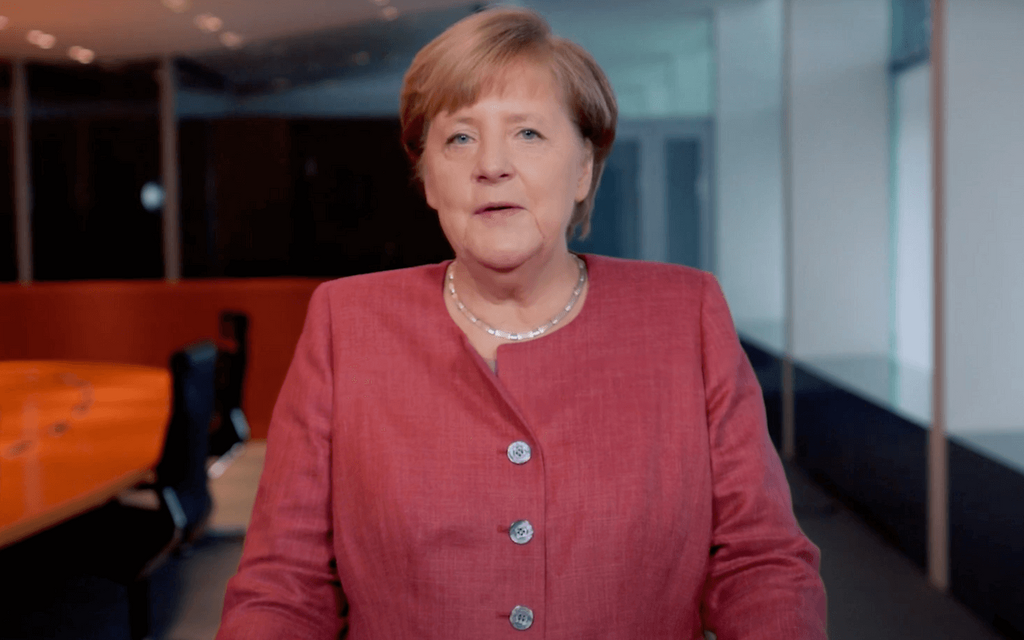
Chancellor Angela Merkel in the Podcast of the Federal Government
At the start of World Food Week around World Food Day on 16 October, Chancellor Angela Merkel stressed that the fight against global hunger will only be successful with international responsibility and solidarity (german only).
The Agriculture and Food Security Cluster of the Deutsche Gesellschaft für Internationale Zusammenarbeit (GIZ) GmbH in Zambia shows how synergies among different projects and partner organisations can help people to eat healthier, diversified food. A delegation of the Bonn based Division of Agriculture and Rural Development learned this in a field visit in the Eastern Province of the Southern African country.
In Himachal Pradesh, India, natural disasters are becoming more frequent and climatic conditions are changing – with negative consequences for apple production and farmers' livelihoods. Holistic and multidimensional innovation bundles are required for the entire value chain in order to make the food system more resilient in the future.
In a new study, the international humanitarian agency CARE analyses how the economic and social barriers faced by women significantly reduces the global gross domestic product (GDP). At the current rate, it will take 152 years to close the economic gap between women and men – although closing this gap would be extremely profitable from an economic perspective.
A Contribution by Carlos Castellanos & Yvonne Bielfeld
The shoe manufacturer Cueros Vélez as a good example of private sector responsibility: the photo gallery shows how the bark of the rubber tree becomes a reliable yet deforestation free companion on our roads.
“In times of global crises and growing budget constraints, strong partnerships are more crucial than ever” – this statement by Federal Minister Alabali-Radovan in the German Bundestag in mid-May is also a guiding principle for the German Agribusiness Alliance. For greater cooperation between politics and the private sector in development cooperation, writes Director Dr. Per Brodersen.
For everyone in the supply chain to benefit, it is essential that politics and business work together. The measurable successes of such partnerships are demonstrated by the following six projects: they show how cooperation with the business sector can make supply chains fairer, more resilient, and more sustainable step by step.
20 years of international engagement, 10 years of successful collaboration with Deutsche Gesellschaft für Internationale Zusammenarbeit (GIZ) GmbH. Andreas Hermes Akademie (AHA) has achieved a very special milestone and invited partners to discuss what has worked in the past and what is needed in the future to create resilient agricultural and food systems.
We use cookies on our website. Some of them are essential, while others help to improve your user experience. Your consent is voluntary and can be revoked at any time on the "Privacy" page.
Protects against cross-site request forgery attacks
Retention period: This cookie remains only for the current browser session.
Saves the current PHP session.
Retention period: This cookie remains only for the current browser session.
Content from third-party providers, such as YouTube, which collect data about usage. Third-party content embedded on this website will only be displayed to you if you expressly agree to this here.
Provider: Google Ireland Ltd., Gordon House, Barrow Street, Dublin 4, Ireland
Retention period: Here you can learn more about the storage period of the cookie: https://policies.google.com/privacy.
Provider: Vimeo, Inc. / 555 West 18th Street New York, New York 10011, USA
Retention period: Here you can learn more about the storage period of the cookie: https://vimeo.com/privacy.
We use Matomo analytics software, which collects anonymous data about website usage and functionality to improve our website and user experience.