Newsletter
Don't miss a thing!
We regularly provide you with the most important news, articles, topics, projects and ideas for One World – No Hunger.
Newsletter
Don't miss a thing!
We regularly provide you with the most important news, articles, topics, projects and ideas for One World – No Hunger.
Please also refer to our data protection declaration.
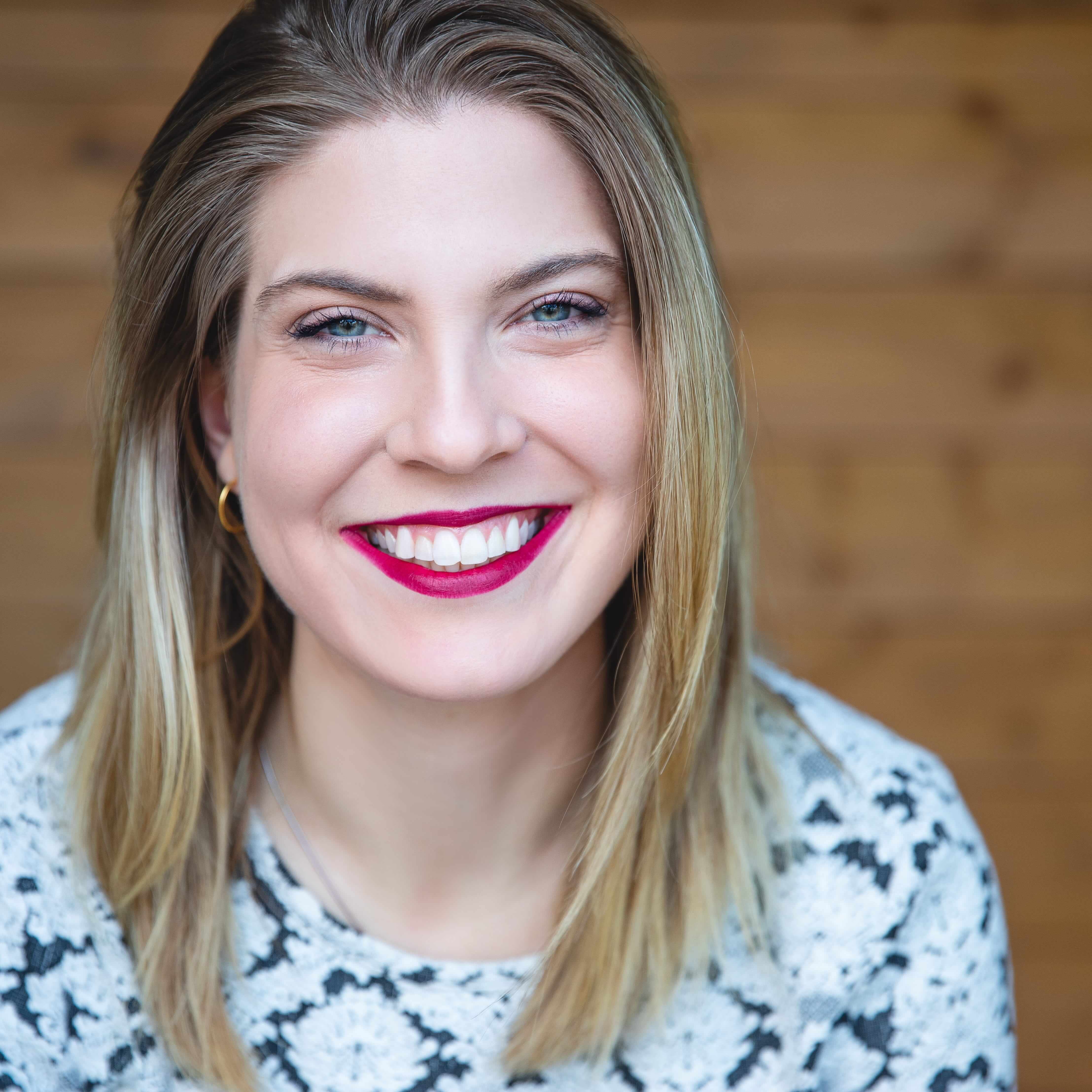
The future of agriculture lies in the hands of young people. Genna Tesdall from the International Netwrok Young Professionals for Agricultural Development (YPARD) discusses what they need.

What can politics do for agriculture?
Genna Tesdall: During my studies, I always found it very difficult that we were only using hard science tools to solve all the agricultural problems, because I really saw that there were many questions of political economy where we could have solved challenges. So in my master's, I studied a pathogen of banana. And really one of the questions that I saw was: Why do we have only Cavendish on the banana market? How can we study this from a political economy perspective? Because if we had more than one variety in the market, maybe we could make things more diverse. Sometimes it's really hard to see how we can mobilize groups of people to get those things to happen. That's the biggest challenge because that could theoretically not take very much money in comparison to technological solutions, for example. So I think we can really do a lot with politics and activism, and that’s what we’re doing in YPARD – bridging science with policy and practice – from local innovators to global policy stages. But we have to believe that we can do it. And if we believe that we're just individuals and that we can never change anything, then it's going to be really hard. And there's a lot of that disempowering narrative happening. I'm not naive. I know that the fossil fuel industry has had a huge influence in talking about personal carbon footprint and all of this. But at the same time, there's got to be a reason why we get up in the morning and do the things that we do.
Do politicians listen to you?
There is a lot of momentum to go in a particular direction, and it's very difficult to break. Throughout my career, I do see that change happens, but it happens over time with the willingness from politicians to listen. 10 years ago, when I first started advocating for youth issues, the battle was to get youth beyond the role “be seen and not heard.” We’ve made huge progress in that area; now youth are consistently consulted, even if often in a tokenistic manner. We are able to bring forward platforms on human rights, agroecology, and a just transition. What’s harder is to press back on the politicians when they are not honoring their commitments to these platforms; since the engagement is tokenistic, it’s a great way not to get invited the next time. So our position in advocacy is not secure.
We’re also not naive as youth activists; there is a huge role that corporate interests are playing. They're very able to fund everything that they want to do for their activism, and they usually don’t align with a human rights and agroecology-centered approach. And so that's a huge challenge, because who gets listened to is also a factor of who can fund more people to go talk to the politicians.
Young Professionals for Agricultural Development (YPARD) is an international network for young people in the field of agricultural development that promotes global exchange between emerging professionals and experts. Through mentoring programs, capacity building, and advocacy work, the movement supports young people in their professional growth and in making their expertise visible within the sector. Its goal is to strengthen the voice of youth in agricultural policy processes to collectively shape a sustainable and just future for global food security.
Let’s take a look at agriculture in general. What should be changed?
We believe that there should be people's leadership in the agricultural system. What does that mean? For one, it means an agroecology and human rights-based approach. In practice we see, increasing farm sizes, increasing need to invest more capital to be able to even start farming or be farming. It should be possible for a young person to enter agriculture, to be able to access a plot of land and start farming, even if they're not inheriting land from their father or grandfather. That's holding so many young people back: we don’t have access to productive assets. Young people should be able to take leadership positions and really have a leading role in this change. Of course, we advocate for agroecology approach as well. We really believe that helps because it's centered a lot around people's leadership and community leadership. Our current agricultural system, in a lot of cases, doesn't respect most people, it doesn't respect most living beings.
Are young people more open to the change you are advocating?
You see that young people tend to be on that curve of early adopters. Young people have generally less vested interest in the system.
We do not already own land, we don't already have a retirement plan, we do not already own houses or businesses. And so we also have the latitude to dream what that new world could look like and really make it feel like our own as well. And everyone loves their own idea – including youth! Hence, that's a great way to make change happen in our view. Of course, we don't want to be adversarial against past generations. I think that would maybe differentiate some of our activism from other activism, because we really do believe we have a lot to learn from each other, and we want to work in cooperation. But while acknowledging that we're in a vulnerable position, we're in a position that is often told to be seen and not heard. And we're going to speak up. We're going to say how we want things to happen. And sometimes that's going to be different than how things have been done in the past.
But why is there a greater need for young people in agriculture?
There's less young people than ever before in agriculture.
We need people who can envision new futures, who can see things differently, who choose to build, create, and live in rural areas.
And we also need young people in order to constitute the food system…
Of course, we need people to be in food systems. I think that is something that we are not planning well. Currently, we do not have a strong eye on what is going to happen to our food supply, to food processing, to food distribution, if we are not allowing people to have good livelihoods in these areas. We know food systems have some of the most dangerous and indecent working conditions, like exposure to dangerous machinery, toxic pesticides, low wages, precarious wages. Then you wonder why people aren't in these professions. These poor conditions are not a working environment I would wish for my child, for example. So we have to take that on, or we're going to have a really big challenge with food production. And that may seem really far off, but it's not that far off.
So now you're talking about the problems and the challenges for food system. What constitutes a fair and good food system in your eyes?
A fair and good food system in our eyes is one that respects human dignity, the dignity of living beings – it respects the human rights approach but also provides just good, decent livelihoods for people where they feel that they can also be a little bit creative with what they are doing, that they can put their talent to work. I mean, think about the things that make you feel like you have a worthwhile profession or worthwhile life. This is what we want to be able to imagine for young people in the food system. We imagine that going to then smaller structures. That you can really have a community level organization.
That's also the reason why YPARD was founded?
YPARD was founded around 20 years ago to connect young people all around the world in agriculture, because the founders of YPARD were at a conference and they realized there aren't very many young people here. We should make sure that we stay in touch.
They were young back then…
Yeah, and so they said: Well, we need to make sure that we stay in touch and also are systematically empowering each other to do something productive in this food system, because of course, we had these challenges 20 years ago. And so that's the idea of why YPARD is to connect to young people, to really fulfill their full potential in this area, because I think it can feel very lonely when you're in the food and agricultural space; as a young person, first, trying to make a career and connecting with your peers can be really empowering because you can ask those silly questions or ponder those difficult aspects of being in this sector. And then also have the courage to just try something out together. And I think that's the beauty: You make your own mistakes, you make your own successes, and then hopefully you learn from the mistakes, and then you continue more on the path that gave you success.
And what are you trying out at the moment?
We're working a lot with what we're calling community solutions fellowships and internships. A group of young people getting together and saying, hey, there's a problem in my community and I want to solve it. And so they apply with this solution to the project. It can be either in its idea stage or it can be already being implemented. And then they get a fellowship of about ten months and they're coached. They get learning modules related to their project, and of course then connected to others in the sector, both in their country and around the world, so that they can help then get that project off the ground. So we're building their professional skills, but also their networks and also that project at the same time. We're in about the third iteration of this type of model. And of course we're learning a lot from doing this model, but we see that there's so much demand. When we opened up our last call for applications, we had six slots, and in about three days we got 500 applications. So that's a good sign for us that we should continue doing things in this direction and keep tinkering on the concept.
And what brought you into agriculture?
My grandparents were farmers in rural Iowa. When I was around ten years old, my grandparents passed away and the farm was sold off. I think if I would have been a little bit older, then I would have been the one to say, please let me farm it. But that was not how the cookie crumbled. But I was always really interested in farming and agriculture and had this connection. That is what brought me to it. At the same time grew up in a university town. I had a lot of friends who came from international backgrounds. That led me to this this career in development cooperation.
Where do you see YPARD in ten years’ time?
Personally, I would love to see being able to start more learning centers in communities to help make this vision of localization happen more strongly. Our new strategy says that we want to work more on localization at the country level, at the local level. What exactly that work looks like? I can imagine having great learning centers for people where people can come have an experience, learn more about different agricultural techniques and connect. We have these models all around the world, but there's still so much need for it. It sounds like such a simple idea, but there's still so many areas that don't have them. Sometimes we don't have to invent something crazy and new, we just have to do something well.

Read more Is the international community still on track in the fight against hunger?

Read more Global responsibility: Tackling hunger is the only way forward

Read more Biodiversity and agriculture – rivalry or a new friendship?
Read more Mr. Marí, what happened at the alternative summit?
Read more What is wrong with our nutrition in Germany, Mr. Plagge ?

Read more How Can We Feed The World in Times of Climate Change?
Read more Nine Harvests Left until 2030: How Will the BMZ Organise Itself in the Future?
Read more Cooperation and Effective Incentives for Sustainable Land Use

Read more What Needs to Change for Africa’s Youth, Ms Kah Walla?

Read more How to Enhance Soil Organic Carbon – Uniting Traditional and Innovative Practices
Read more Digitalization: The Driving Force in the Future of Agriculture?

Read more Our Food Systems are in Urgent Need of Crisis-Proofing: what needs to be done

Read more "Human capital will play a pivotal role in the transformation of African economies"

Read more The importance of water for sustainable rural development

Read more New legal initiatives towards deforestation-free supply chains as a game changer

Read more 2022, a year of crisis – What does it mean for African trade and food security?
Read more How the War against Ukraine Destabilizes Global Grain Markets

Read more Controversy: Do supply chains need liability rules?

Read more 5 Questions for Jann Lay: What is Corona doing to the economy?

Read more Sustainable, feminist and socially just: The new Africa strategy of the BMZ

Read more Do import restrictions really benefit the local poor in West Africa?

Read more Sang'alo Institute invests in farming of sunflower crop

Read more Farmers' organizations want to be involved in designing agricultural policy

Read more BMZ releases video on the transformation of agricultural and food systems

Read more “More of the same is not enough - we need to rethink”

Read more Partners for change - Network meeting on transforming agricultural and food systems

Read more What is needed for a long-term fertiliser strategy?

Read more A framework for sustainable and fair agriculture and food systems

Read more Female Leadership: A Key Lever for Transformation?

Read more Gender-Transformative Approaches – Unlocking Everyone’s Potential

Read more Adapted financial services – a key to transformation

Read more From Pledges to Progress: Nutrition at the Heart of Inclusive Development

Read more A political opportunity to overcome structural barriers for women farmers

Read more Bundled Knowledge – The Compendium of the Green Innovation Centers

Read more “I feel the weight of hundreds of millions of farmers”

Read more Scaling Solutions: What It Takes to Create Lasting Impact
Read more 5 questions to F. Patterson: Why is there more hunger?


Read more The state of food security in Cape Town and St. Helena Bay

Read more How the self-help approach empowers smallholder women

Read more School Feeding: A unique platform to address gender inequalities

Read more The Future of Development Politics: Voices from the Parliamentary Groups

Read more Building Better Resilience to Transboundary Threats

Read more A dashboard as a key tool for global food security

Read more Governor's Day with Farmers – For more discussion with local actors

Read more The Key to Transforming Food Systems Lies in Inclusive Governance

Read more Can we democratize data in the age of digital extraction?

Read more Partners for Change: From Shared Insights to Concrete Action


Read more Developing countries hit doubly hard by coronavirus

Read more Statement from GAFSP Co-Chairs: GAFSP and COVID-19 Pandemic

Read more What do you expect from this Pre Summit, Mr. Haddad?

Read more Mr. Campari, how do we create sustainable food systems?

Read more How can the private sector prevent food loss and waste?

Read more From lost products to safe food - Innovations from Zambia

Read more Land Rights for Secure Livelihoods: My Land is My Life

Read more Together towards Sustainable Development: Private Sector Cooperation
Read more World Soil Conference ends with resolutions on drought management and land restoration

Read more German G7 Presidency – fighting hunger with all our might

Read more The Rice Sector in West Africa: A Political Challenge

Read more Innovative donor approaches and sustainable finance – A Review of UNFSS+2

Read more The common thread is the importance of collaboration

Read more From the Tree to the Street: The Story of Natural Rubber

Read more Stronger toghether: Six collaborations for fair agricultural supply chains

Read more Two decades of global partnerships and farmer empowerment

Read more “Corona exposes the weaknesses of our nutritional systems"

Read more Answers from the youth: "Leave or stay? That depends on it!"

Read more How much private investment is the agricultural sector able to bear?


Read more From start to finish: a vision of interconnectivity
Read more ‘Invite yourself’ – Farmers organisations as key stakeholders of food systems

Read more What does it take to truly shift the paradigm on food systems?

Read more How a Nigerian fintech wants to secure 1 billion US dollars for farms

Read more Agricultural Financing – from a broader Perspective