What Needs to Change for Africa’s Youth, Ms Kah Walla?

By
,

The political activist and entrepreneur Kah Walla actively shapes Africa’s social, political, and business landscape. After moderating the session on youth employment during the EU-Africa Business Forum in February 2022, she talks about governance, the appeal of ‘Team Europe’s’ cooperation offer, and the role of youth participation in rural Africa.

Kah Walla stresses the crucial role women play in transforming Africa’s rural spaces: in some countries, up to 80 percent of agricultural tasks are performed by women. © GIZ

By Kah Walla

A woman in traditional attire speaks passionately in a panel discussion, emphasizing key points with her gestures.

Kah Walla is an activist, entrepreneur and politician from Cameroon. She is the founder and CEO of the international consulting firm STRATEGIES! and President of the Cameroon Gender and Development Network. She also founded the civil movement Cameroon Ô'Bosso. The network supports local civil organisations in representing their interests and being an active part of the development and implementation of national laws.

All contributions

By Jan Rübel

Jan Rübel is author at Zeitenspiegel Reportagen, a columnist at Yahoo and writes for national newspapers and magazines. He studied History and Middle Eastern Studies.

All contributions

Ms Kahbang Walla, some people call you Cameroon's ‘female Obama’ - why?

Edith Kahbang Walla: I think it refers to working very much with the grassroots. I don’t necessarily agree with everything President Obama did, but I respect very much that he was a community organizer. I believe very strongly that for us in Africa, it is urgent that we put into place the type of governance systems that will really respond to the needs of our citizens. But to achieve this, citizens must demand it, they must organize themselves.


Hence, you try to support civil society in Cameroon, for instance?

Yes, you can say it that way. But these days I don’t like the term “civil society” because we made it to be something like an addendum: You have the state and if you like or if you don’t like, you have civil society.


But my vision of governance sees the citizens at the centre.


And civil society is all the different groups representing the citizens. Hence, it should not come after.


How intense is the presence of African states in the rural areas? Let us take a scale from zero to ten…

It is very difficult to give a number for African states as a whole because our countries are in very different situations. Let us look very roughly at three different categories. One is the states that are really doing a good job in terms of functionality. For me, that means three things: presence, notably in terms of basic services, safety and security. And thirdly you have hope, jobs and economic growth. The second category sees countries who are not fully present but move in this direction and make efforts to providing fundamental services like water, electricity, education, health care and security. Finally, you have states who have failed over decades…


…what characterizes them?

We can’t avoid the link between this lacking presence of the state and the ultimate consequence of this, which is conflict. If you look and see where the conflict areas are, it is almost without exception in parts of countries where there very little presence of the state. Rural areas there are lost.


Let us move to the capitals. Last week, representatives of the AU and the EU agreed on a "Joint Vision for 2030" at the 6th EU AU Summit. How do you rate the results of the summit?

There are positives. It was important for these two continents to meet, in this moment where we are going through a pandemic. The summit was able to set out this short term 'Vision 2030' – which is important because of the urgency of the problems that both continents are facing. Secondly, the key areas are covered by this vision: prosperous and sustainable Africa and Europe, enhance cooperation for peace and security, partnerships for migration and mobility, multilateralism – these are the fundamental issues.


Nothing lacked?

Unfortunately, yes. We go back again to the question of functional states and how African states are holding themselves accountable for being functional, and how the European states in this partnership are insisting on the functionality of states…


They have not been tough enough?

It is not their job to be tough on Africa - Africa needs to be tough on itself. However, it is very legitimate for Europe to say: We have supported provision of water with xyz Euros, for example, so where are we? Do people have more water?


How attractive is the cooperation offer of 'Team Europe' compared to those of other actors like China, Russia and the US?


Europe will always be an essential partner for Africa.


We have a very important history together, also with difficult and ugly aspects. But that is our history.


And what about China or Russia – can they be more attractive?

Depending on the type of state. When we look at safety and security as preconditions for a functioning state, we call for fundamental human rights. A citizen without a state which is committed to these values will always immediately be in insecurity. We still have many dictatorships in Africa which don’t want to respect human rights and which look for partners that don’t bother putting an accent on human rights. Europe feels that it is in competition with China, Russia and to some degree Turkey now, and it has become a bit soft on these fundamental human rights and questions of justice. In many ways, it allows dictatorships to play.


Team Europe plays too softly?

Yes, it does. In this cooperation as we saw in the declaration and as we see in cooperation on the ground, there is very little demand from the European side in spite of the fact that these are in the fundamental charters that unite us: the human rights. Africa has a beautiful charter on democracy and good governance and also on human rights, so Europe is not asking: Where is the fundamental respect for these charters? Putting some amount of conditionality to support and aid on the respect for these preconditions would help.


Some African governments would not be pleased.

If you ask the African citizens, and not the states, then they will answer you that they would like to see more conditionalities and more European demand for these fundamental rights. For many Africans, Europe appears hypocritical because of its inconsistency on these fundamentals.


How optimistic are you concerning the rural areas in African countries? As part of the EU-AU Summit, you yourself moderated a discussion on youth employment in rural areas at the EU-Africa Business Forum last week. Is there a ‘Yes, we can’?

I am very optimistic. I walked away from the seminar with a lot of energy! In this seminar, where the young entrepreneurs, the young people who are investing in agriculture.


If you look all over Africa today, there is citizens on the move.


Citizens are organizing themselves in spite of very difficult civic spaces that are restrained. They demand better services in rural areas. They demand that they be included in the decisions that are being taken. That is where the rest of the world, Europe included, is failing them.


How could rural institutions be strengthened so that marginalised groups are no longer neglected? And what changes are needed in the governance system of food systems?

Two things would radically change the food security and even agricultural economies. One is decentralization. That is why governance is important. Because a state that wants to be present throughout the whole country, will then move automatically towards decentralization. You need to have strong local governments to provide fundamental services. They are the interlocutors of the state with the citizens of the rural areas. This is no longer talked about much these days. We discussed it much more in the years 2000s, but it has not been so effective and needs to come back on the table. Also, when you have nice strategies like the Comprehensive Africa Agriculture Development Programme (CAADP), like the African Agri-Business Youth Strategy, these strategies will not produce results of scale if they are not operationalized at the local level. They need to be implemented the sub-region, the country, and within the country at the subnational level.


And secondly?

In governance, farmer-led groups that are actually doing the work on the ground, must be a central part of the governance system at the national level, and even the continental level. We are still talking about agriculture without farmers or with only a token representation of farmers. We are still not integrating young farmers and women farmers in the decision-making process.


How would that help?

They would bring to table the actual needs. We saw this in our seminar at the Business Forum: The young people we had at the table had some very interesting innovative ideas concerning financing, which is a tough question in agriculture. Most of the rest of us working in policy and who talk about these issues had not thought about it from their perspective.
 

Studienteilnehmende großer sowie von Frauen geführter Haushalte leiden stärker unter Ernährungsunsicherheit. (c) Friederike Krämer/GIZ
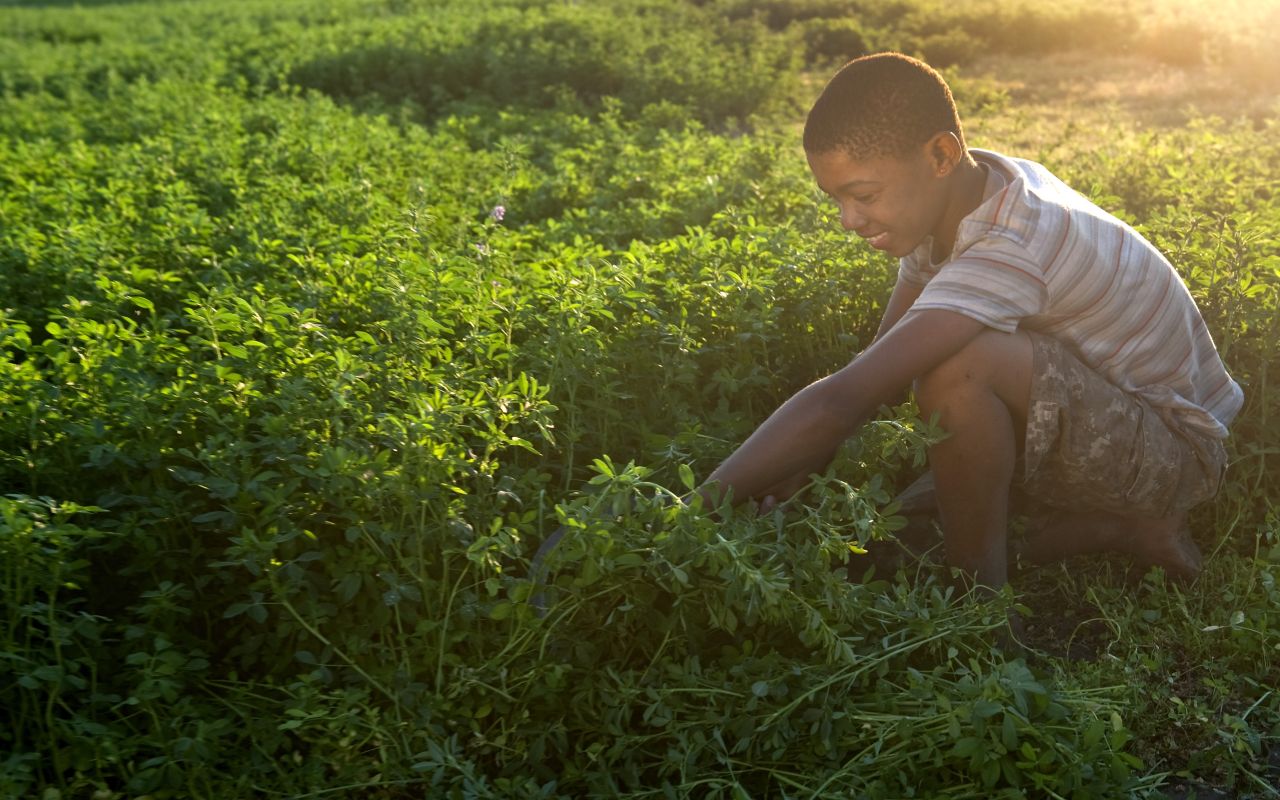
Working a field in Namibia. In many African countries, agriculture still depends on strong physical labor. © GIZ/Ralf Bäcker 2022

For example?

Such as how they can link technology with financial services where groups can be formed to ensure guarantees for the loans that are taken. This is a connection, once again, to local government to ensure access to machinery, for instance. These young people in the seminar are in the field, testing this and that at micro levels and so they have some experience that can be scaled.


You mentioned that young farmers and especially women farmers need to be integrated more in decision-making. Why women?

Because they are 50 percent of the citizens. I always wonder a little bit about this question because if you did not integrate them, it means you have chosen to leave out 50 percent of your citizens.


When we talk about African agriculture and farming, we talk about women.


In some countries, over 50 percent, in other countries up to 80 percent of the farming is done by women. I still see these meetings in Ministries of Agriculture without any woman present. I still see these discussions where they do their national agricultural investment plan, and you don’t see any woman in the room. That means: The farmers are not in the room.


That means: The mistake is in the systems – in the African and the European ones?

Absolutely. I am a firm believer in quotas. I know that quotas are always very controversial for people, but I wait for another mechanism that enables us to overcome centuries of imbalance and inequity in a reasonable period of time. My general experience is that marginalised groups that are not in power, in an enterprise for instance, have a different way of thinking and a different way of approaching a problem. They always add value to a conversation.


Because they are more creative?

And more centred. Groups who are not in power, they don’t worry so much about power. They are more outcome-oriented and more in touch with the realities of a problem.


There are these three big challenges – climate change, biodiversity and hunger – that are to be thought together at COP 27 this year, even more in terms of transformation. What opportunities does the transformation of food systems offer for rural areas in terms of employment and ecosystem services?


For the past 20 to 30 years, African farmers have been raising the red flag on climate change.


Their governments have not been listening, have not made this a priority. But for farmers, this is their priority number one. There is a huge opportunity, a tremendous number of solutions that have been developed for mitigation, for adaptation – but once again, are not scaled. Second, when we talk about biodiversity, there is a huge challenge for Europe. As you know there is a debate on European companies putting a lockhold on and trying to monopolize seeds which really impacts biodiversity. I feel, Europe must look at itself in the mirror and take the necessary regulatory steps. On the African side, a lot of biodiversity is being safeguarded by small communities who are not getting much assistance from their own governments and are certainly not equipped to face major multinationals coming in. So, I see opportunities for these communities in these three priorities – but the challenges must be addressed on the African side and very much so on the European side.


What is the role of big players in agriculture, such as international agricultural corporations - a curse or a blessing?

It depends on what they are coming in to do, which value chains they are coming in for and how they are coming in. Africa is a bit late, but we can learn from the mistakes that others have made. So, just going in for largescale agriculture and knocking out small players is not a good solution for the earth and not a sustainable solution for us as human beings. I believe in other enterprises. In the seventies, the solution of cooperatives was abandoned – but it is a convincing collective force of farmers for production, for transformation and for marketing. I don’t think that Africa should follow in the steps of Europe in terms of the way agriculture has gone. We have the opportunity to have a much better mix: You need largescale farming in some areas, but you need also midsized farms that are viable, competitive and that safeguard better questions of biodiversity and climate.


What do you think about demands coming from the global north that African farmers don’t use chemical fertilizers and chemical pesticides?

Once again, this has to be thought through as an entire value chain strategy. Not just “Don’t use chemicals for production”; the question is: If we don’t use chemicals for production, how are we putting into place the knowhow, the technology and so on to be able to produce at scale without them. Number two: How are we ensuring that those farmers are able to make a living with their production method? The African farmers can’t pay the price for the mistakes Europe has made.


But the idea is good?

It is, but the implementation of it requires a very hard, serious thinking about the entire value chain. And you can’t do it without functional states!


Every answer in this interview returns to states and functionality…

…this is a fundamental pillar. In development, we have a tendency not to talk about it. But without functional states we cannot succeed.


The interview was conducted with regard to the 7th EU-Africa Business Forum February 14th to 18th 2022 leading up to the 6th European-African Union summit. Click here to read the summit’s final declaration.


Similar articles

A smiling person in traditional attire stands in a lush field with goats, enjoying a sunny day.

Policy against disasters

Interview with Thomas Loster

Insurance companies could provide protection during droughts in Africa. How exactly this could be done is what the industry is currently trying to figure out. First experiences are available. An interview with the Managing Director of the Munich Re Foundation, Thomas Loster

Read more

A woman with curly hair and hoop earrings speaks confidently in a formal setting with a blurred emblem in the background.

'It has never been more possible'

Interview with Carin Smaller (Ceres2030)

Over a period of two years, the Ceres2030 team spent researching answers to the questions of how much it will how much it will cost to realize SDG 2 and where that money should be spent most effectively. IISD Senior Advisor and Ceres2030 Co-director Carin Smaller about small farmers, machine learning and women empowerment.

Read more

Two women in colorful headscarves bend over to harvest crops in a lush green field.

„You must be multisectoral in your thinking”

Interview with Adriano Campolina (FAO)

For years, place-based approaches to development have been considered important features in development cooperation, at the BMZ and in FAO. Both organisations are aiming at advancing these approaches: an interview with Adriano Campolina from the FAO on territorial and landscape perspectives.

Read more

Is the international community still on track in the fight against hunger?

Interview with Miriam Wiemers (Welthungerhilfe)

The Global Hunger Index (GHI) 2020 shows that the world is not on track to meet the international goal of “zero hunger by 2030”. If we continue at our current speed, around 37 countries will not even have reached a low hunger level by 2030.

Read more

Jürgen Vögele, Weltbank

"Agricultural research unties the Gordian knot"

Interview with World Bank Vice President Voegele

The CGIAR agricultural research organization is systematically repositioning itself. We spoke with Juergen Voegele, Vice President for Sustainable Development at the World Bank, about progress to date - and discuss what needs to be done collectively to stop global hunger in ten years.

Read more

A large video wall displays numerous participants in a virtual conference with a "goes virtual" banner prominently featured.

GFFA 2021 focussed on climate and COVID-19

A report by David Sahay (Zeitenspiegel)

110 speakers from 120 countries met virtually at the Global Forum for Food and Agriculture (GFFA) to discuss the challenges to global food supply. They asked the question: How can food systems support the health of people and the planet?

Read more

Young corn plants grow in neat rows across a lush field under a cloudy sky, showcasing sustainable farming techniques.

COST-BENEFIT ANALYSES FOR MORE SOIL CONSERVATION

With the help of sustainable farming methods, soils can be preserved and made fertile again. The investment required is also worthwhile from a financial perspective.

A project of GIZ

Read more

A focused worker in blue coveralls operates machinery, wearing safety goggles on his head.

More than just a seat at the table

A contribution by Welthungerhilfe

Africa is home to the world’s youngest and fastest growing population. For many young people, agriculture could offer a job perspective. But to improve the living conditions and job prospects of young people in rural areas, political reforms and investments are desperately needed, as these people will be at the centre of agriculture and agricultural development in the future.

Read more

Farmers work together threshing rice in a field with a makeshift machine under the clear sky.

Leveraging investment impacts

A contribution by Heike Baumüller, Christine Husmann, Julia Machovsky-Smid, Oliver Kirui, Justice Tambo

Any initiative whose aim is to reduce poverty in Africa should focus first on agriculture. But what kind of investment has the greatest impact? The use of scientific criteria provides some answers.

Read more

A drone sprays pesticide over lush green tea plantations on a sunny hillside.

Pesticides – a blessing or a curse?

A debate between Lena Luig and Ludger Weß

What are the consequences of using synthetic pesticides in agriculture? Where do they help, where do they harm? Lena Luig, expert for the development policy organization INKOTA, and science journalist Ludger Weß discuss this controversial topic of international scope.

Read more

A large audience attentively listens to a speaker on stage during a conference in a well-lit auditorium.

Visions in agriculture

Video by Frank Schultze and Jan Rübel

At the beginning of December 2018, AGRA's board of directors met in Berlin. The "Alliance for a Green Revolution in Africa" ​​panel discussed the next steps in their policy of modernizing agriculture. How to go on in the next ten years? One question - many answers from experts.

Read more

A woman in a vibrant outfit inspects grains at a bustling market stall filled with colorful baskets of produce.

"Nutrition is a human right"

Interview with Joe DeVries (AGRA)

Joe DeVries is a breeder – and Vice President of AGRA (Alliance for a Green Revolution in Africa). What are the chances and risks of a ’green revolution‘ in Africa? A discourse between Jan Rübel and him about productivity, needs, and paternalism.

Read more

A man in a white coat examines labeled seed bags on wooden shelves, showcasing a collection of agricultural samples.

Wanted: German investment in African agriculture

Interview with Stefan Liebing

Stefan Liebing is chairman of the Africa Association of German Business. The manager calls for a better structure of African farms. Jan Rübel asked him about small farmers, the opportunities for German start-ups and a new fund.

Read more

(c) Christoph Pueschner/Zeitenspiegel
Somalia / Mogadischu, Juli 2011: diese Frau floh mit ihren Kindern aus dem 250 Kilometer entfernten Baidoa in das IDP-Camp Al-Hidaaya. © Christoph Püschner/Zeitenspiegel

Global responsibility: Tackling hunger is the only way forward

A contribution by Lisa Hücking (WHH)

Chancellor Merkel has begun an ambitious European political programme: Striving for compromise in budget negotiations, an orderly Brexit as well as an appropriate response to the corona crisis. Unfortunately, one of her positions that she previously held is nowhere to be found: Africa's prosperity is in the interest of Europe. 

Read more

A smiling woman wearing a colorful headscarf stands in a sunlit field, exuding joy and confidence.

Africa's face of agriculture is female

A contribution by Beatrice Gakuba (AWAN-AFRIKA)

Africa has a huge opportunity to make agriculture its economic driver. However, the potential for this is far from being made exhaustive use of, one reason being that women face considerable difficulties in their economic activities. The organisation AWAN Afrika seeks to change this state of affairs.

Read more

A person in patterned clothing holds a handful of white corn kernels over a large container, showcasing the grain harvest.

A partnership to fight hunger

A contribution by GAFSP

The Global Agriculture and Food Security Program (GAFSP) was launched by the G20 countries in 2010 in response to the 2008-09 food price crisis to increase both public and private investment in agriculture. An overview of the programme's approach, results and impact.

Read more

Two women in traditional attire discuss farming business strategies at a forum, with one holding a microphone.

Innovations for a secure food supply

A contribution by German Agribusiness Alliance

The COVID 19 pandemic is hitting developing and emerging countries and their poorest populations particularly hard. It is important to take countermeasures at an early stage. Companies in the German agricultural sector want to make their contribution to ensuring the availability of urgently needed operating resources.

Read more

A man in a red shirt hands cash to a customer through a service window with a sign about mobile money in the background.

News from the starting block: Changeover

A contribution by Michael Brüntrup (DIE)

The region of Sub-Saharan Africa is on the decisive verge of a great development boost in farming: it could skip entire generations of technological development. But how? About possible roles and potentials of digital services.

Read more

A woman presents agricultural produce to a seated group outside, near a house, emphasizing community engagement.

"The Green Revolution reaches its limits"

Interview with Stig Tanzmann (BfdW)

Stig Tanzmann is a farmer and adviser on agricultural issues at ‘Bread for the World’. Jan Rübel interviewed him about his reservations about AGRA's strategy.

Read more

A person speaks passionately at a podium during a presentation at the Ministry for Economic Cooperation and Development.

The communicator

A contribution by Jan Rübel

What do electrical engineering, telecommunications and agriculture have in common? They arouse the passion of Strive Masiyiwa: Thirty years ago, he started an electrical installation company with $75, later riding the telecommunications wave as a pioneer. Today he is committed to transforming African agriculture.

Read more

A man in a suit gestures expressively during a conversation, with green plants in the background.

Spiritual mortar for the young generation

A contribution by Jan Rübel

Fred Swaniker is working building a new era of leaders. And what about agriculture? ‘It needs to be more sexy!’

Read more

Farmers operate a blue and red tractor tilling dry soil in a dusty field under clear skies.

Continent in an uptrend

A report by Dr. Agnes Kalibata (AGRA)

Partnering for Africa’s Century: Innovation and Leadership as Drivers of Growth and Productivity in Rural Areas

Read more

A group of people and cattle walk through a lush green field near traditional huts, showcasing agricultural biodiversity.

Biodiversity and agriculture – rivalry or a new friendship?
A contribution by Irene Hoffmann (FAO)

In this article, the author describes what we know about interlinkages, what role agriculture has to play in the sustainable use and conservation of biodiversity, and what the necessary changes in agricultural systems might look like, both on small and large-scale farms.

Read more

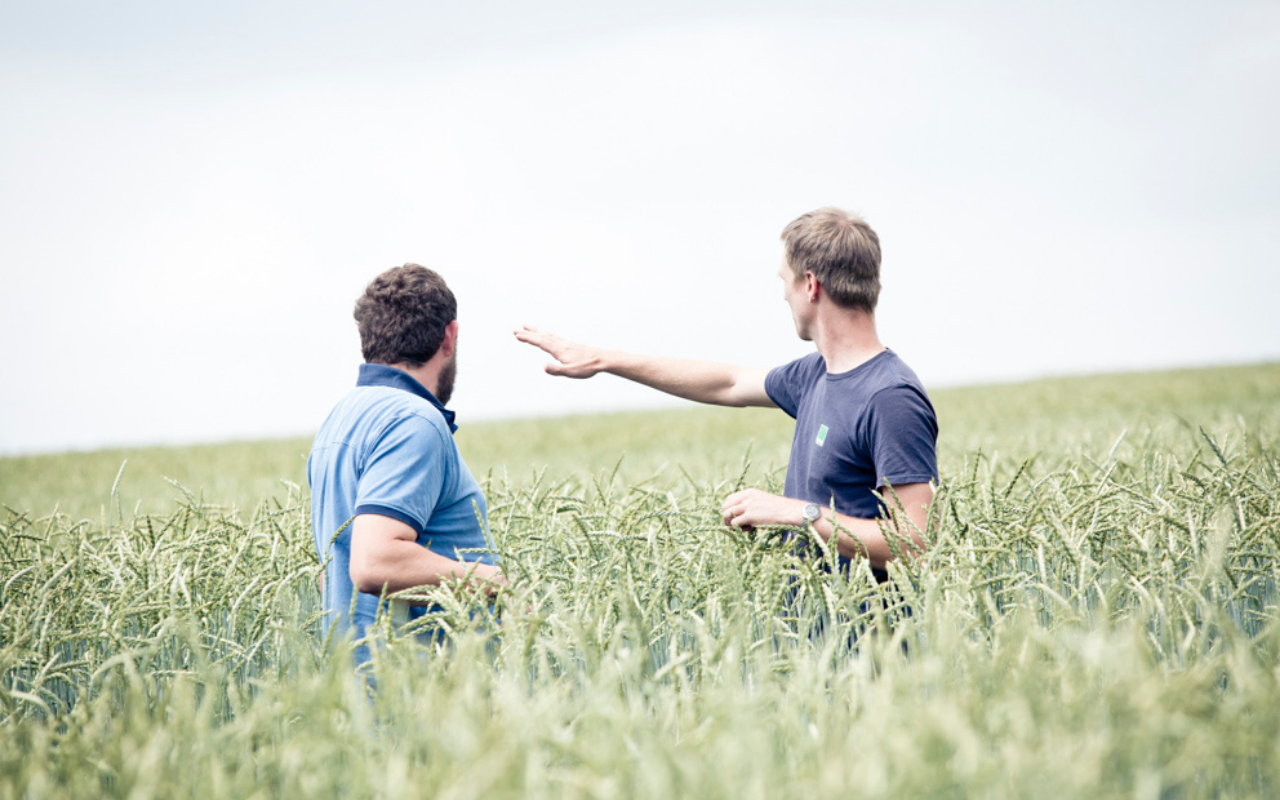
The image promotes a counter-mobilization event to transform corporate food systems, scheduled for July 25-28, 2021.

Mr. Marí, what happened at the alternative summit?
An Interview with Francisco Marí (Brot für die Welt)

Brot für die Welt (Bread for the World) did not attend the UNFSS pre-summit. Instead, the organisation took part in a counter-summit that took place at the same time. A conversation with Francisco Marí about the reasons, the process - and an outlook for the future

Read more

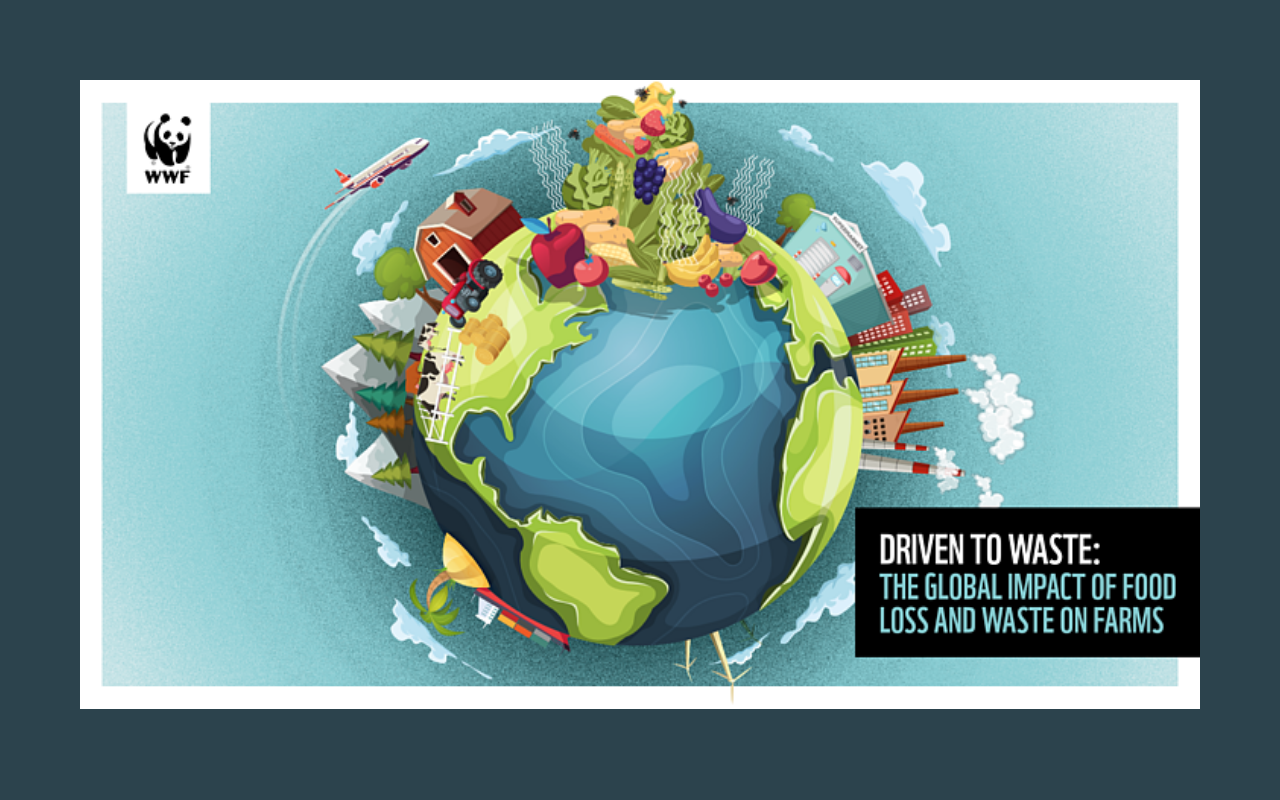
A globe surrounded by farms and food illustrates the global impact of food loss and waste, with a "Driven to Waste" headline.

How much do we actually waste, Mr. McFeely?

An interview with Peter McFeely (WWF)

The WWF has published a sensational study on food waste. The focus: farm-stage food waste. Peter McFeely, Global head of communications and strategic planning at WWF, explains what needs to be done.

Read more

What is wrong with our nutrition in Germany, Mr. Plagge ?

An interview with Jan Plagge (Bioland)

Vitamin-poor nutrition must become more expensive, in-vitro meat is not a panacea, and agricultural systems should be more decentralised. Bioland President Jan Plagge in an interview about the challenge of (future) world nutrition.

Read more

Aerial view of a vibrant green field with parallel tractor lines and a distinct curved pattern.

How Can We Feed The World in Times of Climate Change?
A Contribution by Jan Grossarth

Genetically modified bacteria become edible proteins, cows graze on pasture, and no waste is produced in an industrial circular economy. Journalist Jan Grossarth sees a silver lining for the future of world nutrition

Read more

A person uses a tablet in a greenhouse, symbolizing innovation with a lightbulb icon featuring a tree.

Innovation Challenge 2021

Competition for ideas by BMZ

Out of 40 consortia that applied from all over the world, 14 were invited to present their innovative concept on agroecological approaches in the form of an online pitch and to face the questions of an international jury of experts. Find out which six semi-finalists were selected by the jury and what happens next in this article.

Read more

A facilitator leads a diverse group in a dynamic workshop activity, with participants standing in a circle and engaging actively.

The future is rural

A contribution by "World Without Hunger"

The future is rural. Young African entrepreneurs gave their generation a vocie during the G-20 conference in Berlin. "World Without Hunger" asked six of them, how more jobs can be created in rural areas.

Read more

The image shows a BMZ publication cover on sustainable agri-food systems with Earth and a focus on ending hunger.

Nine Harvests Left until 2030: How Will the BMZ Organise Itself in the Future?
An Interview with Dirk Schattschneider (BMZ)

"One World no Hunger" (SEWOH) becomes one of the five core themes of the BMZ. Dirk Schattschneider, SEWOH Commissioner about previous approaches, future areas of action, and the political will to end hunger.

Read more

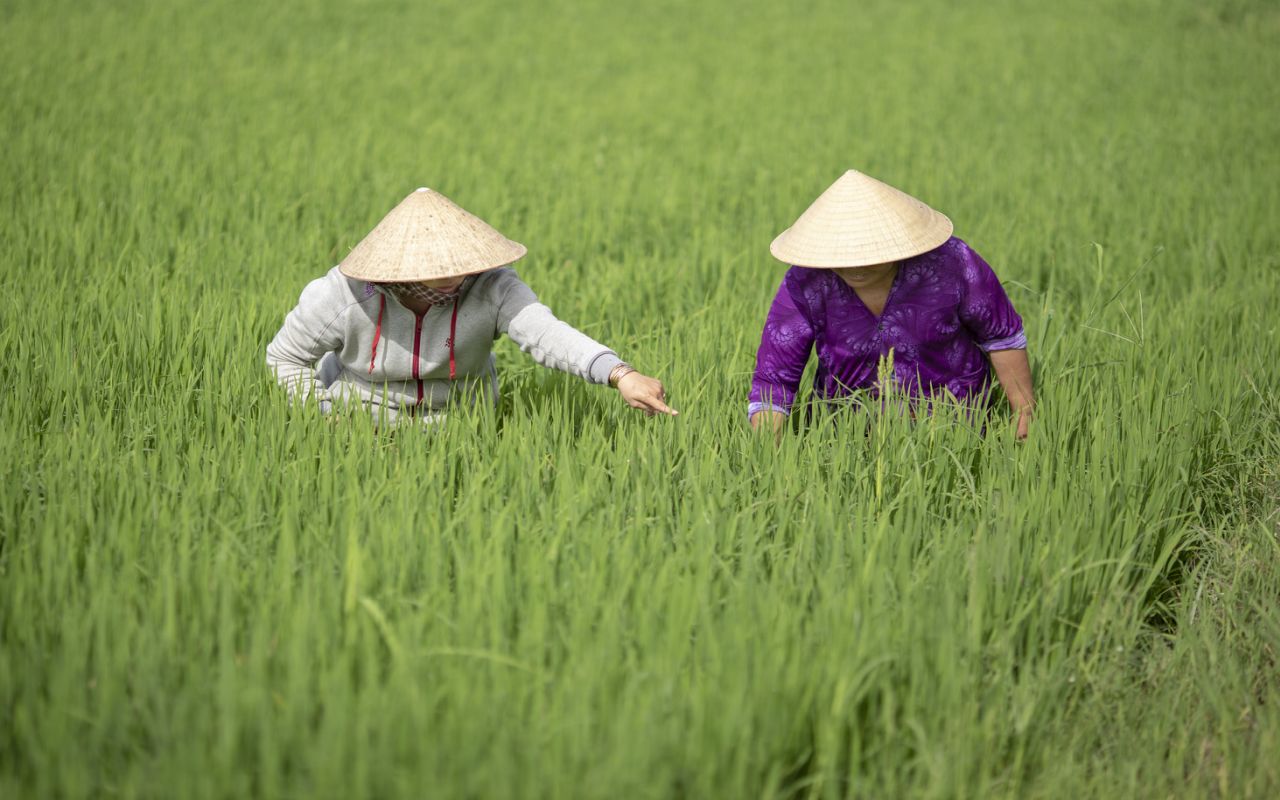
Two people wearing conical hats are working in a lush green rice field, engaging in a focused discussion.

'The Doors are Open - We Farmers are Ready'

An Interview with Shamika Mone (INOFO) and Elizabeth Nsimadala (EAFF)

At the UN Food Systems Summit, farmers organizations have been represented on the international stage for the first time ever. Two representatives talk about bridging personal aspirations with the representation of regional needs and international negotiations.

Read more

Two women are tending to rows of seedlings in a lush, organized nursery garden.

Cooperation and Effective Incentives for Sustainable Land Use

A Contribution by GIZ

The second GFFA expert panel highlights the need for governance action to reverse global trends of land degradation.

Read more

A barren landscape near Lake Chad shows scattered animal bones and sparse vegetation under a clear sky.

GFFA for New Perspectives on the Planet’s Soils

A Contribution by Journalist Jan Ruebel

For five days, the 2022 Global Forum for Food and Agriculture (GFFA) in Berlin is all about strategies for a more sustainable land use.

Read more

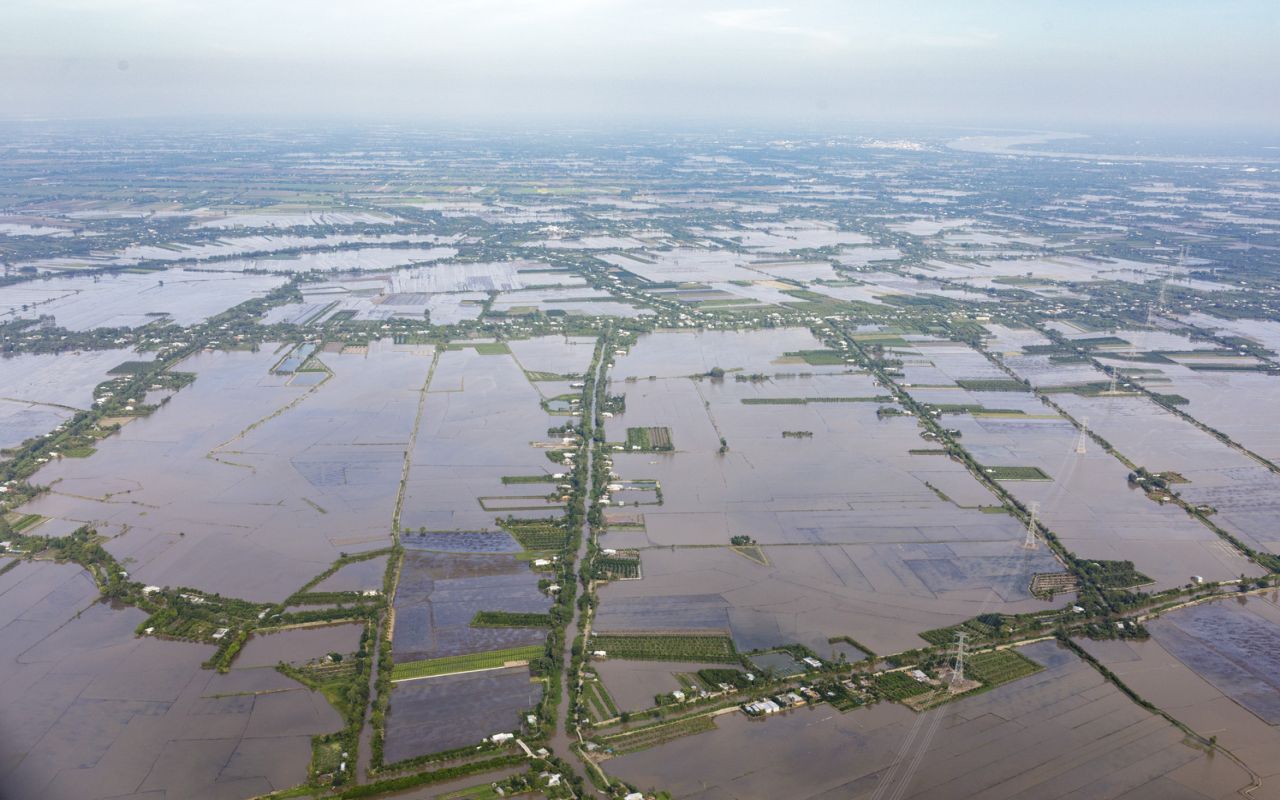
Aerial view of widespread flooding covering agricultural fields and rural roads, showcasing the impact on the landscape.

Strenghtening Farmers' Rights with Soft Laws

A Contribution by Welthungerhilfe

How the UN Voluntary Guidelines on the Responsible Governance of Tenure of Land, Fisheries and Forests (VGGT) contribute to fairer and more secure land access.

Read more

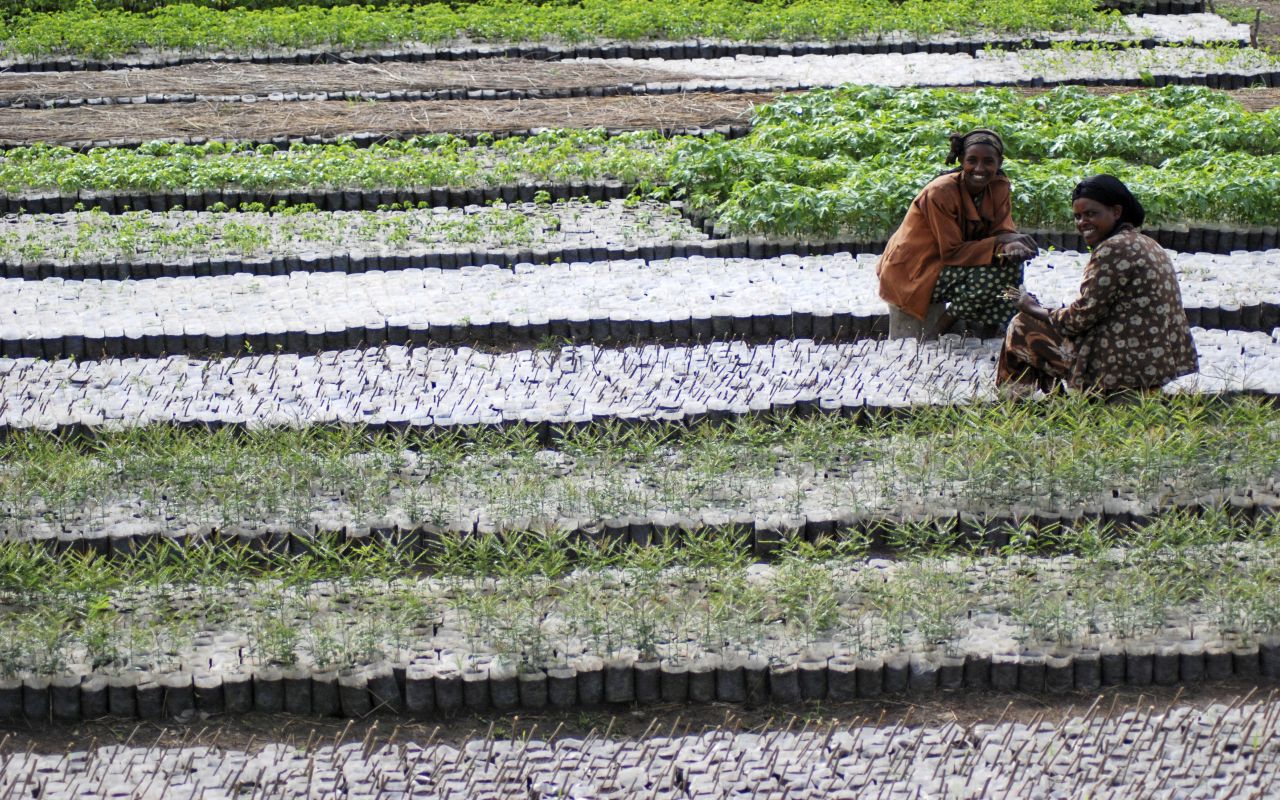
A woman in traditional attire processes compost in a rural Indian setting, highlighting sustainable agriculture practices.

How to Enhance Soil Organic Carbon – Uniting Traditional and Innovative Practices
A Contribution by GIZ

Indian farmers restore precious soil material combining traditional with innovative approaches. A case example how governance, agriculture and development cooperation can work together to combat climate change.

Read more

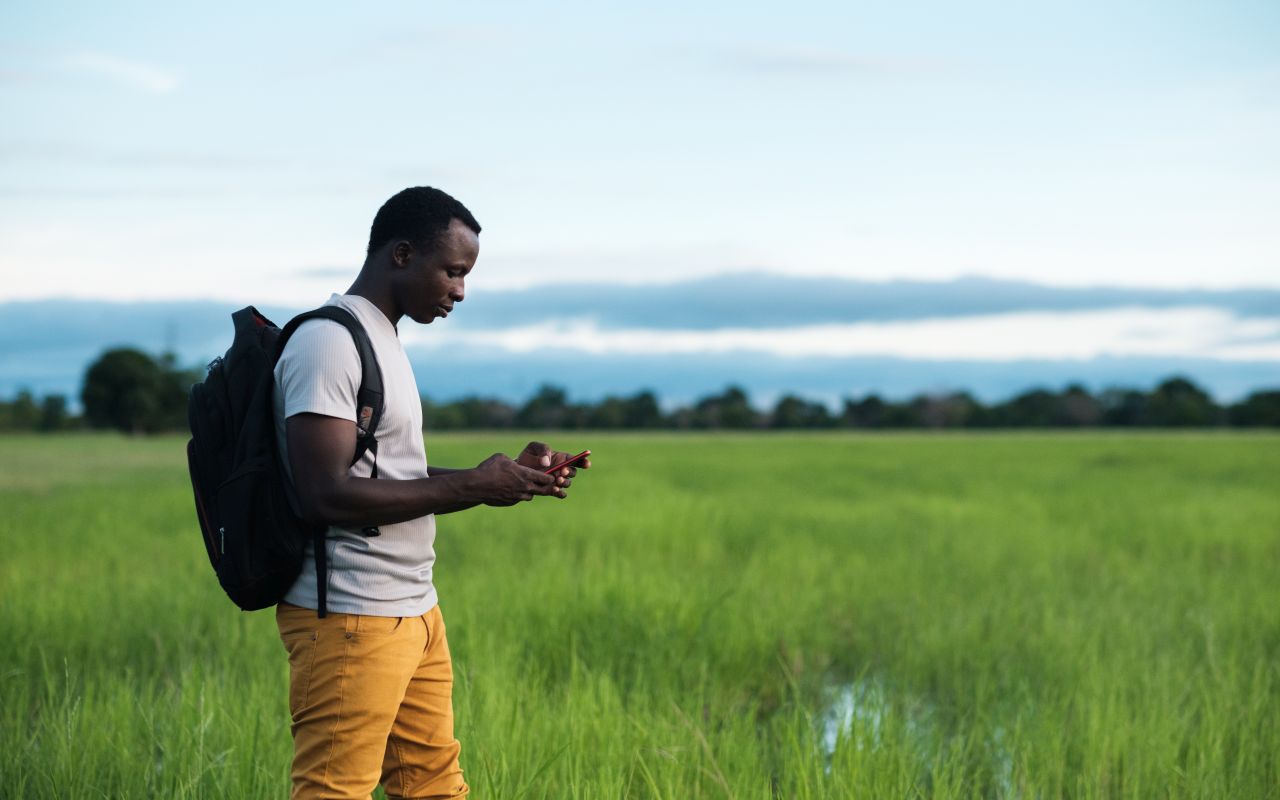
A person stands in a lush green field using a smartphone, highlighting the role of ICT in agriculture.

Digitalization: The Driving Force in the Future of Agriculture?

A Contribution by GIZ

At the ICTforAg conference in March 2022, the digital agriculture community exchanged on the challenges and opportunities associated with the next green revolution.

Read more

A herd of cattle walks along a rural road under a clear sky, guided by herders.

Our Food Systems are in Urgent Need of Crisis-Proofing: what needs to be done

An Artikel by TMG

Based on a scientific study by TMG Think Tank, the authors highlight various challenges in the fight against the hunger crisis. The findings show that climate change, conflict and covid-19 are increasing food and energy prices.


Read more

Lush green foliage thrives in a dense, vibrant display of biodiversity in a tropical jungle setting.

New UN Biodiversity Agreement

A Contribution by Rural 21

Nations adopted four goals and 23 targets for 2030 to foster biodiversity conservation and counter acceleration in the global rate of species extinction at the UN Biodiversity Conference (COP15).

Read more

A worker in a green shirt and red hard hat operates a control panel in a rural industrial setting.

"Human capital will play a pivotal role in the transformation of African economies"

A contribution by Ben Leyka

The potential the African food sector holds is still far too strongly associated with the continent’s natural resources, Ben Leyka maintains. He seeks to change this with the African Agri Council.

Read more

Four people engage in a panel discussion at a podium, with a backdrop featuring agricultural imagery.

And a semicolon in the middle

A contribution by Jan Rübel

After a two-year break due to Corona, the doors of the International Green Week (IGW) in Berlin are opening again. From 20th to 29th January, visitors from all over the world can discover, marvel and taste the produce. But the event is not only feasting and fun. The BMZ stand asks questions about where food comes from & where it goes – and in the process becomes a crash test for many habits.

Read more

A winding irrigation canal runs through a lush Ethiopian valley, showcasing effective water management techniques.

The importance of water for sustainable rural development

A contribtion by WE4F

How can the challenges related to water, rural development and climate resilient agriculture be addressed? What innovations need to be promoted? The Water and Energy for Food (WE4F) initiative presents strategies and innovations for sustainable, integrated water management in German and international cooperation.

Read more

A stormy sky looms over a vast green wheat field in Ukraine, creating a dramatic and contrasting landscape.

From reaction to action

A contribtion by GIZ

A Year of Multiple Crises: Russian war against Ukraine, extreme weather events, high prices for energy and fertilizer, food crisis had severe implications for food security and agriculture globally and especially in Sub-Saharan Africa. A Transformation of the food systems is needed.

Read more

Rows of young plants are neatly arranged in a field, surrounded by lush greenery and a forest backdrop.

New legal initiatives towards deforestation-free supply chains as a game changer

A Contribution by Gerhard Langenberger

Regarding deforestation free supply chains, there are challenges and opportunities for smallholder farmers as well as for international forest governance. Also, responsibilities for companies and potential incentives for manufacturers to use materials from fair trade and sustainable sources need to be explored. But what does “deforestation-free” actually mean?

Read more

A large red cargo ship loaded with colorful containers sails under a bright blue sky with scattered clouds.

2022, a year of crisis – What does it mean for African trade and food security?
A Contribution by Ousmane Badiane

The Africa Agriculture Trade Monitor 2022 (AATM) was published by IFPRI and AKADEMIYA2063. The report analyses the short- and long-term trends and drivers of African agricultural trade flows, including regional policies and the role of global markets.

Read more

Golden wheat fields sway under a vibrant blue sky with scattered clouds in Ukraine. | © Polina Rytova

How the War against Ukraine Destabilizes Global Grain Markets

A Contribution by GIZ

Since early February 2022, two of the biggest grain and oilseed exporters have been at war. An overview, which countries are affected most severely by the destabilized grain markets, and what comes next.

Read more

©GaÎl GellÈ
Cote d'Ivoire

Controversy: Do supply chains need liability rules?

Discussion about the potential supply chain law

The German government is struggling to pass a supply chain law. It is intended to address violations of human rights, social and environmental standards. What would the consequences be for business? A double interview with Veselina Vasileva from GEPA and economics professor Andreas Freytag.

Read more

GDP Growth 2020
GDP Growth 2020

5 Questions for Jann Lay: What is Corona doing to the economy?

Interview with Jann Lay (GIGA)

The Corona pandemic is hitting economies around the world very hard - but developments in African countries are quite diverse. There are different speeds, resiliences and vulnerabilities. What are the reasons for this? Apl. Prof. Jann Lay of the GIGA Institute provides answers.

Read more

The image shows a vibrant view of Earth from space, highlighting Africa and Europe amidst a starry sky.

Sustainable, feminist and socially just: The new Africa strategy of the BMZ

A contribution by Prof. Dr. Anna-Katharina Hornidge

In the video format "#99SecondsWith" of the German Institute of Development and Sustainability (IDOS), Prof. Dr Anna - Katharina Hornidge talks about the new Africa-Strategy of the Federal Ministry for Economic Cooperation and Development (BMZ).

Read more

A rooster with vibrant red comb and detailed plumage stands alert behind a wire fence in a rural setting.

Do import restrictions really benefit the local poor in West Africa?

A contribution by Isabel Knößlsdorfer

Protectionist policies like tariffs supposedly protect domestic producers if they cannot compete with cheaper imported products. Some African countries have therefore opted to impose such import restrictions for a number of products. For the case of chicken imports in Ghana, this study analyses whether restrictions would lead to overall positive or negative welfare effects among households.

Read more

A group of people walks through a field in Tanzania, with vibrant sunflowers blooming under a clear sky.

Sang'alo Institute invests in farming of sunflower crop

A contribution by James Wanzala

Kenya is a large importer of vetable oils mainly from Indonesia and Malaysia - amongst them sunflower oil. Due to the Russian war of aggression against Ukraine, there were supply bottlenecks and food shortages, leading to less affordable vegetable oils in Kenya. As a response to the lack of supply, the Sanga'alo Institute of Science and Technology, took that impulse, teamed up with the GIZ and established regional cultivation and refinement of sunflowers.

Read more

A woman in a colorful dress and hat works with a hoe in a vast, barren field under a cloudy sky.

Farmers' organizations want to be involved in designing agricultural policy

An interview with Kolyang Palebele

Four interviews kick off the relaunch under the new name „Food4Transformation“, asking the same questions from different perspectives. "Women and young people need access to land. And they need financial support to cultivate this land." - says Kolyang Palebele, President of the Pan African Farmers Organisation (PAFO).

Read more

Young green seedlings sprout from the soil, showcasing new growth in a lush garden setting.

Agricultural policy belongs in prime time

An interview with Dr. Julia Köhn

Four interviews kick off the relaunch under the new name „Food4Transformation“, asking the same questions from different perspectives. Dr Julia Köhn, Chair of the German AgriFood Society, points out in the interview: Only if innovation and transformation are profitable in the medium term can they close the food gap in the long term.

Read more

Aerial view of two people guiding oxen across a red, plowed field, highlighting agrifood transformation themes.

BMZ releases video on the transformation of agricultural and food systems

A contribution by GIZ

The Federal Ministry for Economic Cooperation and Development (BMZ) has released a video on the transformation of agricultural and food systems. In the video, Federal Minister Svenja Schulze also speaks about the urgent need to combat global hunger and contribute to resilient agricultural and food systems.

Read more

Colorful illustrations depict diverse economic activities and cooperation under the German Ministry for Economic Cooperation and Development.

“More of the same is not enough - we need to rethink”

An interview with Dirk Meyer

Four interviews kick off the relaunch under the new name „Food4Transformation“, asking the same questions from different perspectives. Dirk Meyer, Federal Ministry for Economic Cooperation and Development, thinks: less individual solutions are needed, but more systemic approaches. Because in addition to the goals for food security, the issues of climate and biodiversity must also be taken into account.

Read more

Solar panels are installed in a rural area, harnessing renewable energy under a clear blue sky.

Unlocking the potential of agrivoltaics

A contribution by Fraunhofer Institute

Agrivoltaics is a concept that combines photovoltaic electricity generation and agricultural production, providing the opportunity for a more efficient land use and contributing overall to the integration of food, energy and water systems. This can be particularly interesting for countries in the Global South, where rural electrification rates are often low and food security needs to be improved.

Read more

Four individuals stand together, holding and presenting a large policy document at a "Partners for Change" event.

Partners for change - Network meeting on transforming agricultural and food systems

A Contribution by the Federal Ministry for Economic Cooperation and Development

At the network meeting "Partners for change - Transformation to a food secure, resilient and sustainable future", almost 250 participants from over 20 countries came together to exchange experiences and ideas on the transformation of agricultural and food systems. The final product, joint recommendations to transform agricultural and food systems, can now be read online.

Read more

A large audience attentively listens to a panel discussion on "Partnering for Change" in an elegant, arched venue.

Just change starts with listening

A Contribution by Jan Rübel

Halfway through the 2030 Agenda, the BMZ invited participants to a network meeting entitled "Partners for change - Transformation to a food secure, resilient and sustainable future". Experts from around the world developed recommendations in a consultation process and then consolidated them in Berlin. A site visit.

Read more

A person in boots pulls a hose across a field, preparing for fertilization under a clear blue sky.

What is needed for a long-term fertiliser strategy?

A contribution by Michael Brüntrup

The world is currently experiencing a historic food crisis. High fertiliser prices are part of the problem. In addition to the necessary short-term aid measures, the crisis ought to be made use of to develop and implement longer-term fertiliser strategies for sustainable, in particular smallholder increases in production in the Global South.

Read more

Participants attentively listen during a policy briefing session in a well-lit conference room.

Think20 Policy Brief centres on Agroecology

Insights from the T20 Policy Brief

Given the urgency of transforming agricultural and food systems, GIZ India's Food Systems and Agroecology Working Group is exploring the potential of agroecology in collaboration with Think20 partners. A policy brief has now been published.

Read more

A diverse group of people gathers for a photo at a UN event focused on desertification and drought awareness.

A Call to Action against Desertification

A contribution by GIZ

Every second, worldwide, we lose valuable and healthy soil with the size of four football fields. This was only one of the many facts being presented to a wide audience in Bonn and worldwide via livestream at the World Desertification and Drought Day on 17th June 2024. This was the 30th anniversary of the United Nations Convention on Combatting Desertification (UNCCD), which was celebrated at the Bundeskunsthalle in Bonn.

Read more

A woman in a pink headscarf and floral dress stands confidently in a lush garden. | © Claudia Jordan

Stick together and learn from each other

By Claudia Jordan

During the Women Leadership Programme in May 2024, around 20 women from African countries and Germany met again for a one-week workshop in Bavaria, Germany to become fit for leadership in their organisations. One topic that concerns the women across countries is climate change, but also violence against women and their discrimination in agriculture.

Read more

A person in a yellow shirt holds a tray of eggs, smiling inside a chicken coop filled with hens.

Cultivating tomorrow

A Contribution by GIZ

Africa’s largest youth generation has the potential to transform agriculture sustainably. Young entrepreneurs like Febelsa in Mozambique are building agricultural businesses that fuel local growth.

Read more

A woman in a red headscarf observes young plants growing in a greenhouse, tending to them carefully.

Uprooting the Norm

A Contribution by GIZ

As a passionate social scientist and entrepreneur from Malawi, Ngabaghila Chatata knows that she can overcome any challenge. Her story stands out in a country faced with high unemployment, particularly in its rural areas. As the managing director of Thanthwe Farms, she has set out to inspire the next generation of young agripreneurs – proving that successful business starts with the right mindset, not only capital.


Read more

A diagram illustrates the concepts of decent livelihoods, resilience, protected environment, fairness, and healthy diets globally.

A framework for sustainable and fair agriculture and food systems

A Contribution by Gideon Tups

The guiding orientation framework developed by the Deutsche Gesellschaft für Internationale Zusammenarbeit (GIZ) summarizes the requirements for the transformation of agriculture and food systems – and identifies principles and approaches for transformative change.

Read more

A group of diverse professionals stands together at a CAADP event, with a presentation screen in the background.

African Union sets the Way for the Future

A Contribution by GIZ

From January 9 to 11, 2025, heads of state and government of the African Union met in Kampala, Uganda. With a clear vision and concrete measures, the Kampala Agenda aims to make the continent's agricultural and food systems climate-resilient, fair and future-proof by 2035.

Read more

Workers harvest cocoa pods in a lush green plantation, with one person pouring a basket of pods onto a pile.

Guide to a Sustainable Cocoa Sector

A Contribution by Jens Busma

The Federal Ministry ofor Economic Cooperation and Development (BMZ) and the Federal Ministry of Food and Agriculture (BMEL) presented a revised version of the 10-Point Plan for a sustainable cocoa sector. The plan takes into account new supply chain legislations and current developments. A particular focus is paid to a living incomes, responsible purchasing practices and ecological and climate-friendly cocoa cultivation.

Read more

A woman sorts cocoa beans in a wooden tray, wearing a colorful floral shirt and traditional patterned skirt.

"We didn't even make it halfway"

Interview with Claudia Brück and Torben Erbrath

The demand for fair-trade cocoa is growing – but how is the industry responding? In an interview, Claudia Brück, Executive Board Member of Fairtrade Germany, and Dr. Torben Erbrath, Managing Director of the Federal Association of the German Confectionery Industry, discuss progress as well as challenges, and why real change can only be achieved through long-term commitment along the entire supply chain.

Read more

A diverse group of women joyfully pose together on a rooftop, celebrating female leadership and empowerment.

Female Leadership: A Key Lever for Transformation?

A Conversation with Carmen Torres Ledezma & Oluwaseyi Kehinde-Peters

Female Leadership is vital to the transformation of agriculture and food systems. Therefore, it is so important to advance gender-sensitive approaches to increase the presence of women in leadership positions in agricultural production and to make these systems more equitable, sustainable and resilient.

Read more

A woman in a blue sari arranges white silk cocoons on a woven wall in a rural setting.

Gender-Transformative Approaches – Unlocking Everyone’s Potential

A Contribution by GIZ

Studies show that women often manage agricultural resources more effectively and sustainably. With equal access to production resources, agricultural yields could increase by up tp 30 per cent. But this is about more than just productivity. How can gender-transformative approaches (GTA) drive meaningful change and why are GTA key to sustainable change?

Read more

A woman at a trade show proudly displays organic food products in front of a booth showcasing diverse packaged goods.

BIOFACH as a game changer for organic producers

A Contribution by Claudia Jordan

In 2025, GIZ and the Import Promotion Desk (IPD) celebrate ten years of successful cooperation. With their joint stand at BIOFACH trade fair in Nuremberg, they were able to introduce over 300 organic companies of partner countries to the European market. And the journey continues – despite challenges on the global market.

Read more

A diverse group of professionals gather for a conference, posing together in a spacious lobby surrounded by greenery.

Adapted financial services – a key to transformation

A Contribution by GIZ

In March, delegations from nine partner countries met in Berlin at the Partner Conference Scaling Access to Finance for Agripreneurs. Alongside AUDA-NEPAD, IFAD, BMZ, GIZ, and others, around 100 participants worked on practical solutions to support financial inclusion in agricultural transformation and hand over their conclusions to the AU's Kampala CAADP process.

Read more

A woman in traditional attire inspects fresh vegetables at a bustling market, embodying voices from vibrant local cultures.

From Pledges to Progress: Nutrition at the Heart of Inclusive Development

A Contriution by GIZ

At the Nutrition for Growth 2025 Summit in Paris, Team Europe, comprising the European Commission and Member States, put nutrition at the centre of international politics as a driver for resilience, equality and human rights. There is a consensus on the results of the summit: to turn commitments into concrete progress through strong partnerships and innovative approaches.

Read more

A woman stands in a lush field holding freshly picked vegetables, with others in the background at the N4G Summit.

Working together to improve global nutrition

A Contribution by Jan Rübel

The global fight against malnutrition needs more than just words - as demonstrated by the Nutrition for Growth summit in Paris. With comprehensive commitments and clear receivables, a signal has been sent: Healthy nutrition must become a global priority. But what do participants from countries such as Yemen and Timor Leste think?

Read more

Participants engage in discussions during the SOILution P4C conference, with speakers addressing the audience from a stage.

Elevating Soil Health for a Sustainable Future

A Contribution by Kah Walla

In May, this year's "Partners for Change – SOILutions for a Food Secure, Resilient, and Sustainable Future" conference took place. Kah Walla, Moderator of the Conference and Director of Strategies!, summarises the discussions and declares that healthy soils are not just the foundation of agriculture, but the cornerstone of a resilient, equitable, and climate-smart future.

Read more

A portable radio with an extended antenna sits on freshly cut grass in a field. | © GIZ Ursula Meissner

Twelve countries, two podcasts, one goal 

A Contribution by GIZ

Two new podcast formats from the Deutsche Gesellschaft für Internationale Zusammenarbeit (GIZ) bring stories from on-the-ground project work to life: "Over to you!" from Malawi and "Voices of Change – Beneficiary Story Book" from Zambia. At the heart of these podcasts are the people behind the changes toward sustainable food security.

Read more

(c) Caritas San Miguel

The human finca

Interview with Marvin Antonio Garcia Otero

In Eastern El Salvador, campesinos are cultivating a self-image to encourage rural youth to remain in rural areas. With help from Caritas, they have adjusted the cultivation methods to their soils and traditions - Marvin Antonio Garcia Otero,the deputy director of Caritas of the Diocese of San Miguel believes this is the best way to prevent rural exodus and criminality.

Read more

Text highlights the potential of 71 million young people to enhance rural areas, with footprints symbolizing progress.

Answers from the youth: "Leave or stay? That depends on it!"
GIZ study; conducted by Geopoll

Does Africa's youth want to live in the city or in the country? Which career path seems particularly attractive? And how optimistic are the young people about the future? Young adults from rural areas answered these questions by SMS.

Read more

A speech bubble asks about taking over a farm, featuring emojis of a chick, potato, cow, rice bowl, and tractor.

The Life of Their Dreams - What Children Want

Interview with Gnininkaboka Dabiré and Innocent Somé

Later on you want to become a farmer yourself, or would you prefer to take up another profession? Two young people from Burkina-Faso talked to representatives of the Dreyer Foundation about their parents' farms, the profession of farmer and their own plans for the future.

Read more

A teacher in vibrant attire leads a joyful group of children outdoors, embodying community spirit and education.

It all comes down to the young population

A contribution by Jan Rübel

What happens when young people leave the rural areas? How can the region achieve what is referred to as the demographic bonus – and how can it reap the benefits of the demographic dividend? A look at demography shows the following: What is most important is promoting women’s rights and education.

Read more

A smiling child in a purple jacket holds sticks in a sunny rural field under a clear blue sky.

An investment in Africa's future

A contritbution by Essa Chanie Mussa (University of Gondar)

Rural youth need viable livelihood opportunities to escape out of poverty and realize their aspirations. How could they be helped to fully unleash their potential? This is an aloud call that needs novel strategies among governments, policy makers, and international development partners and donors.

Read more

A person in a denim jacket stands in a lush banana plantation, holding a bunch of green bananas.

Youth Employment in Rural Areas

The world’s population keeps on growing; with this rise comes an increased need for food as well as productive employment opportunities. Offering young people in rural areas better employment prospects is one of the objectives of the sector project. The young population is the key to a modern and efficient agricultural economy.

A project of GIZ

Read more

© GIZ / Ollivier Girard

"The virus does not need visa"

Interview by Dr. Ahmed Ouma (CDC)

Countries across Africa coordinate their efforts in the fight against corona by the Centre for Disease Control (CDC) of the African Union in Addis Abeba. Until now, the curve of new infections has been successfully flattened – why? Dr. Ahmed Ouma, Deputy Director, explains the work of CDC in an interview with Tilman Wörtz.

Read more

A man in camouflage distributes food to people, including women and children, from a large pot outdoors.

5 questions to F. Patterson: Why is there more hunger?

Interview with Fraser Patterson

Every year in October, the "Welthungerhilfe" aid organisation, with the Irish "Concern Worldwide" NGO, publishes the Global Hunger Index, a tool with which the hunger situation is recorded. What are the trends - and what needs to be done?

Read more

Stephan Exo-Kreischer ist Deutschland-Direktor der Lobby- und Kampagnenorganisation ONE.

New campaign for women: "Poverty is sexist"

Interview with Stephan Exo-Kreischer

This is a benchmark for everybody: More rights for women are a very influencing solution in the struggle against extreme poverty and hunger worldwide, says Stephan Exo-Kreischer, Director of ONE Germany. The organisation specialises in political campaigning as a lever for sustainable change.

Read more

“We have to prepare for the unexpected”

Interview with Dr Maria Flachsbarth (BMZ)

In August, Germany’s development ministry set up a division concentrating on One Health topics. Parliamentary State Secretary Maria Flachsbarth on knowledge gaps at the human-animal-environmental interface, the link between One Health and food security, and lessons learnt from previous pandemics.

Read more

Teilnehmer einer Schulung im Digital Transformation Center Kigali, Ruanda. © Mali Lazell, GIZ

Africa's rapid economic transformation

A report by T. S. Jayne, A. Adelaja and R. Mkandawire

Thirty years ago, Africa was synonymous with war, famine and poverty. That narrative is clearly outdated. African living standards are rising remarkably fast. Our authors are convinced that improving education and entrepreneurship will ensure irreversible progress in the region even as it confronts COVID-19.

Read more

Förderung einer nachhaltigen Landwirtschaft, Burkina Faso. Foto: Aude Rossignol, GIZ

Building our food systems back better

A contribution by Jes Weigelt and Alexander Müller

What is required to make food systems provide sufficient, healthy food while not harming the planet? How should food security be maintained given the threat posed by climate change? Our authors look at some aspects of tomorrow’s food systems against the backdrop of the corona crisis.

Read more

A small roadside shop with colorful signage stands under a clear blue sky next to a parked truck.

The state of food security in Cape Town and St. Helena Bay

A study by Markus Hanisch, Agustina Malvido, Johanna Hansmann, Alexander Mewes, Moritz Reigl, Nicole Paganini (SLE)

Post-Covid-19 lockdown: How food governance processes could include marginalised communities - an extract of the results of an SLE study applying digital and participatory methods.

Read more

A group of women, some wearing green "d.light" shirts, gather for a photo in a well-lit room.

How the self-help approach empowers smallholder women

A report by INEF and Kindernothilfe

Supporting groups of smallholding women substantially contributes to strengthen rural operations economically. The organisation and associated group activities can help to reduce extreme poverty and improve the food situation.

Read more

Four smiling children joyfully eat together at a table, sharing bowls of food in a warm, vibrant setting.

School Feeding: A unique platform to address gender inequalities

A contribution by Carmen Burbano de Lara (WFP)

Besides the well known impacts of Covid19 lockdowns for the adult population, the associated school closures led to 90 percent of the world’s children with no access to schools. However, school meals are in often the only daily meal for children. Without access to this safety net, issues like hunger, poverty and malnutrition are exacerbated for hundreds of millions of children.

Read more

A woman in Burkina Faso feeds her baby while children sit against a rustic wall in the background.

Hunger must not be a consequence of the epidemic!

A contribution by Michael Brüntrup (DIE)

Even though COVID-19 poses a threat to the health of humanity, the reaction to the pandemic must not cause more suffering than the disease itself. This is particularly relevant for poor developing countries, where the impact of the corona crisis on food security is even more severe!


Read more

A person stands on a rocky hill, overlooking a vast, scenic landscape with a towering cliff and expansive fields below.

Human Rights, Land and Rural Development

A contribution by Michael Windfuhr (German Institute for Human Rights)

Land rights are no longer governed by the law of the strongest. That is what the international community has agreed to. Governments and private companies have a duty to respect human rights and avoid corruption.

Read more

A man in a cap and blazer speaks at a podium during a presentation on small business competition winners.

How do you campaign “Food Systems”?

Interview with Paul Newnham, Director of the SDG 2 Advocacy Hub.

The UN Food Systems pre-Summit in Rome dealt with transforming the ways of our nutrition. How do you bring that to a broad public? Questions to Paul Newnham, the Director of the Sustainable Development Goal (SDG) 2 Advocacy Hub.

Read more

Farmers work together weeding a lush green maize field under a clear blue sky.

How Smallholders became Commodity Suppliers

Small farmers are often left behind in African agriculture. Access to markets and improved competitiveness can only be achieved if the small farms join forces. But those affected in partner countries are often at a loss as to how to implement cooperative models. Here, the BMZ provides support through the SEWOH ONE World – NO Hunger initiative and the Social Structure Promotion (Sozialstrukturförderung).

A project by Deutscher Genossenschafts- und Raiffeisenverband e. V.

Read more

A complex network of colorful wires is intricately connected on a white circuit board, demonstrating electrical engineering.

The Future of Development Politics: Voices from the Parliamentary Groups

A Contribution by Journalist Jan Rübel

Representatives of the six parliamentary groups offer their views on the future of German development cooperation.

Read more

A tree trunk is covered with locusts as a group of people and goats stand in the background.

Building Better Resilience to Transboundary Threats

A Contribution by the TMG Think Tank for Sustainability

Fuelled by climate change, desert locust plagues become increasingly frequent. A plaidoyer for a paradigm shift on handling transboundary crises.

Read more

Three people stand smiling on a modern staircase with photographers capturing the moment, reflecting a formal event.

From shared conviction to global response

A Contribution by Jan Rübel

The G7 is responding to the worsening global hunger crisis by mobilizing an additional $4.5 billion for this year alone. A key milestone for this in the run-up was the international conference on global food security "Uniting for Global Food Security".

Read more

Golden wheat stalks sway under a clear blue sky, capturing a serene agricultural landscape.

A dashboard as a key tool for global food security

A Contribution by BMZ

The Global Alliance for Food Security (GAFS), jointly launched by the German G7 Presidency and the World Bank, released the Global Food and Nutrition Security Dashboard during COP27: A Rapid Response Tool for Coordinating Global Action for Food Security.

Read more

A panel discusses food system transformation at the Global Forum for Food and Agriculture 2023, with a speaker at the podium.

How to govern food systems transformation

A contribution by Daniel Montas and Jan Rübel

The transformation of food systems is regarded as the new magic code, but effective strategies are lacking. A new group of experts discussed the prerequisites for efficiently managing this process. The experts representing politics, youth, civil society, farmers' organizations, private sector, and academia unanimously concluded: transformation is possible, but it needs a strong drive from within.

Read more

A winding road cuts through lush green mountains under a vast, clear sky, showcasing nature's breathtaking beauty.

“We want to overcome hunger and poverty”

An interview with Fernanda Machiaveli

After four years of the Bolsonaro administration, the new Brazilian government is trying to restart its engagement in agroecology, fighting deforestation in the Amazon and protecting indigenous communities and poor families from hunger. An interview with the Vice-minister for Rural Development and Family Farming, Fernanda Machiaveli.

Read more

An aerial view of a rural village showcases a network of dirt roads winding through houses and greenery.

“We have to focus on sustainability”

An interview with Karen Mapusua

Karen Mapusua, President of IFOAM Organics International Network, on the danger of the current fuel crises and inflation to loose track in sustainablity, why organic farmers should be heard and how the word “crisis” has a very different meaning where she lives in Fiji.

Read more

A man in a suit speaks at a podium under a colorful tent during a Farmers Day event.

Governor's Day with Farmers – For more discussion with local actors

A contribution by William Onura and Larissa Stiem-Bhatia

In agriculture it is important to include political stakeholders in the discourse. To build the bridge between practical application and political action, the think tank TMG launched the Governor's Day with Farmers in Kakamega County, Kenya. Now it took place for the second time. But what are the goals and benefits of the Governor's Day?

Read more

Aerial view of a lush agricultural landscape in Ethiopia, showcasing neatly arranged crops and a small building. | © GIZ

The Key to Transforming Food Systems Lies in Inclusive Governance

A Contribution by Daniel Montas

Experts from Burkina Faso, Cambodia, Ethiopia, India, Kenya and Malawi came together to discuss inclusive governance in a workshop entitled "Inclusive Governance of Food Systems Transformation". Daniel Montas, TMG Research, on the findings.

Read more

A woman in a red blazer speaks confidently in a modern conference room setting.

Podcast: Fighting world hunger together

Chancellor Angela Merkel in the Podcast of the Federal Government

At the start of World Food Week around World Food Day on 16 October, Chancellor Angela Merkel stressed that the fight against global hunger will only be successful with international responsibility and solidarity (german only).

Read more

A woman leans on a red and blue tractor in a field, using a mobile phone to connect with digital resources.

Can we democratize data in the age of digital extraction?

A contribution by Clare Crowe Pettersson & Lena Bassermann

The United Nations Committee on World Food Security (CFS) recently adopted new policy guidelines on the use of data and digital technologies in the context of food security and nutrition. What comes next?

Read more

A group of professionals engaged in a lively discussion at a round table, with notes and a water bottle visible.

Coordination as a Game-Changer

A Contribution by Emmanuel Atamba & Larissa Stiem-Bhatia

Drawing on dialogues with experts in Kenya, TMG Research releases its latest policy brief highlighting the critical need to strengthen coordination mechanisms in food systems governance. Emmanuel Atamba and Larissa Stiem-Bhatia from TMG Research summarize the results.

Read more

Five women in colorful attire proudly display their land titles in Madagascar, celebrating empowerment and ownership.

Towards more equitable rural realities

A Contribution by GIZ

In the #HerLand campaign for COP16, the UNCCD is focusing on women as key players in conserving soils and combating drought. The Deutsche Gesellschaft für Internationale Zusammenarbeit (GIZ) has also contributed to the campaign focusing on securing women's land rights.

Read more